
Province guide
Nakhon Ratchasima
Nakhon Ratchasima, widely known as Korat, is Thailand's largest province by area and a gateway to Isan, combining Khmer heritage, Khao Yai landscapes, silk and a major regional city.
Official source · National Statistical Office of ThailandUnderstand the areas
Explore the areas within Nakhon Ratchasima.
Ban Lueam District →Bua Lai District →Bua Yai District →Chakkarat District →Chaloem Phra Kiet District →Chok Chai District →Chum Phuang District →Dan Khun Thot District →Huai Thalaeng District →Kaeng Sanam Nang District →Kham Sakaesaeng District →Kham Thale So District →Khon Buri District →Khong District →Lamtaman Chai District →Mueang Nakhon Ratchasima District →Mueang Yang District →Non Daeng District →Non Sung District →Non Thai District →Nong Bunmak District →Pak Chong District →Pak Thong Chai District →Phimai District →
Loading local information…
View this section with the complete guide →Find a stay in Nakhon Ratchasima
Choose a destination, then check prices and availability on Agoda.
Agoda opens Thailand-wide results for this destination. You can refine the area there.
Find a business or service in Nakhon Ratchasima
Loading local information…
View this section with the complete guide →About Nakhon Ratchasima
Nakhon Ratchasima, commonly called Korat or Khorat, forms the principal gateway between central Thailand and the lower northeast. The large provincial capital is a major transport, education and commercial centre, while the wider province stretches across plateau, farmland and forested uplands. Tourism Authority of Thailand highlights Korat's distinctive Pleng Korat folk-song tradition, hospitality, agriculture and long history from prehistoric communities through Dvaravati and Khmer influence.
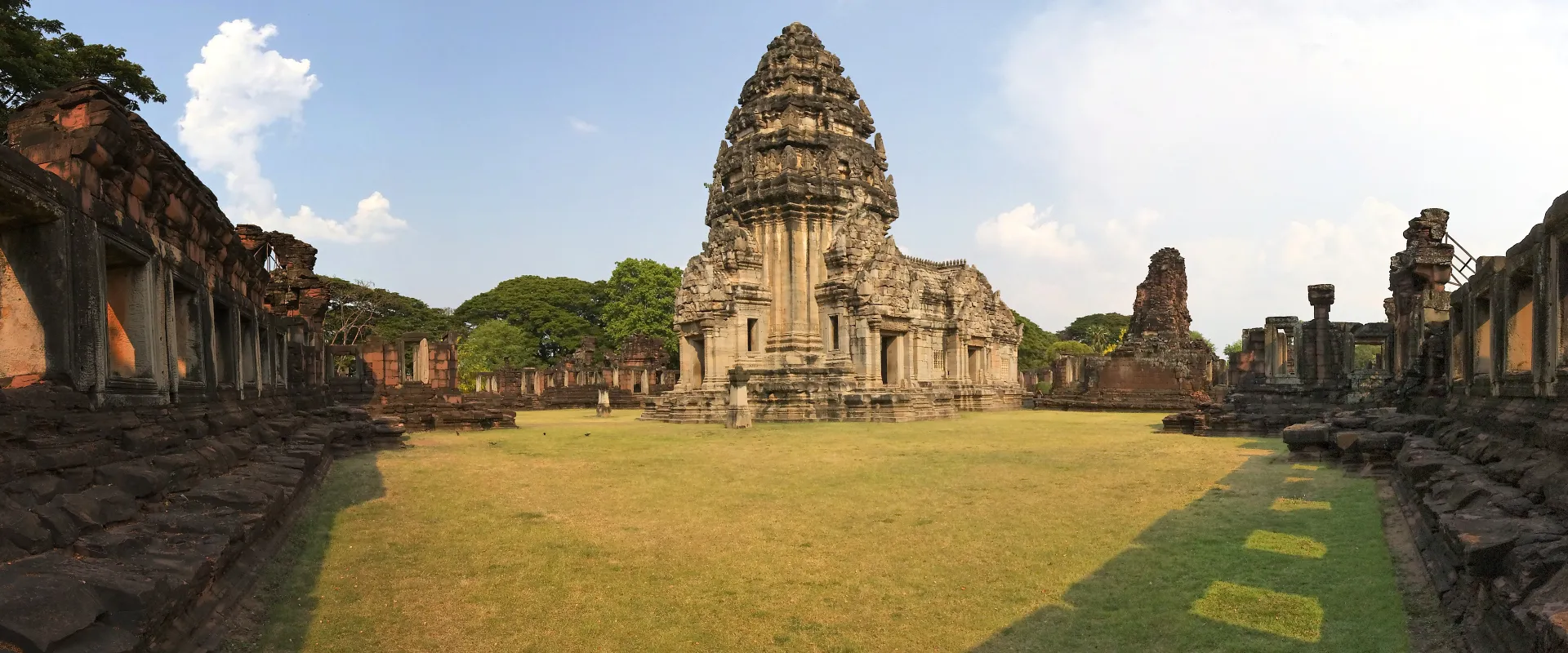
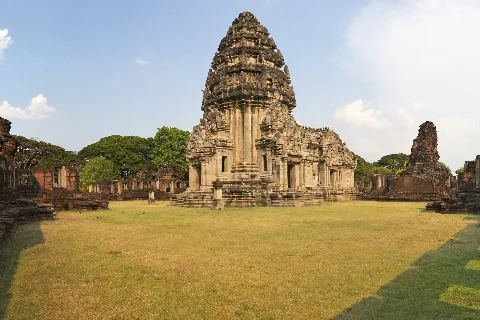
Plan the province as several separate areas. Mueang Nakhon Ratchasima is the urban base for city history, services and the Thao Suranari Monument. Phimai is the major Khmer-heritage focus, centred on Phimai Historical Park. Pak Chong is the western gateway for Khao Yai National Park, while Wang Nam Khiao is known for upland scenery and nature-based trips. Pak Thong Chai has a strong silk-weaving tradition. Distances between these districts are substantial, so choose a base that matches the part of the province you intend to explore.
Nakhon Ratchasima covers 20,493.96 square kilometres, making it Thailand's largest province by area in the 2024 National Statistical Office table. At 31 December 2024 it was divided into 32 districts, 289 subdistricts and 3,756 villages. Its registered population was 2,620,172 in 2024; this is the province-wide civil-registration count, not the population of Korat city and not a visitor estimate. Rail and highway links connect Bangkok with Pak Chong and Nakhon Ratchasima city, but onward travel to historical parks, national parks and rural districts requires additional planning; check current timetables and park notices.
November to February generally brings cooler, drier conditions for city walks, heritage sites and outdoor areas. March to mid-May is typically hot, while the rainy season normally begins around mid-May and eases in upper Thailand around mid-October; mountain weather and park access can differ from the city. Carry sun and rain protection, dress respectfully at monuments and temples, observe national-park wildlife and safety rules, and allow generous travel time across this exceptionally large province.
- Last reviewed
- 20 September 2026
- Content owner
- Thailand Navigator Editorial Team
- Page type
- Province guide
Community experiences
Reviews of Nakhon Ratchasima
Read first-hand experiences, then share your own.
Loading member reviews…
Reviews are temporarily unavailable. Please try again.
—
Ratings include stars without a written review.Rating distribution
No written reviews yet
Your experience could help the next visitor decide what to explore.
Be the first to share your experience
What stood out? What would you tell someone planning a visit? A short, honest review is enough.
Write a review