
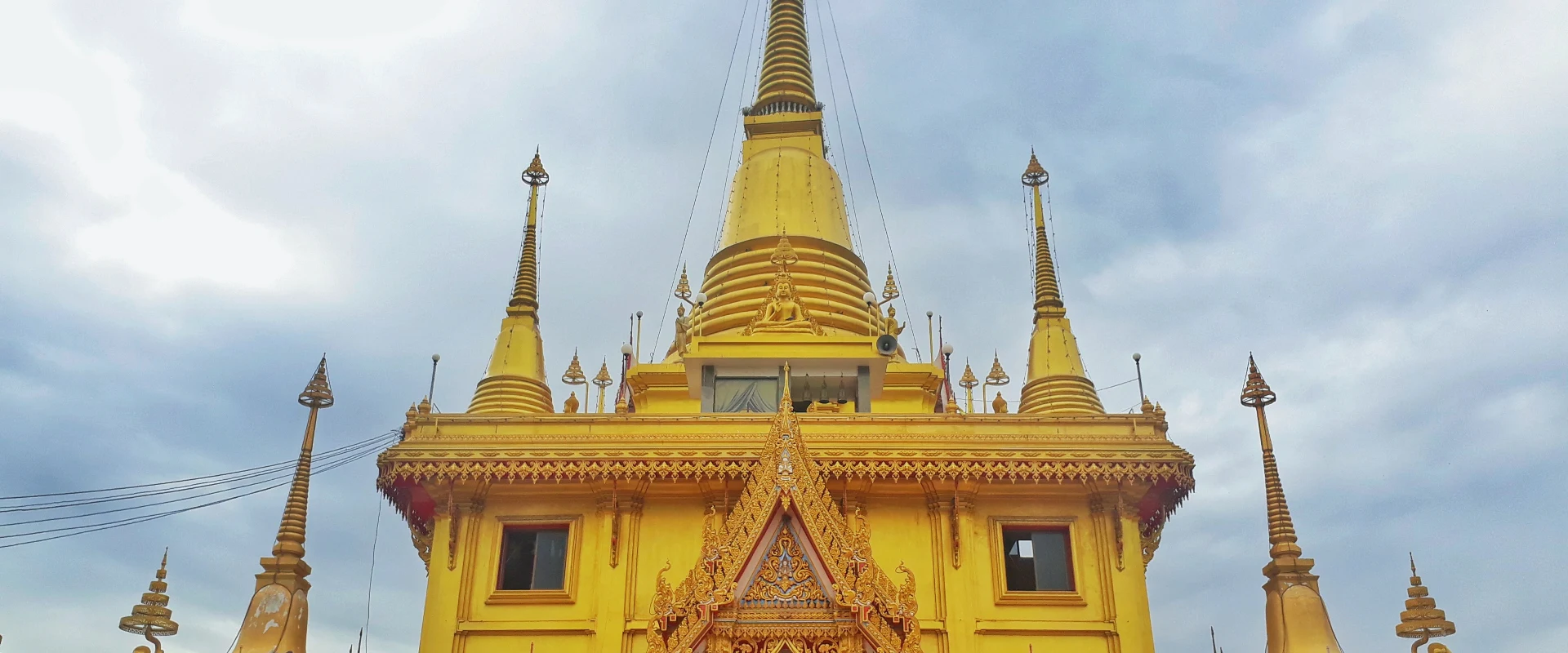
About Nakhon Sawan
Nakhon Sawan is a major gateway between central and northern Thailand. At Pak Nam Pho in the provincial capital, the Ping and Nan rivers meet to form the Chao Phraya; Pasan, on the confluence, interprets this river identity in contemporary architecture. The province combines an active regional city with broad lowlands, wetlands and western uplands, so it works both as a practical stop on a northbound journey and as a destination in its own right.
Plan the province by area. Mueang Nakhon Sawan is the best base for Pak Nam Pho, Pasan, Wat Khiriwong, city services and the Chinese New Year dragon and lion processions, whose dates follow the lunar calendar. Bueng Boraphet, east of the city, is the principal nature experience, with wetland scenery, birdlife, boat outings and an aquarium highlighted by the Tourism Authority of Thailand. Other province-wide options include Chansen Ancient City, Khao Nor–Khao Kaew and Wat Sri Uthumphon; confirm current opening arrangements and local transport before travelling.
Nakhon Sawan covers 9,597.68 square kilometres. At 31 December 2024 it had 15 districts, 130 subdistricts and 1,434 villages. Its registered population was 1,014,401 in 2024; this is the province-wide civil-registration count, not the population of Nakhon Sawan city and not a visitor estimate. State Railway of Thailand Northern Line services call at Nakhon Sawan and other stations in the province, while highways connect the province with Bangkok and the north. Attractions beyond the urban area are spread out, so road transport and realistic transfer time are important.
November to February generally offers cooler, drier conditions for city walks, wetland visits and outdoor stops. March to mid-May is typically hot, and the rainy season in upper Thailand usually runs from around mid-May to mid-October, with timing varying by year. Carry sun and rain protection, use respectful dress at temples, take binoculars rather than disturbing wildlife at Bueng Boraphet, and check current railway times, weather alerts and attraction notices before departure.