
About Phitsanulok
Phitsanulok Province includes an important regional city and an extensive hinterland of lowlands, hills and protected landscapes. The provincial capital is a useful base for cultural visits and onward travel, while nature destinations lie in several different districts.
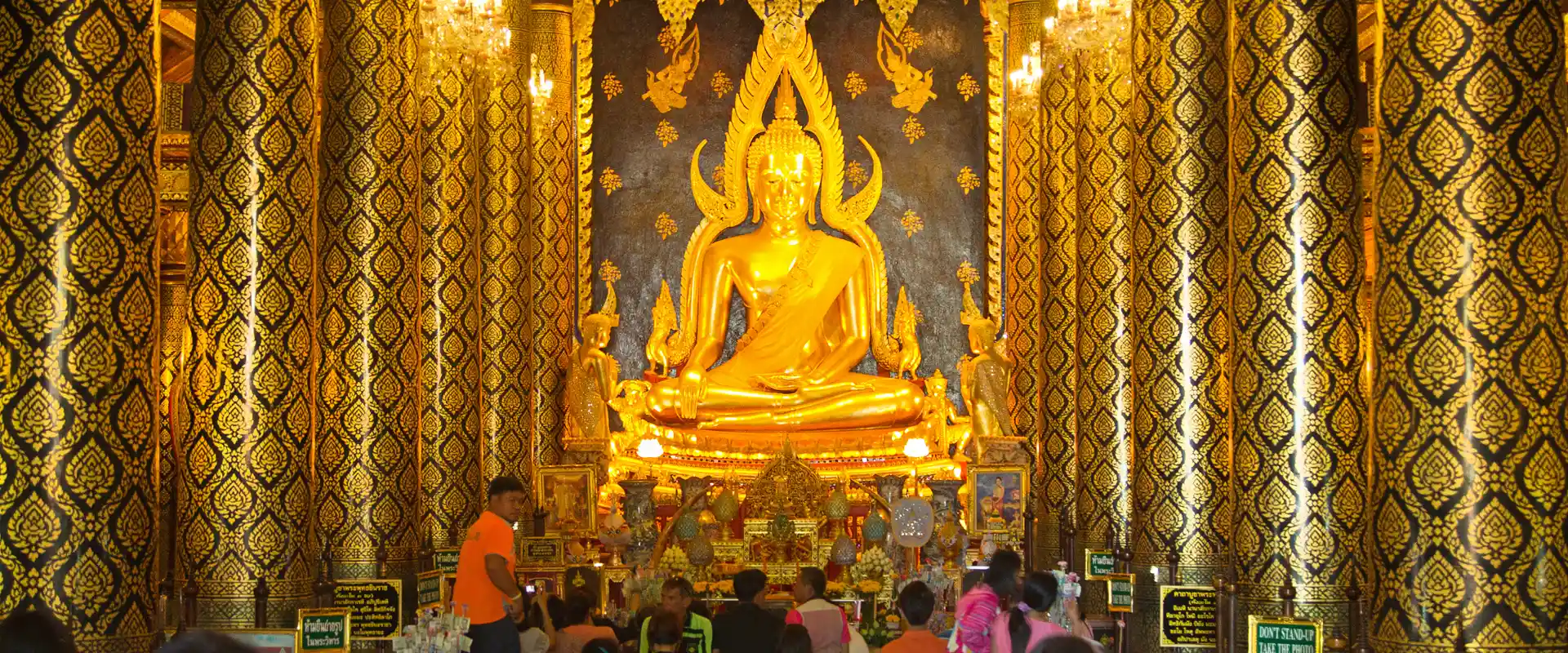
Phra Buddha Chinnarat at Wat Phra Si Rattana Mahathat is the best-known religious landmark. Wat Chulamani, Chan Palace and the Sergeant Major Thawee Folk Museum add historical and everyday-life perspectives. Beyond the city, TAT highlights Chat Trakan waterfall, Phu Hin Rong Kla National Park and the rural limestone scenery of Noen Maprang.
Separate a city itinerary from a mountain or waterfall outing. Confirm the relevant entrance, local transport and return arrangements; travelling across the province can take much longer than reaching the city centre. At temples, follow dress requirements and worshippers' space. Rafting, waterfalls and mountain trails depend on rainfall, operator decisions and park notices, so check current conditions before committing to an outdoor trip.
Phitsanulok Province covers 10,815.85 square kilometres and had 9 districts, 93 subdistricts and 1049 villages at 31 December 2024. Its 2024 registered population was 839,116; this is a whole-province civil-registration count, distinct from the capital city or an estimate of visitors.
November to February generally offers cooler conditions for outdoor visits. The hotter period and the rains bring different travel considerations, with rain usually increasing from around May to October; check current forecasts for your route.