
About Sukhothai
Sukhothai Province includes the modern town, the old capital's archaeological landscape and other districts with their own heritage and local life. The historical park is a principal reason to visit, but it represents only one part of the wider province.
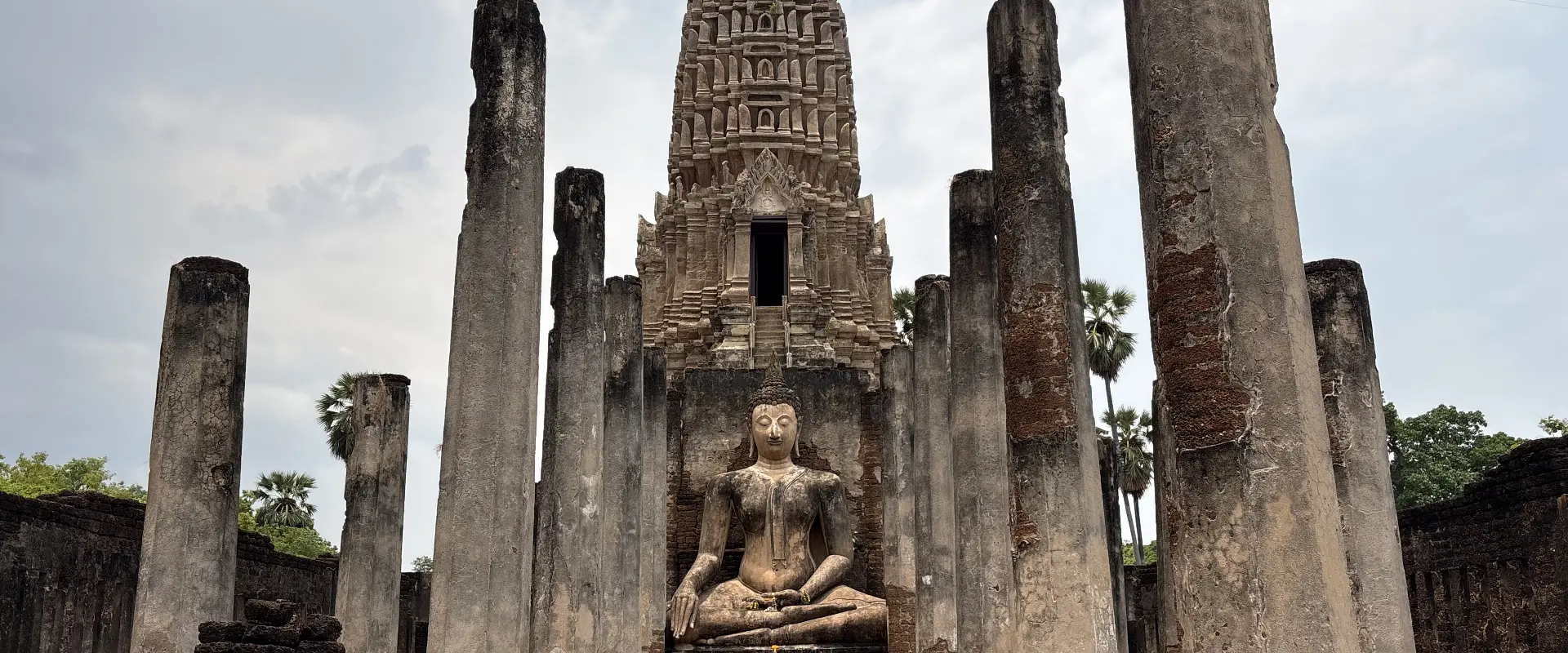
Sukhothai Historical Park contains major monuments including Wat Mahathat and Wat Si Chum. Si Satchanalai offers a separate archaeological area and a long ceramic tradition. Both belong to the UNESCO-listed Historic Town of Sukhothai and Associated Historic Towns property, alongside Kamphaeng Phet in a different province. Thung Saliam and rural communities provide further context beyond the ruins.
Choose accommodation according to whether you want the modern town, the old-city area or a wider road itinerary. Si Satchanalai is a separate trip, so plan transport and return time rather than treating the heritage areas as adjacent. Exposed archaeological sites can be hot; carry water and use cooler parts of the day. Check individual site access and admission, protect fragile structures and confirm the current programme before travelling specifically for Loi Krathong events.
Sukhothai Province covers 6,596.09 square kilometres and had 9 districts, 86 subdistricts and 843 villages at 31 December 2024. Its 2024 registered population was 573,388; this is a whole-province civil-registration count, distinct from the capital city or an estimate of visitors.
November to February generally offers cooler conditions for outdoor visits. The hotter period and the rains bring different travel considerations, with rain usually increasing from around May to October; check current forecasts for your route.