
Thailand Guide
Local Customs in Thailand
Prepare for Thai home visits, shared meals, markets and neighbourhood routines with specific questions and practical examples.
Reviewed 2 November 2026 using the sources below. Confirm current rules, availability and prices directly before acting.
Start here
Ask the host about the actual arrangement
This guide covers ordinary situations: entering a home, joining a meal, buying at a market and sharing a neighbourhood. Observe, ask and confirm; family and individual preferences differ. Use the separate etiquette guide for introductions and meetings, and the temple guide for sacred sites.
Visiting someone’s home Confirm when to arrive, how to find the entrance and whether to bring anything.
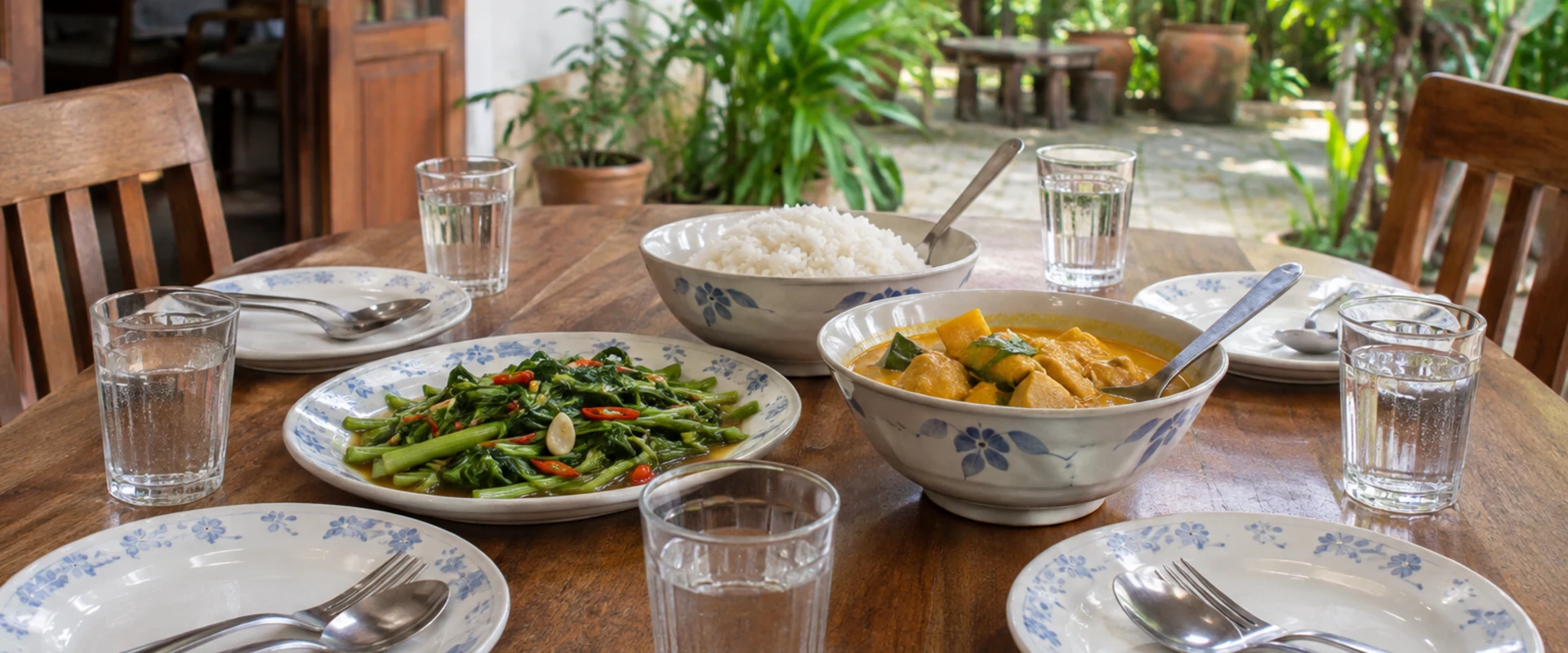
Joining a shared meal Ask how dishes are served and whether everyone has ordered or is sharing.
Buying at a market Check the item, quantity, unit and total before agreeing.
Find the information you need
Choose the option that best matches your situation to see the most relevant part of this guide.
Visiting someone’s home
Confirm when to arrive, how to find the entrance and whether to bring anything. At the door, look for the household’s shoe arrangement and ask if unsure. Wait to be shown where to sit or put belongings, especially when a home also contains a work or worship area.
Ask before photographing rooms, family members or personal objects. Explain dietary or access needs early and keep the first visit manageable. If a pet, child or household member needs space, follow the host’s guidance rather than assuming an invitation gives access to every room or activity.
Buying at a market
Check the item, quantity, unit and total before agreeing. A price may be per piece, bunch, kilogram or portion. Ask whether you may handle produce or whether the seller will select it. Keep bags and photographs out of the working space and allow other customers to pass.
Bargaining depends on the setting and seller; do not assume a supermarket-style price label invites negotiation. If you negotiate, stay friendly and be prepared to decline without an argument. Count change and check the goods at the stall so a simple mistake can be resolved promptly.
Living beside other people
Ask the landlord or building manager about quiet hours, waste collection, deliveries, parking and shared access. Keep corridors and gates usable and do not assume a quiet street is private parking. Raise a recurring problem with specific dates and a practical request rather than a public accusation.
Learn the routine of the actual building or community. A condominium rule, a household preference and a neighbourhood custom are different kinds of expectation. Where an agreement affects money, access or responsibility, ask for it in writing.
Community events and family occasions
If invited to a celebration, ask about time, clothing, contribution and whether visitors may take photographs or join a particular activity. Family and religious occasions can have sections intended for relatives or participants rather than spectators. Accept a boundary without pressing for an exception.
Songkran illustrates why context matters: UNESCO describes family and community observances as part of the traditional New Year, alongside the public celebrations visitors may know. Follow the host’s explanation of the particular event rather than assuming every occasion is a water party.
Five questions that prevent awkward assumptions
0 checked
0%
Useful next steps
Social interactions
Use the introductions, invitations and meetings guide.
Learn moreTemple visits
Follow sacred-site rules and the visit checklist.
Learn moreThai food
Recognise dishes and ordering choices.
Learn moreThai culture
Learn the regional and community context.
Learn moreSources and review
Sources used for this guide
Sources are reviewed regularly so important changes can be reflected in the guide.
Temple and sacred-site etiquetteTourism Authority of Thailand Last checked 2 Nov 2026
Phahurat: Sikh community and cultural contextTourism Authority of Thailand Last checked 2 Nov 2026
Songkran: traditional Thai New Year and community practiceUNESCO Intangible Cultural Heritage Last checked 2 Nov 2026
Thailand: medical emergencies and accessing treatmentUK Foreign, Commonwealth & Development Office Last checked 2 Nov 2026
Community experiences
Reviews of Local Customs in Thailand
Read first-hand experiences, then share your own.
Loading member reviews…
Reviews are temporarily unavailable. Please try again.
—
Ratings include stars without a written review.Rating distribution
No written reviews yet
Your experience could help the next visitor decide what to explore.
Be the first to share your experience
What stood out? What would you tell someone planning a visit? A short, honest review is enough.
Write a review