
ThailandNavigator
Thailand Guide

Travelling in Thailand With Food Allergies

Prepare a Thai allergy card, ask a kitchen about sauces and cross-contact, work through real dining scenarios, and know the emergency steps.

Reading time
5 min read
Reviewed
Reviewed
Editorial owner
Thailand Navigator Editorial Team
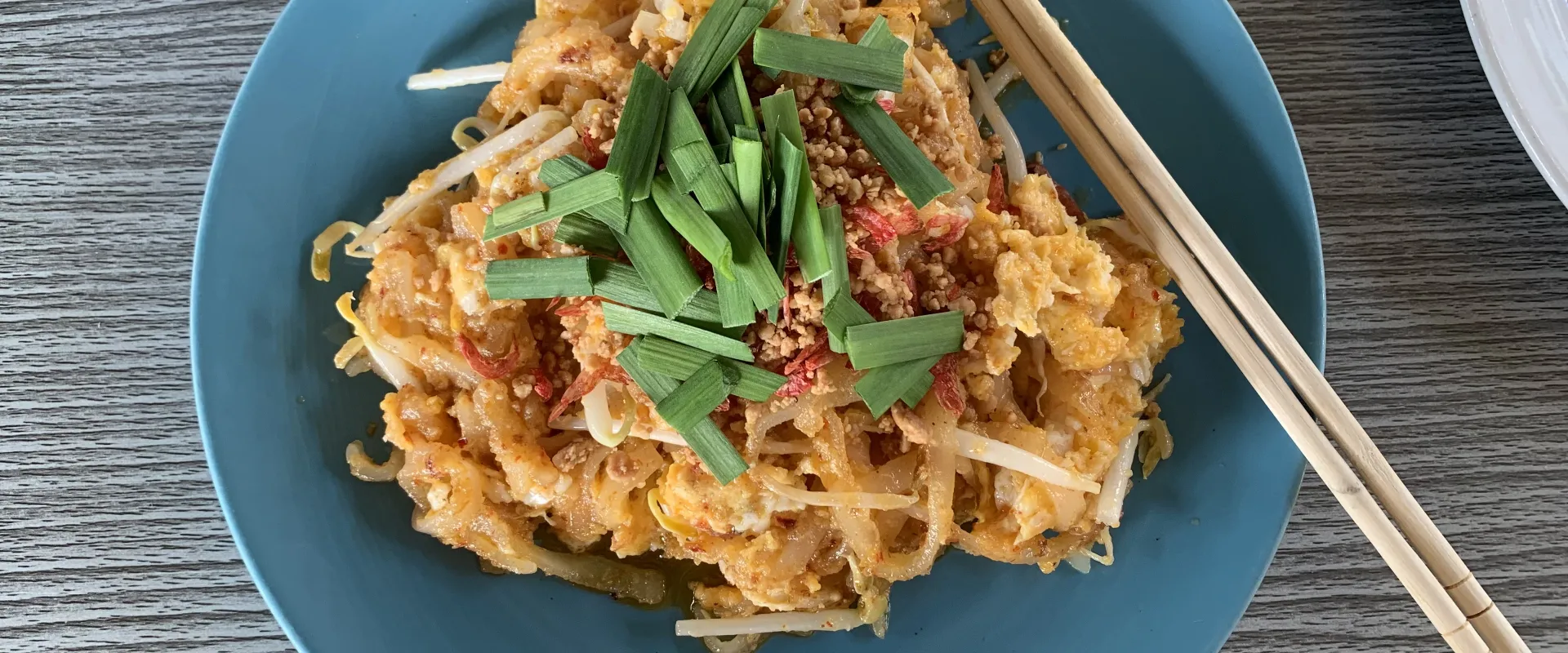
A plate of pad thai photographed in Ang Thong, Thailand
Pad thai in Ang Thong, 2024. Chainwit., CC BY 4.0. Cropped. An illustration of the dish.
Discuss your personal plan with a clinician before travel. If you suspect anaphylaxis, follow your emergency plan and call 1669 in Thailand.
Quick answer

Tell the cook exactly what to check

Carry your personalised Thai-and-English allergy card, prescribed emergency medication and emergency plan. Show the card to someone who can ask the cook. Check ingredients and the preparation separately before ordering.

Use exact ingredients Name each allergen, including relevant sauces and prepared bases.
Ask about equipment Check woks, oil, mortars, utensils and serving tools.
Know the emergency route Keep medication and the Thai medical emergency number accessible.

Plan for food allergies before and during your trip

Choose the option that best matches your situation to see the most relevant part of this guide.

Ask about an individual dish and how the kitchen will make it. A sauce, stock or curry paste can contain an allergen that you cannot see. A kitchen can also introduce traces through a shared wok, cutting board or fryer. Prepare a clear list and a way to ask both questions before you travel.

1

Prepare before you travel

1. Review your emergency plan with your clinician. Confirm which ingredients to avoid, how to recognise a serious reaction, what medication to carry and when to use it. Keep prescribed emergency medication and your plan with you, clearly labelled and accessible on flights and outings. Check airline rules for carrying it.

2. Save the card in Thai and English. Use a professionally checked translation and include the exact allergens. Allergy & Anaphylaxis Australia publishes Thai chef-card resources. Keep a printed version and an offline copy. Give a copy to your travel companion if you have one.

3. Plan food and access to care before leaving each base. Contact your accommodation or tour operator in advance, and take suitable snacks for transfers if allowed. Save your insurance assistance and a nearby appropriate hospital. In Bangkok, use Bangkok Hospitals by Location and Care Needs to confirm the campus. For example, save the exact listing and address for Bumrungrad in lower Sukhumvit or MedPark on Rama IV if it fits the area where you will stay. In an emergency, use 1669. For family travel see the guide to travelling with young children.
2

Prepare a Thai allergy card

Replace the brackets with the specific names your clinician and translator have checked. Adjust the severity wording to match the allergy. Keep the equivalent English message on the same card, so you can check every ingredient listed.

ฉันแพ้อาหารต่อไปนี้อย่างรุนแรง [ระบุชื่ออาหารที่แพ้]

กรุณาตรวจสอบส่วนผสมทั้งหมด รวมถึงซอส เครื่องปรุง น้ำซุป และน้ำมันที่ใช้ทอด แม้มีเพียงเล็กน้อยก็อาจทำให้ฉันแพ้รุนแรงได้

กรุณาใช้อุปกรณ์และภาชนะที่ล้างสะอาด และไม่ใช้น้ำมันทอดร่วมกับอาหารที่มีส่วนผสมที่ฉันแพ้ ถ้าไม่แน่ใจ กรุณาบอกฉันก่อนทำอาหาร

English meaning. I have a severe allergy to [list the foods]. Please check all ingredients, including sauces, seasonings, stocks and frying oil. Even a small amount could cause a serious reaction. Please use clean equipment and utensils and avoid frying oil used for foods that contain my allergens. Tell me before preparing the food if you are unsure.

  • Peanut and other specific nuts
    Peanut is ถั่วลิสง. Cashew is เม็ดมะม่วงหิมพานต์. Specify each nut you need to avoid. Soy is ถั่วเหลือง and sesame is งา.
  • Fish and shellfish
    Fish is ปลา and fish sauce is น้ำปลา. Shrimp is กุ้ง, dried shrimp กุ้งแห้ง, shrimp paste กะปิ, crab ปู and oyster sauce น้ำมันหอย. State which allergens apply to you.
  • Egg, milk and wheat
    Egg is ไข่, cow’s milk นมวัว and wheat ข้าวสาลี. A noodle or batter may contain another ingredient besides the one named on the menu. Confirm the recipe.
3

Talk to the kitchen

1. Identify who can verify the ingredients. Show the card before ordering, preferably directly to the cook or through staff who can ask them. Check sauces, marinades, curry pastes, broth, garnish and packaged ingredients. Ask if the dish is already mixed or prepared.

2. Ask what touches the food. Ask about a shared mortar, wok, board, knife, ladle, grill and fryer. Request clean suitable equipment and check whether the oil has already been used with the allergen. A dish that can be made without an ingredient can still pick it up during preparation.

3. Confirm what will actually be served. Repeat the specific ingredient and preparation checks when the dish comes out. If the kitchen cannot verify its recipe or equipment for your needs, choose another meal or venue or use a known backup.

4

Work through common meal situations

  • Pad thai with peanut, shrimp or egg allergy
    Ask about all the ingredients, including crushed peanuts, egg, dried shrimp, fish sauce, any prepared pad thai sauce and the wok. Ask whether the preparation can start fresh and use clean equipment. Removing a garnish after cooking leaves earlier contact unresolved.
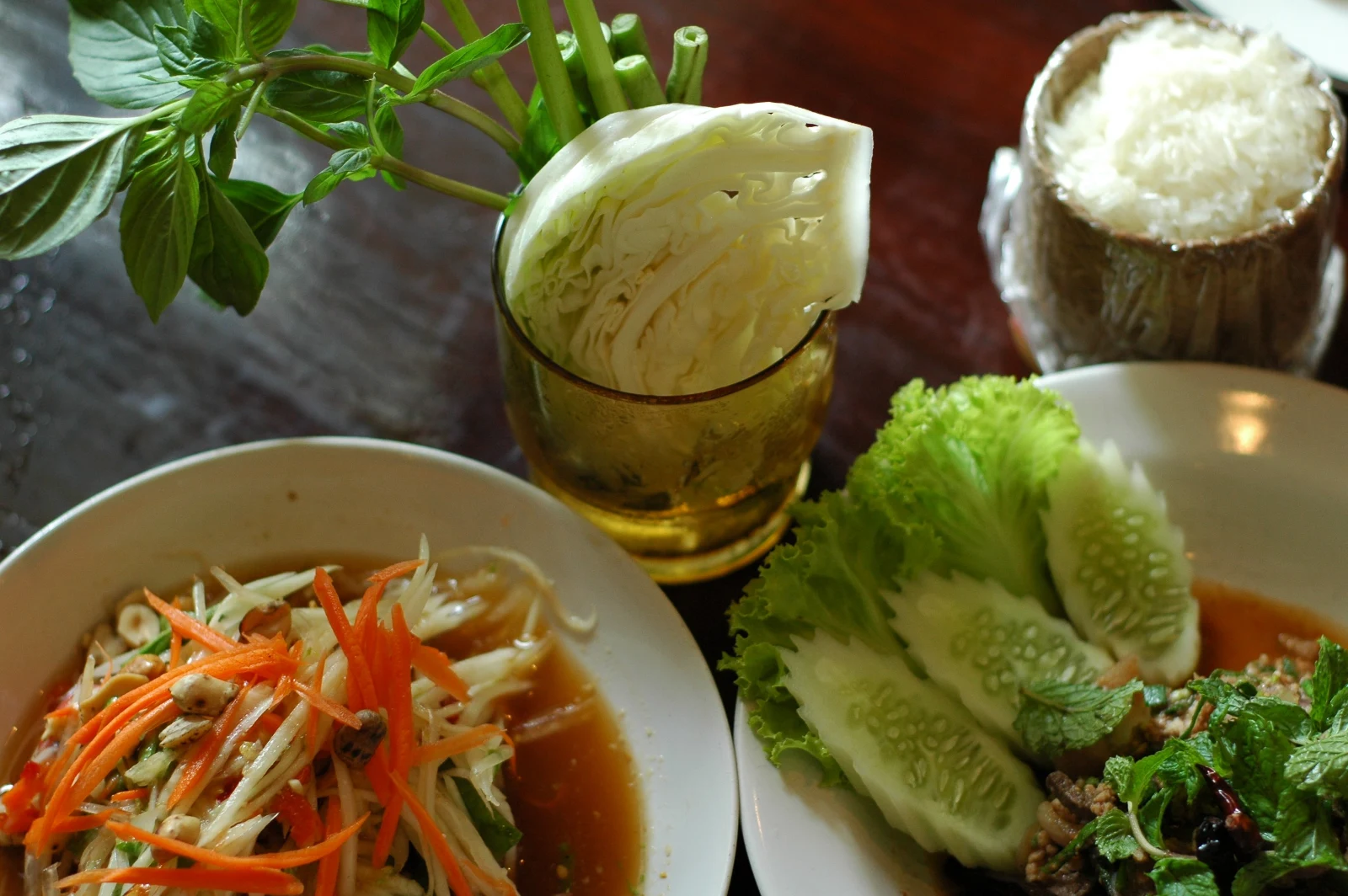
  • Som tam at a stall
    If you are visiting a market such as Hua Hin Night Market, check the specific stall. Ask about peanuts, dried shrimp, fish sauce and the shared mortar. If the sauces are mixed in advance, ask to see the ingredients or choose another option.
  • Noodle soup, curry or fried snacks
    Check the broth, paste or sauce separately from the meat and vegetables. Ask what else is cooked in the fryer or with the ladle. At a buffet, food and serving utensils can move between trays.
  • Food tour or a packed snack
    For a tour, send your card before paying and ask how each stop handles the ingredients and preparation. Use the Bangkok food tour guide to understand the different dining settings. For a sealed product read both the ingredient list and the allergen statement on that exact package. Ask for help with the Thai label if you need it.
A Thai meal with som tam, larb and sticky rice served as separate dishes
Som tam, larb and sticky rice, Bangkok. Jpatokal, CC BY-SA 4.0. Resized. Recipes vary.
5

If a serious reaction is suspected

Follow your clinician’s emergency plan. For suspected anaphylaxis, use your prescribed adrenaline auto-injector as directed and call 1669 immediately for emergency medical services. Give the location with a building name or pin, say you suspect a severe allergic reaction and tell the dispatcher what medication has been used. Ask someone nearby to help direct responders. Follow dispatch instructions even if symptoms start to improve.

แพ้อาหารอย่างรุนแรง กรุณาโทร 1669 เรียกรถพยาบาล

This message says there is a severe food allergy and asks someone to call 1669 for an ambulance. Keep the number in your emergency plan and make sure your travelling companions know where you carry your medication.

Sources and review

Sources used for this guide

Sources are reviewed regularly so important changes can be reflected in the guide.

Suggest content

Help us improve Thailand Navigator.
What would you like to do?

Your account, current page and submission date are recorded automatically.

Community experiences

Reviews of Travelling in Thailand With Food Allergies

Read first-hand experiences, then share your own.

Write a review
Loading member reviews…
Reviews reflect members’ own experiences.

Want to write a review?

Closing this prompt will not remove your rating.

Choose language

Select the language used across Thailand Navigator.

You can change this any time from the language menu.