
- Cash for small or cash-only purchases
Carry small notes for markets, some local rides and places that cannot take your card or QR app. Ask before ordering or getting in a vehicle. Budget the next day’s cash using the Thailand trip budget planner. - Card for larger merchants
Check the final amount, the currency on the terminal and any surcharge before confirming. Use a second card stored separately as a backup. For hotel or rental deposits, ask about a temporary authorisation and how long the issuer may keep funds reserved. - Thai QR with a participating app
Ask whether the merchant’s QR type and your app participate in a Bank of Thailand cross-border link. For example, the Bank of Thailand names eligible Malaysian Public Bank app payments to Thai QR codes from several participating Thai banks. Another app or a different type of QR may behave differently. Check the amount, conversion, fee and recipient before confirming. - Cash exchange at a licensed counter
Compare the baht you will actually receive and any commission. Keep the receipt and check the notes before leaving. Use the operator’s exact location and hours when planning a visit, for example the SuperRich (1965) directory listing.
Thailand Guide
Cash, Cards and ATMs for Thailand Visitors
Decide when to use cash, a card or QR payment, compare ATM charges and currency conversion, and know what to do if a withdrawal or card fails.
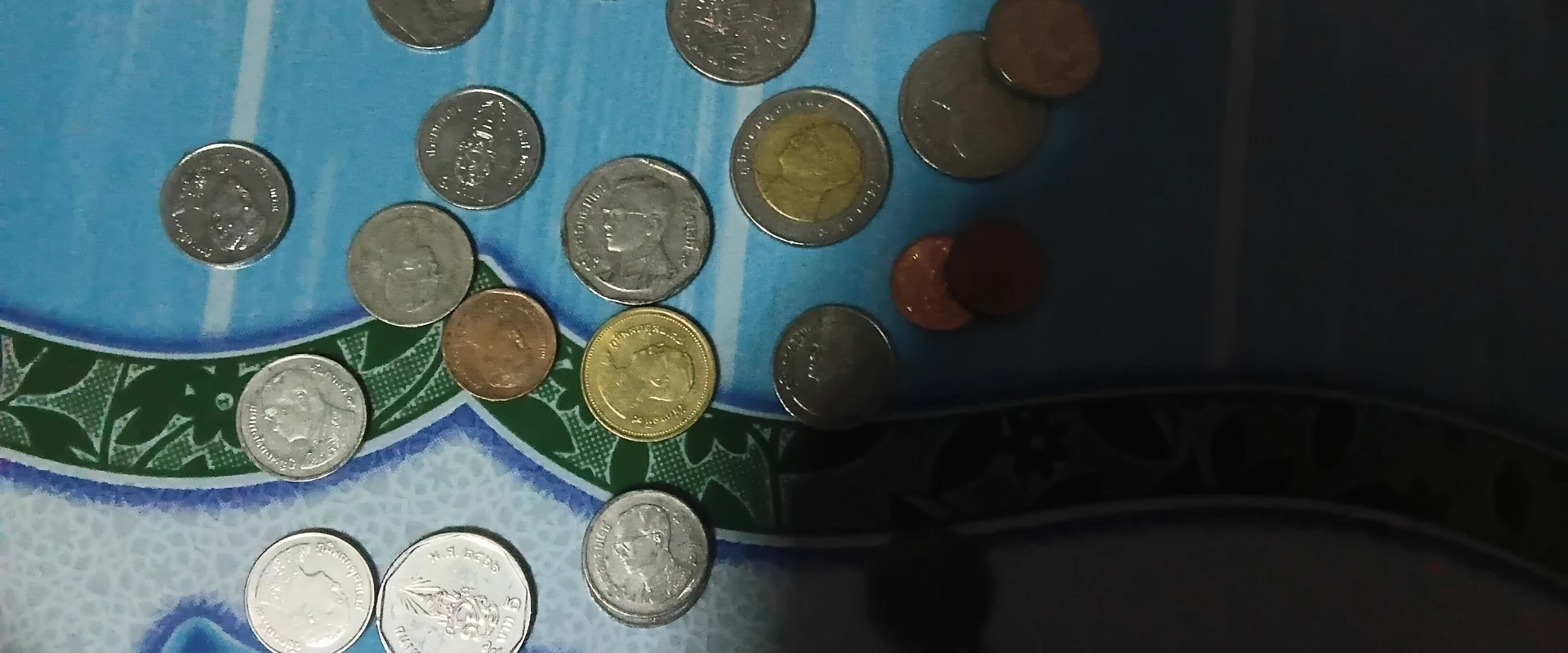
Check your card issuer and the terminal screen for current fees, limits and exchange terms. Quote examples are identified by operator and card network.
Quick answer
Carry baht for small purchases and keep a second way to pay
Use cash where cards or your QR app are unavailable. At an ATM, check the local fee and the transaction currency separately. Keep a second card and enough cash for the next essential ride or meal.
Cash Useful for small vendors, local transport and a backup.
Cards Check whether the final charge is in THB.
ATMs and QR Check the network, fees and the merchant’s supported payment type.
Make and troubleshoot a payment
Choose the option that best matches your situation to see the most relevant part of this guide.
Payment choices Use cash, card, QR or licensed exchange according to the purchase
ATM charges Separate the local fee from currency conversion
Use a Thai ATM Check the currency choice and keep a receipt
Problems with a card Handle a decline, retained card or debit without cash
Prepare for arrival Test your backup and plan the first expenses
Thai baht is the local currency. Plan for your first ride and the first few small purchases before you land, then use whichever payment method the merchant accepts. Keep a working backup, especially before visiting an island or a rural area where there may be fewer machines or places to change money.
Choose how to pay
Work out the ATM cost
The local ATM operator can charge a flat fee. Your home issuer can add its own withdrawal fee, exchange markup or, on a credit card, a cash-advance fee and interest under its terms. A home-currency offer at the machine is another choice, called dynamic currency conversion or DCC. It can apply a different rate from the one your card issuer or network uses.
Dated example. Krungsri’s schedule effective 11 March 2026 lists ฿250 per withdrawal for foreign-issued Visa cards and ฿350 for foreign-issued Mastercard cards at its ATMs. On a ฿5,000 withdrawal those charges alone are 5% and 7% respectively, before issuer fees or exchange conversion. At ฿10,000 the same flat charges are 2.5% and 3.5%. These figures are for that operator and schedule. Read the fee shown by the machine and take only as much cash as you need and can carry securely.
On the currency prompt. To have the charge sent to your card in Thai baht, choose THB, the local currency, or the option to continue without the machine’s conversion, if that is what the screen says. If you consider paying in your home currency, compare its full rate and fees with your card terms. A local ATM fee can still apply when you decline conversion. Cancel if the terminal does not give you a clear choice.
Make a withdrawal step by step
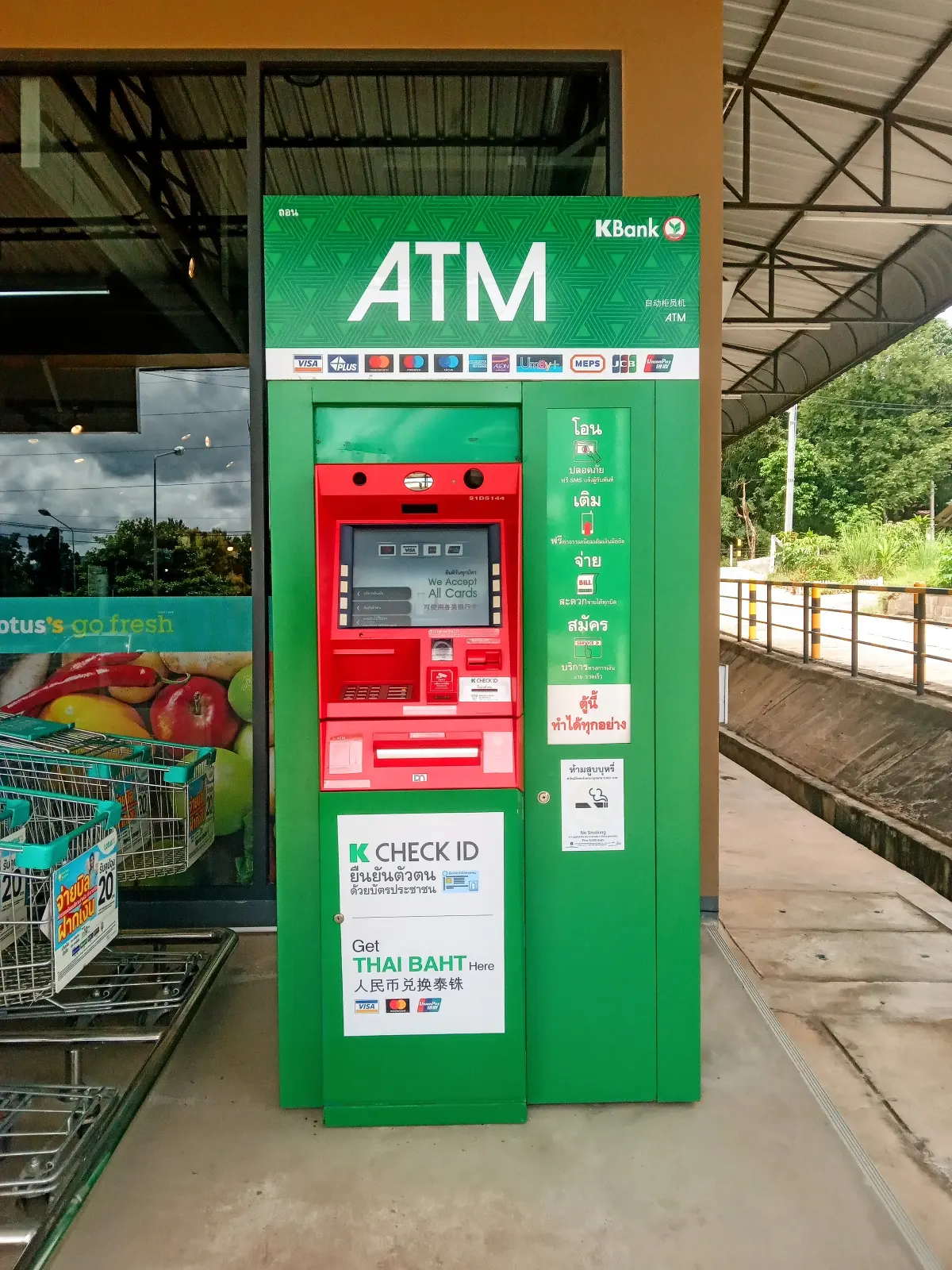
1. Choose a bank-operated machine that accepts your card. Look for the network logo. An ATM by an open bank or staffed location can make it easier to get the operator’s contact details if something goes wrong. Check your issuer’s limit and that overseas withdrawals are enabled.
2. Enter the amount and read the fee. Use the screen language you understand and cover the keypad when entering your PIN. If the displayed local fee is too high, cancel and consider a different machine or payment method.
3. Review the currency before confirming. For a THB withdrawal without DCC, confirm the baht amount shown and decline the separate home-currency offer if it appears. Read the terminal wording carefully. Take your cash, card and any receipt before walking away.
4. Check the transaction in your account. Confirm the cash amount and check the pending or posted debit. Keep the receipt if something is wrong. Note the operator, location, terminal number and time so your card issuer can trace a dispute.
What to do if a payment fails
- Card declined
Check the banking app for a security prompt, spending limit or travel restriction. If the payment appears pending, check with the merchant and issuer before repeating it. Try the backup payment if you need to leave. - Account debited but machine gave no cash
Keep the receipt, ATM ID, location, time and amount. Contact your card issuer through the official app or verified number for a withdrawal dispute. The local ATM operator may also need the terminal details. Avoid repeatedly trying the same withdrawal while a debit is unresolved. - Machine kept the card
Contact the operator using verified contact information. Freeze or block the card through your issuer if it cannot be returned promptly, and check for other activity. Use a backup card or cash for immediate needs. - Card lost or an unknown charge appears
Freeze or report it promptly in the official app or through your issuer’s emergency number. Save records of unrecognised charges and follow the issuer’s dispute process. Keep the card PIN and one-time codes private. - QR or transfer looks incomplete
Check your own banking app and the recipient details before sending again. Save the reference and ask the provider to trace the payment. Use a different method if the merchant needs payment and you can confirm the first attempt did not go through.
Before flying and after landing
Check the fees for each card, whether it can withdraw overseas, and how to reach the issuer without access to the card itself. Keep some baht or a clear plan to get it. At Suvarnabhumi or Don Mueang, check your terminal and how to pay for your actual onward transport. The Thailand Arrival Checklist and transport guide explain what to check before leaving the airport.
For a longer stay, save a separate fallback for rent, healthcare or emergencies and ask your branch what documents it currently requires for a Thai account. See the first 30 days checklist for banking and housing setup.
Sources and review
Sources used for this guide
Sources are reviewed regularly so important changes can be reflected in the guide.
Thailand Arrival ChecklistThailand Navigator Last checked 17 Nov 2026
Cost of Living in ThailandThailand Navigator Last checked 17 Nov 2026
Getting Around ThailandThailand Navigator Last checked 17 Nov 2026
Suvarnabhumi AirportThailand Navigator Last checked 17 Nov 2026
SuperRich Currency Exchange (1965) Company LimitedThailand Navigator Last checked 17 Nov 2026
Community experiences
Reviews of Cash, Cards and ATMs for Thailand Visitors
Read first-hand experiences, then share your own.
Loading member reviews…
Reviews are temporarily unavailable. Please try again.
—
Ratings include stars without a written review.Rating distribution
No written reviews yet
Your experience could help the next visitor decide what to explore.
Be the first to share your experience
What stood out? What would you tell someone planning a visit? A short, honest review is enough.
Write a review