Thailand’s 2011 floods, archival report image. Voice of America, Public domain release. Cropped and resized. Original on Wikimedia Commons.
Use dated official layers for screening and confirm conditions with the building, owner and local authority. Follow official instructions during an active flood.
Quick answer
Check the street, access route and building systems as well as your floor
Use the exact entrance pin and a separate pin for parking or a low access road. Ask for event dates and evidence from the building.
Address and mapsCapture the entrance and compare rainfall with past flooding
Building viewingCheck parking drainage power and lift access
Local evidenceAsk for dates, water levels and responses
Choose a section
Choose the option that best matches your situation to see the most relevant part of this guide.
A high-floor apartment can still lose parking, lifts, electricity or the road out of its soi. Run two checks before signing. Find what the maps and local records show for the street, then ask how the actual building and its access routes performed during past events.
1
Screen the exact entrance and access roads
1. Collect exact pins with the full Thai address. Mark the building ingress, parking ramp, exit and nearby low road or underpass. Save the subdistrict, district, province and postcode. If the broker sends a neighbourhood marker, ask for the actual entrance. In Bangkok, distinguish a canal crossing or side soi from the adjoining main road.
2. Compare three different kinds of evidence. Use the GISTDA Disaster Platform for dated satellite observations or its historical layers. Use ThaiWater and local monitoring for rainfall and river-level context. In Bangkok, the Bangkok Flood Control Center and BMA’s traffic dashboard provide current local road or sensor reports. Compare dates, layer legend, coverage and your actual access route. A gap in any layer can reflect the timing, coverage or resolution of the data.
3. Check the places your household must reach. Trace both a usual and a plausible alternate route to work, school or essential appointments. Check the low junction, bridge, raised footway and pickup point. Use the accessibility guide if anyone needs a step-free route or a lift to leave the building.
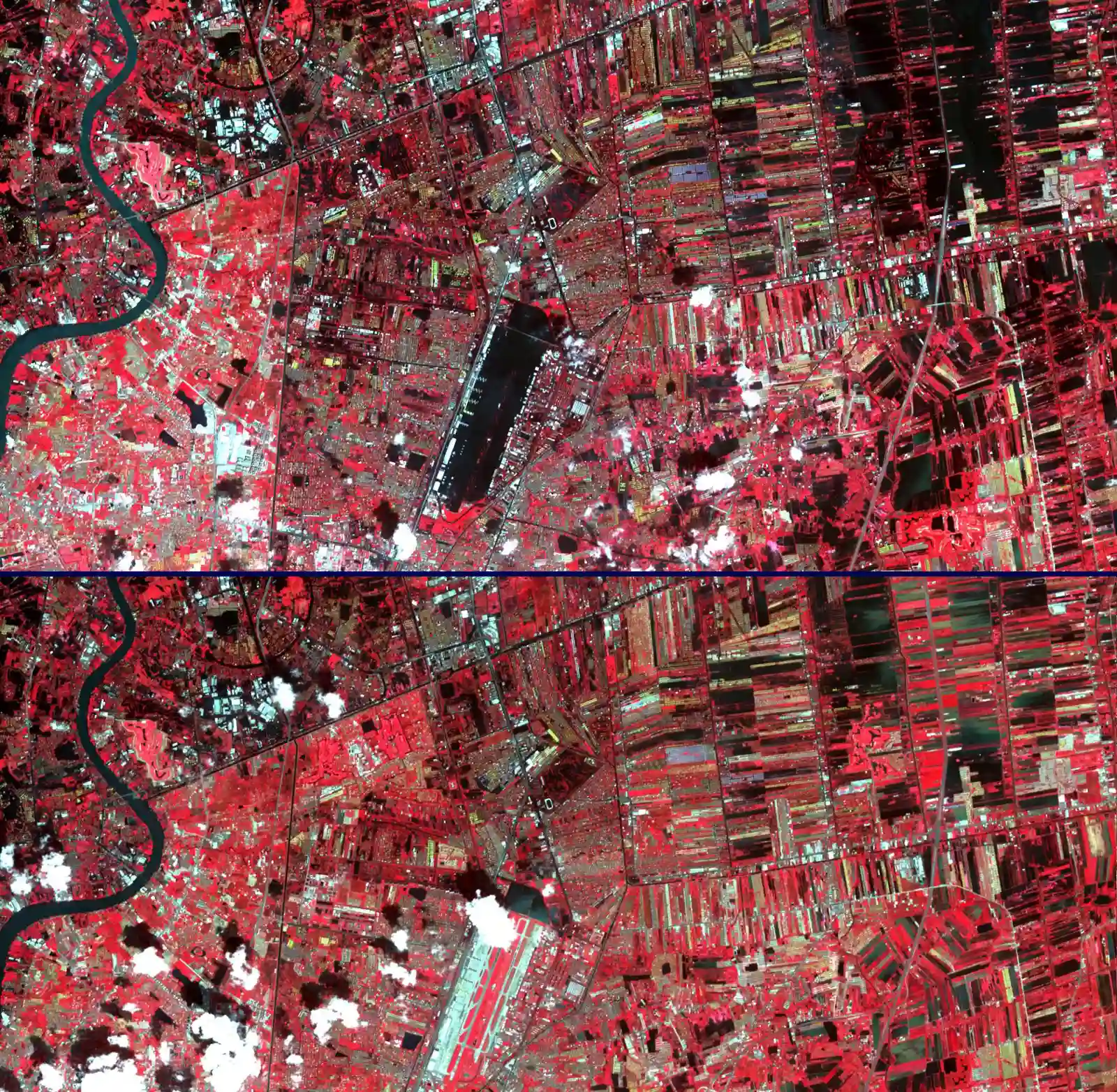
Historic ASTER satellite imagery of flooding around Bangkok. Check newer official layers for the address you are considering. NASA, METI, AIST, Japan Space Systems and the U.S.–Japan ASTER Science Team, Public domain release. Resized. Original on Wikimedia Commons.
2
Check what can fail during a wet week
Parking and entrance Inspect the ramp, garage and street exit for slope, drainage, raised thresholds, flood barriers or water marks. Ask where cars can be moved, who opens the alternate gate and how much warning residents get. Check motorcycle and pedestrian access independently.
Systems below your room Ask where the switchboard, backup power, water pumps, communications equipment and lift controls are. Identify which circuits and lifts run on backup and for how long. Ask what happened on the last outage and how the building warns residents.
A realistic viewing route Recheck the soi after an ordinary rain if it is safe. Look at pavement drainage, culverts and the route to the main road from dry ground. In a coastal or river town such as Hua Hin or Phuket, check local sources for the exact street. For Hat Yai and Songkhla, distinguish the two locations and get address-level evidence.
3
Get the flood history and response in writing
Ask building management and at least one independent local source about the most recent flood. Request the date, how high the water reached, how long the building and roads were affected, whether parking or utilities were shut, and what repairs or barriers followed. For example, if a building says the units stayed dry, follow up on whether the basement ramp, lift and road entrance all worked that day. Ask for dated photos, resident notices or maintenance evidence where available.
4
Make the lease and move-in decision
Keep your evidence and unresolved points with the Bangkok condo viewing checklist and the rental handover checklist. In the lease, ask who moves vehicles, handles damage or repairs, and pays if an access or utility outage makes the unit unusable. Review the cancellation or delayed-handover terms and any tenant contents cover, including exclusions. Ask the Office of the Consumer Protection Board or a qualified adviser about consumer recourse that applies to the actual tenancy.
If the cheapest unit has unclear parking and only one low exit, compare it with another address before paying. Prioritise written answers and an access plan that works for the people and vehicles you rely on. Before driving across provinces during heavy rainfall, use confirmed local advice for your actual route, including longer coastal or inland legs such as the trips south of Hua Hin.
Sources and review
Sources used for this guide
Sources are reviewed regularly so important changes can be reflected in the guide.