Haew Suwat waterfall, Khao Yai National Park. Poompob Anantarak, CC BY-SA 4.0. Cropped.
Follow current Department of National Parks notices, ranger instructions and weather warnings for the exact park, trail, pier or island you plan to use.
Quick answer
Confirm the exact entrance and activity before booking
Check the official park notice, then confirm whether your trail, island or campground is open. Book the specific ticket, guide or boat you need and keep a dry-land or shorter backup.
Check accessConfirm the entrance, route and last entry for your activity.
Reserve the right placesCheck admission, guide, tour and accommodation separately.
Respect wildlifeKeep distance and follow the warnings and rangers.
Plan your national park visit
Choose the option that best matches your situation to see the most relevant part of this guide.
Decide whether you want a scenic stop, a marked walk, a longer trek, an overnight stay or a marine visit. Each can have a different entrance, booking and closure rule even inside the same park. Start with the Thailand national park directory and confirm the exact area with the park before paying for transport.
1
Confirm what is open
1. Match the destination to the exact gate or landing. For Khao Yai National Park, the park lists a north entrance on the Pak Chong side and Noen Hom on the Prachinburi side. The selected sights, hotel and gate should make sense together on your map. In a marine park, check the pier and island landing on the voucher.
2. Check current official notices and opening times. Read the Department of National Parks notice and the park’s own update. Ask about the exact trail, waterfall, island or campground, vehicle access, last entry and when you must leave. Heavy rain can close a route or a whole park at short notice. Confirm again before setting off.
3. Choose an alternative that still works. Have an open shorter trail, visitor centre or town activity ready if your first choice closes. Do not enter a closed area. Use the local public directions or a confirmed driver to reach the backup.
2
Book the right ticket and services
Park admission Check admission for each visitor, vehicle fees, identity requirements and which method the gate accepts. Khao Yai describes both gate payment and its E-Ticket route. Follow the current instructions and save the QR code or receipt offline.
A park guide or activity booking Ask whether you must register the walk or book a ranger or approved guide in advance. Confirm service hours, group size, meeting point and last allowed start separately from the entry ticket.
Overnight accommodation Reserve the actual bungalow or campground via the park or DNP’s current reservation service. Check payment deadlines, where to collect a key or pitch, what bedding or gear is supplied and when the gate closes.
A boat or snorkelling departure Ask whether the fare includes the park ticket, exact islands and marine operator. Confirm seasonal permission, luggage, boarding requirements and refund terms. Use the island transfer guide to plan the full trip.
3
Choose a trail you can finish
Compare distance, expected time, surface, elevation, steps and whether the route finishes where it starts. Ask about slippery ground, floods, trail markers, water crossings and mobile signal. Keep enough time to return before gate closure. If you need a step-free alternative, use the questions in the accessible travel guide and confirm the exact surface and facilities with the park.
Khao Yai example. The park describes Kong Kaew Waterfall Trail No. 1 as a 1.2 km loop without a mandatory guide. It lists a mandatory guide for the Km. 33–Nong Phak Chi trail. Ask the visitor centre to confirm access and register the route before going. Allow for the walk itself and the separate road transfer from the gate.
At Doi Inthanon National Park, compare the actual elevation and weather for the stop you want with conditions in Chiang Mai city. At Khao Sam Roi Yot National Park, confirm whether your outing uses a long climb, an optional boat or a separate entrance. The car-free Hua Hin guide explains how to arrange a park pickup and return.
4
Plan a marine park day
The Similan Islands are an example of why the date and exact activity matter. The DNP prepared for the 15 October 2026 reopening after a seasonal closure. Confirm current access and any island-specific limits with the park before paying. The DNP’s Similan E-Ticket guidance describes passport identification for foreign visitors. Ask if the operator arranges admission and whether it needs your details before departure.
Save the ticket or park confirmation, exact pickup and cancellation policy. Check wind and sea warnings, follow the crew’s instructions and keep a mainland alternative. Seasonal opening still leaves day-to-day changes possible. The month-by-month Thailand guide explains why the Andaman and Gulf need separate weather checks.
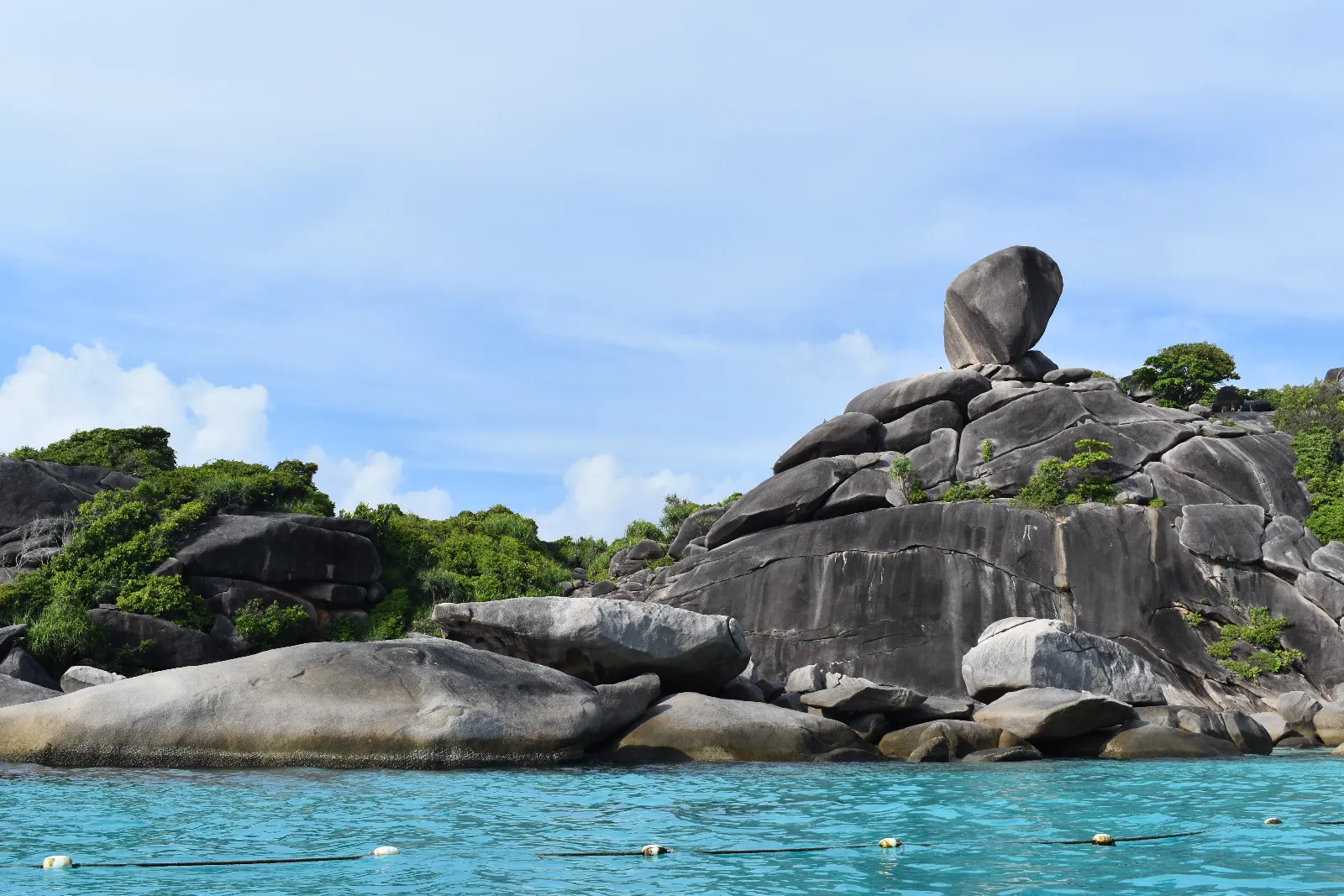
Donald Duck Bay, Similan Island. No Troubles Just Bubbles, CC BY-SA 4.0. Resized.
5
Follow the rules on the day
Stay on the permitted route and follow signs and ranger instructions. Keep quiet and give wildlife room to move. Leave animals and plants in place and pack out rubbish. In marine areas observe mooring, swimming and reef rules, and leave coral and wildlife undisturbed.
If a wild elephant is on the road. Khao Yai’s safety guidance tells drivers to stop at least 30 metres away. Follow the park’s instructions, remain in the vehicle and give it space. Ask a ranger what to do if it blocks your route. Keep your departure time flexible and never approach for a photograph.
Before leaving coverage. Tell someone your planned route and return time, keep the ranger or operator contact offline, and recheck your return transport. If the activity is closed or conditions are unsuitable, use your confirmed alternative.
Sources and review
Sources used for this guide
Sources are reviewed regularly so important changes can be reflected in the guide.