
Adventure Activities
Whale Watching
Plan responsible whale watching in Thailand’s upper Gulf: compare departure areas, understand seasonal uncertainty, check boat safety and follow wildlife-viewing guidance.
Reviewed 1 November 2026. No operator has been inspected or endorsed by this guide. Seasons are broad planning windows; sightings, sailings, prices and access depend on current conditions and the actual operator.
Start here
Whale watching in Thailand: where, when and how to choose
The upper Gulf coast around Samut Sakhon, Samut Songkhram and Phetchaburi is a practical starting point for watching the whales commonly described locally as Bryde’s whales. Late rainy-season into cool-season trips are often promoted, but sightings and sailings depend on wildlife, sea conditions and the operator. Nothing guarantees an encounter.
Where to plan a trip Official tourism guidance identifies the upper Gulf coast as a whale-watching area, including Samut Sakhon, Samut Songkhram and Phetchaburi.
When to go: a season is not a booking guarantee Government tourism material describes September–December as a favourable upper-Gulf period, while TAT’s Phetchaburi overview mentions October–January.
Find what you need
Use a section below to plan your next step.
Where to plan a trip
Official tourism guidance identifies the upper Gulf coast as a whale-watching area, including Samut Sakhon, Samut Songkhram and Phetchaburi. This makes it possible to build a trip from Bangkok or a western Gulf base without assuming that an island excursion in southern Thailand is a whale tour.
Select an actual departure pier and a confirmed operator, not only a province name. The boat may travel to where whales have recently been seen, so the driving distance to the pier does not tell you how long the full outing takes. Ask for the planned departure, likely return range and the latest weather decision.
Compare departure areas
| Comparison | Useful starting point | Question to settle |
|---|---|---|
| Samut Sakhon coast | A possible approach from Bangkok; official tourism material mentions the Phanthai Norasing area. | Which named pier and boat are operating on your date, and is a road transfer included? |
| Samut Songkhram coast | Part of the wider upper-Gulf whale area, potentially combined with a coastal stay. | Is a dedicated whale-watching trip actually available, or is the advertised outing a different type of boat tour? |
| Phetchaburi / Ban Laem coast | TAT identifies areas including Laem Phak Bia, Hat Chao Samran and Bang Tabun. | Which pier, boat type and route apply now, and how will you get back to your accommodation? |
When to go: a season is not a booking guarantee
Government tourism material describes September–December as a favourable upper-Gulf period, while TAT’s Phetchaburi overview mentions October–January. The difference is a reason to treat these as broad local planning windows. Whales may be present outside them, and good sightings can be absent on a date within them.
Ask about recent sightings near the operating area, but remember that yesterday’s encounter does not guarantee tomorrow’s. Check the current marine forecast and the captain’s decision. A calm-looking beach or a sunny city forecast is not enough to assess offshore conditions.
Leave flexibility around the boat day, particularly if cancellation would affect an expensive onward flight. Ask what happens if weather prevents departure, the route is shortened or the boat sails but no whales are found.
What the experience can be like
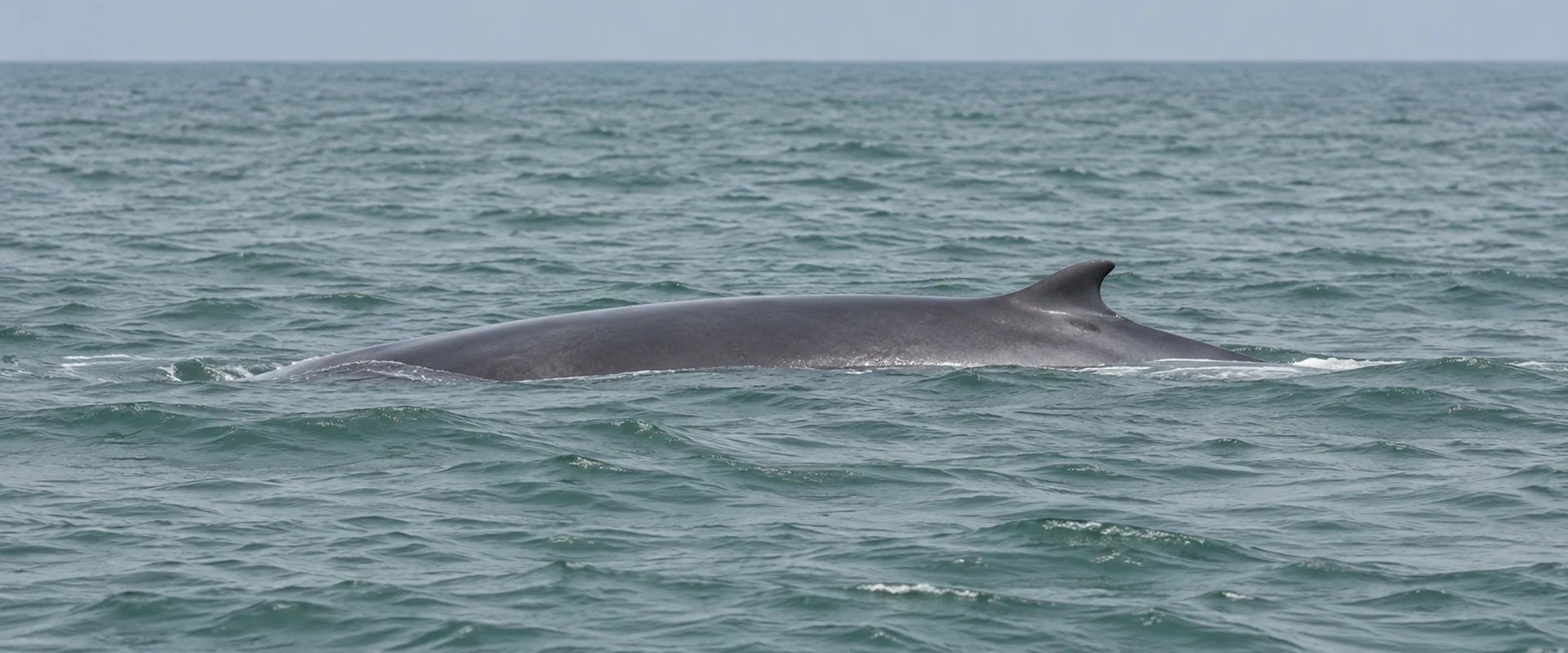
This is observation of free-ranging wildlife. You may spend time searching, see only brief surfacings or have no whale encounter. Photos of a wide-open feeding mouth or a close pass show a moment, not the guaranteed content of every trip.
Choose a trip where learning about the coast, birds and marine life is part of the experience. A guide who explains what is being observed can make the outing worthwhile without putting pressure on the captain to chase an animal.
The Gulf’s coastal water is not necessarily clear turquoise water. Whale watching from a boat is also different from a snorkelling trip. Do not book expecting to enter the water with whales.
Questions to ask the operator before paying
0 checked
0%
What responsible viewing looks like
Thailand’s Department of Marine and Coastal Resources publishes whale-and-dolphin viewing guidance. For large whales it specifies keeping at least 100 metres away, with 300 metres around whales with calves. It also describes slow approaches from the side, limits on nearby boats, avoiding abrupt manoeuvres and not chasing animals that move away. These are published viewing guidelines; ask the operator how they implement the current local requirements.
The same guidance advises against feeding or swimming and diving with whales or dolphins. Do not ask the crew to break those boundaries for a photograph. Use binoculars or a suitable zoom lens, keep noise down and let the animal determine whether it comes closer.
A closer boat is not automatically offering a better trip. If animals are already surrounded or showing avoidance, a responsible skipper may wait, move away or end the encounter.
Children, access needs and seasickness
Speak to the actual operator about boarding, railings, seating and toilet access. A vessel described as family-friendly is not proof that it has a suitable child life jacket or that a mobility device can be accommodated. Ask for specific answers before booking.
Consider whether everyone in the group is comfortable with a potentially long period at sea and limited opportunities to return early. If you are prone to seasickness or have a condition affected by boat travel, ask a pharmacist or clinician about suitable precautions and medicines for you. Do not use another passenger’s medication or assume a remedy is safe for a child.
Carry drinking water, sun protection, a hat that will stay on, non-slip footwear and a light protective layer. Keep phones, cameras and essential medication dry. Follow the crew’s seating and movement instructions rather than standing up suddenly for a sighting.
Build a day you can recover from
- 1The day before
Confirm the weather decision, departure pier, transfer, inclusions and contact number. Charge devices and save the booking and pier pin offline.
- 2Before boarding
Check the actual boat, life jackets and safety briefing. Tell the crew about relevant access needs. Ask about anything that differs from the confirmed booking.
- 3During the outing
Keep the viewing distances, avoid litter and follow instructions. Enjoy the wider wildlife experience rather than demanding a close encounter.
- 4After the return
Allow room for a later return and a relaxed onward journey. If reporting a concern, record the boat, date, place and factual behaviour without endangering yourself or wildlife.
Questions travellers ask
Are sightings guaranteed in the advertised season?
No. Wildlife moves and conditions change. Read any no-sighting offer carefully: a return-trip voucher is different from a refund.
Should I copy prices and phone numbers from an old tourism article?
No. Older official articles can establish the destination but their operator contacts, fares and departure times may have changed. Get a current written quote from the operator.
Can I swim with the whales?
Thailand’s published viewing guidance advises against swimming or diving with whales and dolphins. Choose observation that does not disturb them.
Is a whale shark the same animal?
No. A whale shark is a fish, and a dive advertised for whale sharks is a different activity from watching whales in the upper Gulf.
Useful next steps
Seasonal highlights
Find more seasonal nature experiences.
Learn moreGetting around Thailand
Arrange the road transfer and onward journey.
Learn moreSources and review
Sources used for this guide
Sources are reviewed regularly so important changes can be reflected in the guide.
Upper Gulf whale-watching areas and seasonal contextThailand Government Public Relations Department / Tourism Authority of Thailand Last checked 1 Nov 2026
Phetchaburi whale-watching departure areasTourism Authority of Thailand Last checked 1 Nov 2026
Thai whale and dolphin viewing guidelinesDepartment of Marine and Coastal Resources, Thailand Last checked 1 Nov 2026
Questions to ask before booking a whale-watching tourInternational Whaling Commission Last checked 1 Nov 2026
Responsible whale watching and disturbanceInternational Whaling Commission Last checked 1 Nov 2026
Current weather warnings and marine forecast linksThai Meteorological Department Last checked 1 Nov 2026