

ThailandNavigator
Thailand Guide

Where to Retire in Thailand: How to Plan a Trial Stay

Shortlist retirement locations in Thailand and use a month of everyday housing, transport and healthcare tests to choose a neighbourhood.

Reading time
5 min read
Reviewed
Reviewed
Editorial owner
Thailand Navigator Editorial Team
Context
Bangkok
Hua Hin’s sandy shoreline on the Gulf of Thailand
Hua Hin Beach. Photo by Elmschrat, CC0 1.0.
Check the entry permission for the trial dates and the conditions of any longer stay separately. Confirm your care, insurance and housing requirements before making long-term commitments.
Quick answer

Use a month to test daily life in one neighbourhood

Shortlist two or three cities, then stay in one area long enough to repeat normal trips. Test the route to care and groceries, check real rental terms, and decide which problems you could live with throughout the year.

Pick daily needs first List your limits for steps, time to care, noise and total cost.
Run the same journeys Test routes in heat, after dark and at the times you’ll use them.
Decide with evidence Record actual journey times and written quotes.

Plan a one-month retirement trial

Choose the option that best matches your situation to see the most relevant part of this guide.

A holiday shows whether you enjoy a place for a week. A retirement trial should answer a different question: can you repeat the ordinary parts of your life there comfortably? Start with Thailand Navigator’s retirement location comparison, then shortlist around your own healthcare, transport, accessibility and housing needs.

1

Shortlist by what you need most

Set three requirements before you fall in love with a listing. Examples include a level route to groceries, a maximum trip time to a specific clinic, and a price that leaves room for insurance and travel. Use those requirements to compare actual neighbourhoods rather than whole cities.

  • Bangkok
    Start here if regular specialist appointments or a rail-based routine are high priorities. Compare an actual home-to-hospital journey using the Bangkok hospital guide.
    Check the entire route in both directions. Bangkok rent examples and move-in calculations are in the Bangkok cost-of-living guide.
  • Chiang Mai
    Consider a compact routine around a neighbourhood with food, groceries and services you’ll use. Test whether your preferred area works with walking and rides.
    Look at Air4Thai for the season you expect to spend there. Walk in hot weather and plan an indoor or lower-exposure alternative if local air quality is poor.
  • Hua Hin
    Check it if you want a coastal base with rail access and daily services that you can test close to home.
    Try the route from your building to Hua Hin Railway Station, groceries and your named clinic or Bangkok Hospital Hua Hin. Verify the entrance for your department and transport home after evening appointments.
  • Pattaya and the surrounding coast
    Look at a particular neighbourhood if you want coastal living with city services. Compare a busy central block and a quieter area at the times you’ll be out.
    Test the return after dark, crossings and the route to the care you would use. Let your own experience of noise and access decide the shortlist.
  • Phuket Island
    Consider it if the coast matters and your chosen home is near your everyday destinations. Try a few trips without relying on a holiday transfer.
    Price rides and check what a week of rain would do to errands. Visit your chosen supermarket and clinic from the actual building and try the return in traffic.
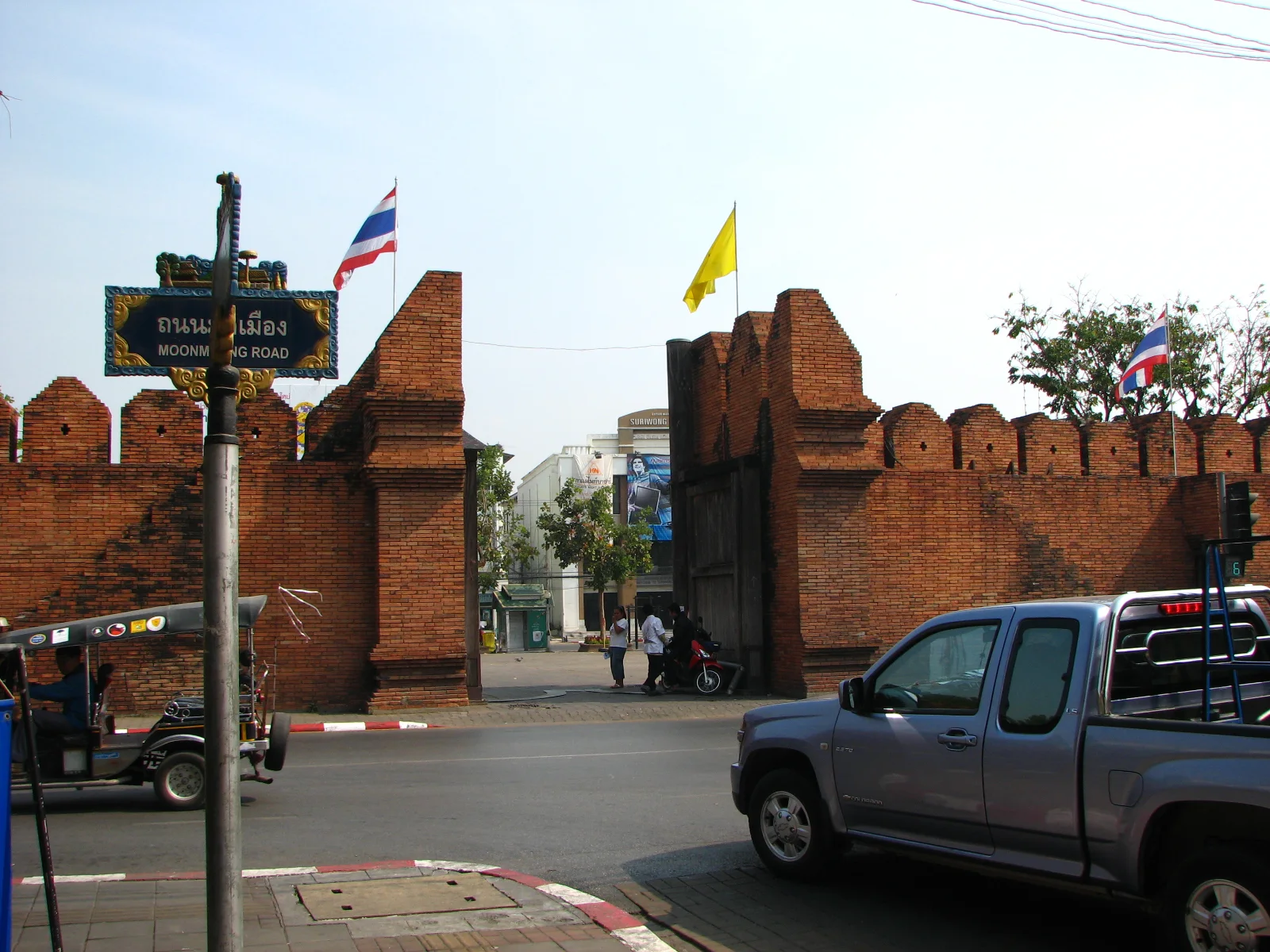
Tha Phae Gate in Chiang Mai’s old city
Tha Phae Gate, Chiang Mai. Photo by Rinto Jiang, public domain.
2

Book the trial stay

1. Find a real home base. Start with Thailand Navigator rental search or accommodation that accepts your exact dates. Choose housing close to the long-term building type and location you would consider. Ask what’s included, how utilities are calculated, which access rules apply and how cancellations work.

2. Price the whole month. Use a written quote for rent and separate out a refundable deposit, water, power, internet, housekeeping and any fee for check-in, moving or transport. Find out whether the regular lease terms differ from the trial rate.

3. Check documents and the route out. Confirm the entry permission you will use, travel medical cover and how your accommodation handles registration. For a later move, review retirement visa options separately. Keep a flexible departure or alternative stay if the first area proves impractical.

3

Run the four-week trial

  • Week 1 · Establish a routine
    Buy groceries, get your phone working, test the internet, do laundry and find the nearest pharmacy. Log spending and transit from the front door. Ask how to handle repairs.
  • Week 2 · Test constraints
    Walk and ride at the times you would normally leave. Try a return after dark, a hot afternoon and a wet-weather option when conditions allow. Time both directions and include waiting.
  • Week 3 · Test housing and care
    View at least two actual long-term units. Verify a relevant clinic, any prescriptions or follow-up the provider can handle, and a backup facility. Ask your insurer how those visits would be paid.
  • Week 4 · Compare and decide
    Review the four weeks of spending and repeat the journey that felt hardest. Get written long-term lease and insurance figures. Compare with a second shortlisted area if a requirement still fails.
4

Test healthcare transport and access

Write down which care you use now, how often you need it, which speciality and medications are involved, which language you need and who can accompany you. Ask a suitable clinic which services are available and what records it needs. Get an actual coverage answer for that facility and service. See the Hua Hin hospital insurance guide for examples of billing questions.

Do a non-urgent practice journey to the relevant entrance. Test the path from your front door, lift and gate to the transport pickup or station, then from the drop-off to reception. Measure turning room or door width if needed, and check crossings, kerbs, gradients, shade, seating and toilets. Ask what happens when a lift is closed or a ride is delayed. Write down a backup if you could not complete the route on your own.

Example in Hua Hin. From the exact room you are considering, go to a grocery shop and back during an ordinary afternoon. On another day, check the route to the clinic entrance and confirm a suitable ride for the way home. Record queue time, heat and road crossings separately. If the trip feels manageable only with help, price that help and check when it’s available.

5

Check season and longer-term costs

Compare the month you visited with the parts of the year you expect to live there. Check local heat, rain or air quality history and ask how the building handles moisture, hot afternoons, outages and repairs. If one period could change your decision, schedule a shorter second test during it or ask someone you trust to check the exact route and unit.

Make a separate long-term sheet using real quotes for housing and electricity, daily transport, routine care, insurance, food and occasional trips home. List one-off cash for moving and any refundable deposits separately. Check regular costs against your actual four-week spending and set aside money for changes you’ve seen in practice.

6

Decide whether to stay longer

Score the actual building and neighbourhood on affordability, access, routine care, transport, comfort and social life. Record a fact for each score, such as a timed walk, a written rent offer or a confirmed clinic appointment process. If a requirement fails, resolve it with a verified change or try the next area with the same tests.

Before a longer commitment, review the current stay requirements, read the exact lease and confirm payment and insurance. Go back to the retirement location comparison with your notes to choose the next place to test.

Sources and review

Sources used for this guide

Sources are reviewed regularly so important changes can be reflected in the guide.

Suggest content

Help us improve Thailand Navigator.
What would you like to do?

Your account, current page and submission date are recorded automatically.

Community experiences

Reviews of Where to Retire in Thailand: How to Plan a Trial Stay

Read first-hand experiences, then share your own.

Write a review
Loading member reviews…
Reviews reflect members’ own experiences.

Want to write a review?

Closing this prompt will not remove your rating.

Choose language

Select the language used across Thailand Navigator.

You can change this any time from the language menu.