

Ask Navigator
Which destinations work well for a rainy-season holiday?
For a Thai rainy-season holiday, Koh Samui is a strong beach shortlist for May–September, while Bangkok and Chiang Mai work well when food, culture and flexible sightseeing matter more than uninterrupted sunshine. Phuket can still suit a resort-and-town holiday, but Andaman beach swimming and boat excursions are less dependable during the southwest monsoon. October–December needs a different comparison: Samui and the lower Gulf can become wetter while the Andaman coast generally moves towards its drier season. Choose by travel month and by what you would enjoy if outdoor plans were cancelled.
Assumptions for this answer
- You are comparing destinations across Thailand rather than asking about current weather at a booked resort.
- Seasonal guidance is assessed as of 8 November 2026; no live forecasts, flood warnings or attraction-opening information have been supplied.
Start with the month, not a nationwide rainy-season label
General guidanceThailand’s southwest monsoon generally runs from around mid-May to mid-October, affecting much of the country. However, the southern coasts do not follow identical patterns. Phuket, Krabi, Ko Lanta and Phi Phi face the Andaman Sea; Koh Samui and its neighbouring islands sit in the lower Gulf of Thailand. May–September can therefore be worth comparing for a Samui beach holiday when the Andaman side is wetter. Later in the year, the northeast monsoon can bring moisture to the southern east coast into December, even as northern and central Thailand become cooler and drier. A November holiday should not simply copy an August island recommendation. Around November–April, Phuket and Krabi generally become stronger beach candidates, although the transition varies between years. Rainy season does not mean uninterrupted rain, but neither does it guarantee a convenient shower followed by sunshine. Prolonged wet spells occur. Rainfall, safe swimming, road access and offshore conditions are separate questions: a pleasant hotel afternoon does not establish that a boat excursion is safe.
Destinations that make practical rainy-season bases
General guidanceThese are choices for different holiday styles, not a ranking of guaranteed dry weather. Choose the destination whose alternatives you would actually enjoy, rather than relying on a single weather-sensitive highlight.
| Destination | Who it suits | Why it works | Main compromise |
|---|---|---|---|
| Koh Samui | Beach and resort travellers comparing May–September | A useful lower-Gulf alternative, with dining, wellness and cultural activities beyond the beach. | Not rain-free; October–December can be a wetter period. Offshore outings remain conditional. |
| Bangkok | Food, museums, shopping and city culture | Many activities can be moved indoors, and neighbourhood plans can change without abandoning the holiday. | Heavy downpours can disrupt roads and make exposed sightseeing uncomfortable. |
| Chiang Mai | Northern food, temples, crafts and a slower city stay | An urban base lets you alternate cultural visits with optional countryside excursions. | Mountain viewpoints, trails and roads need separate checks; the city forecast is not enough. |
| Phuket | Mixed-interest groups and resort stays | A substantial island with an airport, mainland road access and alternatives to beach days. | During the southwest monsoon, west-coast swimming and marine excursions may disappoint. |
| Krabi: Ao Nang or Krabi Town | Travellers happy with scenery, food and flexible mainland exploring | A mainland base avoids making every change of plan depend on an island transfer. | Railay and offshore highlights still involve boats; this is not an all-weather island-hopping choice. |
| Kanchanaburi | History and river scenery with optional nature outings | Museums and town-based activities provide alternatives when outdoor access changes. | Waterfalls, rivers and forest excursions require current local checks after heavy rain. |
For a beach holiday, favour a resilient base
General guidanceThe strongest wet-season beach choice is often the place where the holiday still works without swimming or an excursion. Accommodation location and access matter almost as much as the coast.
Koh Samui: the first beach comparison for May–September
Compare established areas such as Chaweng, Lamai and Bo Phut if restaurants and services nearby are important. A secluded resort suits travellers content to stay on property, but ask how evening transport works during heavy rain. Choose the hotel for its usable facilities and location, not just its beach photograph. Treat Ang Thong and other offshore trips as optional additions rather than the holiday’s sole purpose.

Phuket: choose it for variety, not dependable monsoon swimming
Phuket can work for families or mixed-interest groups willing to combine resort time with Old Town, food and indoor activities. Its airport and mainland bridge reduce dependence on sea transfers. Stay near the activities you expect to use: a remote beachfront hotel is less convenient if swimming is prohibited and every alternative requires a drive. Follow beach flags even when the sky clears.

Krabi: stay on the mainland if flexibility matters
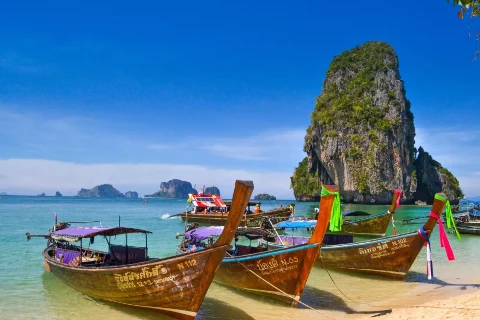
Ao Nang offers a coastal visitor base; Krabi Town suits travellers prioritising town life over walking straight onto a beach. Railay is attractive, but its boat access makes it a different proposition. Phi Phi and quieter island stays are less suitable when the main objective is avoiding weather-dependent logistics. Confirm actual park access separately from whether an inhabited island can be reached.
For culture and food, cities are often the easier choice
General guidanceCity-based holidays tolerate changing weather better than trips built entirely around beaches, viewpoints or trails. Keep outdoor visits movable rather than assigning every attraction an unchangeable slot.
Bangkok: strongest when indoor alternatives are part of the appeal
Choose Bangkok if museums, food, shopping and neighbourhood exploration genuinely interest you. Group sights geographically and keep a nearby indoor alternative for exposed temple or market visits. Accommodation near rail transport can reduce reliance on rain-delayed road journeys, although station access still matters. Do not walk through floodwater to preserve a sightseeing plan.
Chiang Mai: culture first, mountains optional
The old city and surrounding urban neighbourhoods suit temple visits, northern food, craft activities and cafés between showers. Use mountain excursions as adjustable extras, not guaranteed clear-view days. Doi Inthanon, Chiang Dao and remote village stays need their own access and forecast checks. A city hotel offers more alternatives than a countryside property whose main attraction is outdoor activity.

Nature destinations work best when rain is acceptable, not merely tolerated
General guidanceKanchanaburi is a sensible compromise if you want river scenery and forest access alongside museums and history. Stay close to the town’s services if you want alternatives; an isolated riverside property creates a more weather-dependent holiday. Do not assume waterfalls are safer or more accessible because the landscape looks lush. Khao Sok can suit travellers deliberately seeking rainforest atmosphere, but it is not an escape from wet weather. The park-entrance area and Cheow Lan Lake are separate bases. Before committing, ask the accommodation or licensed operator which walks and water activities are permitted, what replaces a cancelled outing, and whether you would still enjoy the stay without those activities. Avoid itineraries whose success depends on cave entry or a particular trail remaining open. Likewise, historical parks such as Ayutthaya and Sukhothai are worthwhile for enthusiastic history travellers, but substantial sightseeing is exposed. They are less convincing rainy-day substitutes than a city with several indoor options.
Before booking, test whether your chosen destination will still work
General guidanceUse seasonal patterns to make the shortlist, then use current information to decide what is sensible for your actual dates.
Check the right regional forecast
Use tmd.go.th for the destination forecast and active warnings; add the relevant marine forecast for a coastal stay. Do not use Phuket’s outlook as a substitute for Samui’s, or Chiang Mai city conditions for a mountain route.
Check access, not just whether the hotel is open
For flood concerns, consult disaster.go.th, local-authority notices and the transport provider. For parks, confirm the specific trail, waterfall, cave or marine site. Ask the hotel whether its approach road and nearby dining options remain practical during heavy rain.
Read cancellation terms against your actual priorities
An operating hotel does not guarantee swimming, an open national park or a usable excursion. Check which payments are refundable, what a weather cancellation covers and who arranges an alternative. Do not assume rainy-season accommodation is automatically cheaper or better value.
Apply the no-excursion test
Imagine that the main outdoor outing cannot happen. If the remaining hotel, food and local activities still sound appealing, the destination is a good fit. If not, change the base or travel month rather than relying on a favourable seasonal average.
TN pages linked in this answer 4
Supporting sources and related pages are identified where they appear. Planning estimates use AI knowledge and stated assumptions.
AI-assisted answer with relevant TN links ·
This answer combines AI knowledge with relevant TN information where available. Planning estimates are approximate, not live quotes. This answer has not had human editorial review. Check important current details before booking or acting.
Community comments 0
Share an experience, ask a follow-up, or suggest a correction.
Community contributions are not verified and do not change the AI answer.
Join the conversation
Everyone can read. Sign in to comment, reply, or mark comments helpful.
Ask Navigator
Your question
Which destinations work well for a rainy-season holiday?

A little Thailand know-how is on its way.
We’re putting together your answer with useful Thailand Navigator links.
This is taking a little longer. You can keep waiting or return to Your questions later.
You can leave this page. Your answer will be saved in Your questions.
Check for your answer →