
ThailandNavigator
Thailand Guide

Bangkok by BTS, MRT and River Boat

Which Bangkok train or boat to take, how to pay and change systems, which exits to use, and when a car makes the journey easier.

Reading time
7 min read
Reviewed
Reviewed
Editorial owner
Thailand Navigator Editorial Team
Context
Bangkok
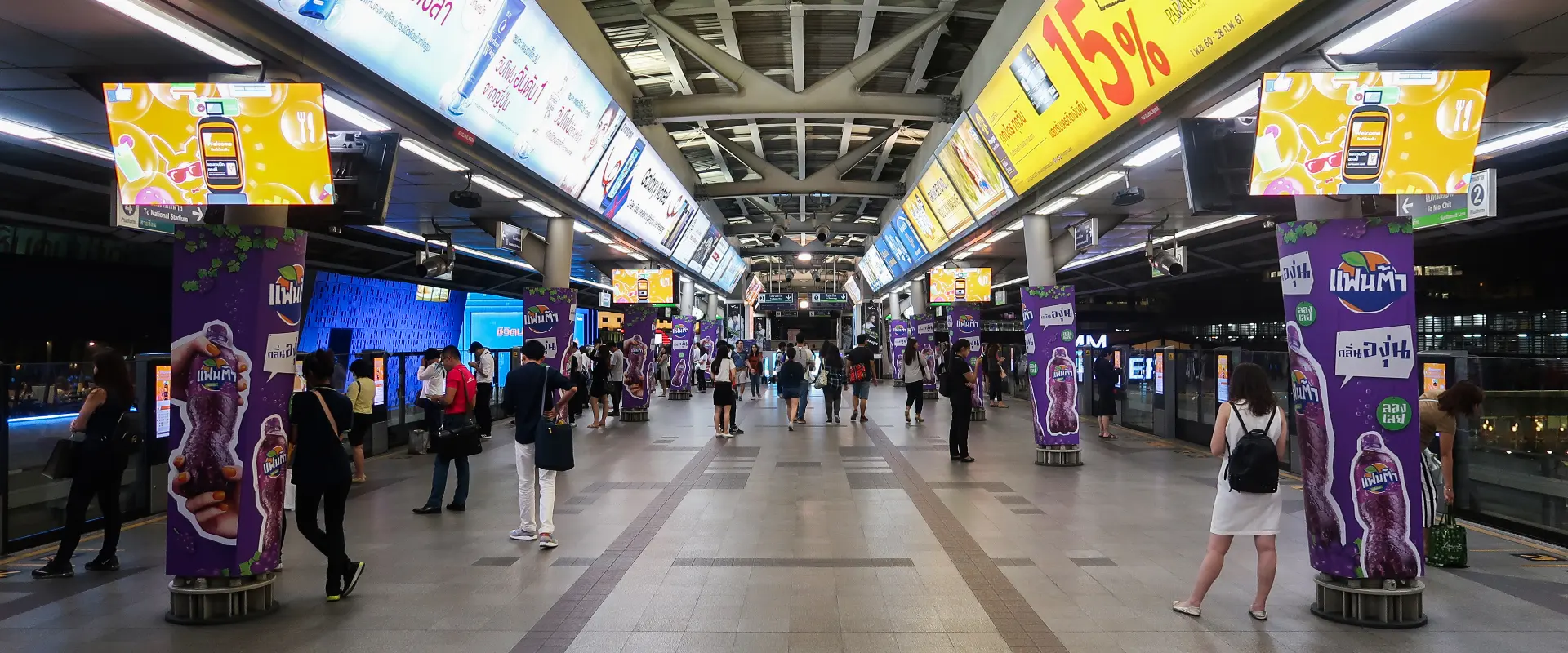
Passengers on the upper platform at Bangkok’s elevated BTS Siam interchange
BTS Siam upper platform. Wikipedia user Wpcpey, CC BY-SA 4.0 (https://creativecommons.org/licenses/by-sa/4.0/). Cropped and resized. Original on Wikimedia Commons.
Operator timetables, fares, pier stops and lift availability can change. Check your actual route and direction before travel and before the last leg home.
Quick answer

Pick the line from the destination back

Use the BTS for Siam and much of Sukhumvit, the Blue Line MRT for Chinatown and the Old City, and the river boat when the destination is beside a served pier.

BTS Skytrain Siam connects the two main BTS lines. Use a single ride or a Rabbit Card.
MRT Blue Line Sukhumvit is the Asok interchange. Sanam Chai serves the Old City.
River boats Change from BTS at Saphan Taksin Exit 2 for Sathorn Pier. Ask for a named stop.

Find the route, fare and exit

Choose the option that best matches your situation to see the most relevant part of this guide.

In Bangkok, search for the nearest useful station or pier from both ends of the trip. A station’s exit can matter as much as the line, especially where a wide road, a flyover or a long interchange separates you from the venue.

1

Choose the system for your trip

  • BTS Skytrain
    Use the elevated system for Siam, much of Sukhumvit and the connection to the river. Siam (CEN) connects the Sukhumvit and Silom lines inside the BTS system. Follow the terminal shown for your direction, then check your stop on the platform map.
  • MRT Blue Line
    Use the subway for Yaowarat in Chinatown, the Old City and stations such as Sukhumvit. If the map shows a loop, read the next two stops on the board before you board. The right train from Sukhumvit to Sanam Chai goes first to Queen Sirikit National Convention Centre, then Khlong Toei.
  • Chao Phraya river boats
    Choose the boat if both your boarding and destination piers are served at your time. That works well for Wat Arun and the Grand Palace area. Check the service name, direction and stops together, then check the later ride back.

The Airport Rail Link and SRT Red Line have separate stations, platforms and ticketing. For trips with a flight attached, check the Bangkok airport transfer guide for both airports.
2

Pay and change trains

1. On BTS, start with a single-journey ticket if you will make a few rides. Select your destination at the machine and pay using a method displayed on that machine. Carry baht coins and small notes for a visitor-friendly backup. If you’ll ride repeatedly, ask the BTS office about an adult Rabbit Card. BTS lists a ฿120 issue fee and a ฿100 minimum when adding stored value. Those two amounts serve different purposes. Take your original passport for registration and check current terms at the counter.

2. On the Blue Line, use a single-journey token or a supported contactless card. For a token, select the stop, tap the token to enter and insert it at the exit gate. If using contactless, BEM lists eligible Visa and Mastercard contactless credit cards from domestic and international issuers, with narrower eligibility for debit cards. Use one card per passenger and the same physical card at entry and exit. Remove it from your wallet before tapping. If the reader rejects it, buy a token. BEM discontinued the legacy MRT and MRT Plus cards from June 2026.

3. Allow time and a separate fare at a BTS-to-MRT transfer. From BTS Asok (E4), leave the BTS fare gates, follow the MRT signs to MRT Sukhumvit (BL22) and enter the MRT separately. BEM lists Exit 3 as the Asok connection. Plan around 10–15 minutes for walking and gates until you know the transfer. Siam’s change between the two BTS lines stays within BTS.

Work out a day’s fare before buying a pass. Look up each rail leg by exact origin and destination on the relevant operator’s fare screen. Add the two journeys separately if you return by a different network, plus an optional boat ticket. An individual rail fare changes with the journey. If travelling as a group, count each passenger and compare the total with the actual vehicle quote, including tolls where relevant. See the cash and card guide for small notes and overseas card fees.

3

Board the right boat

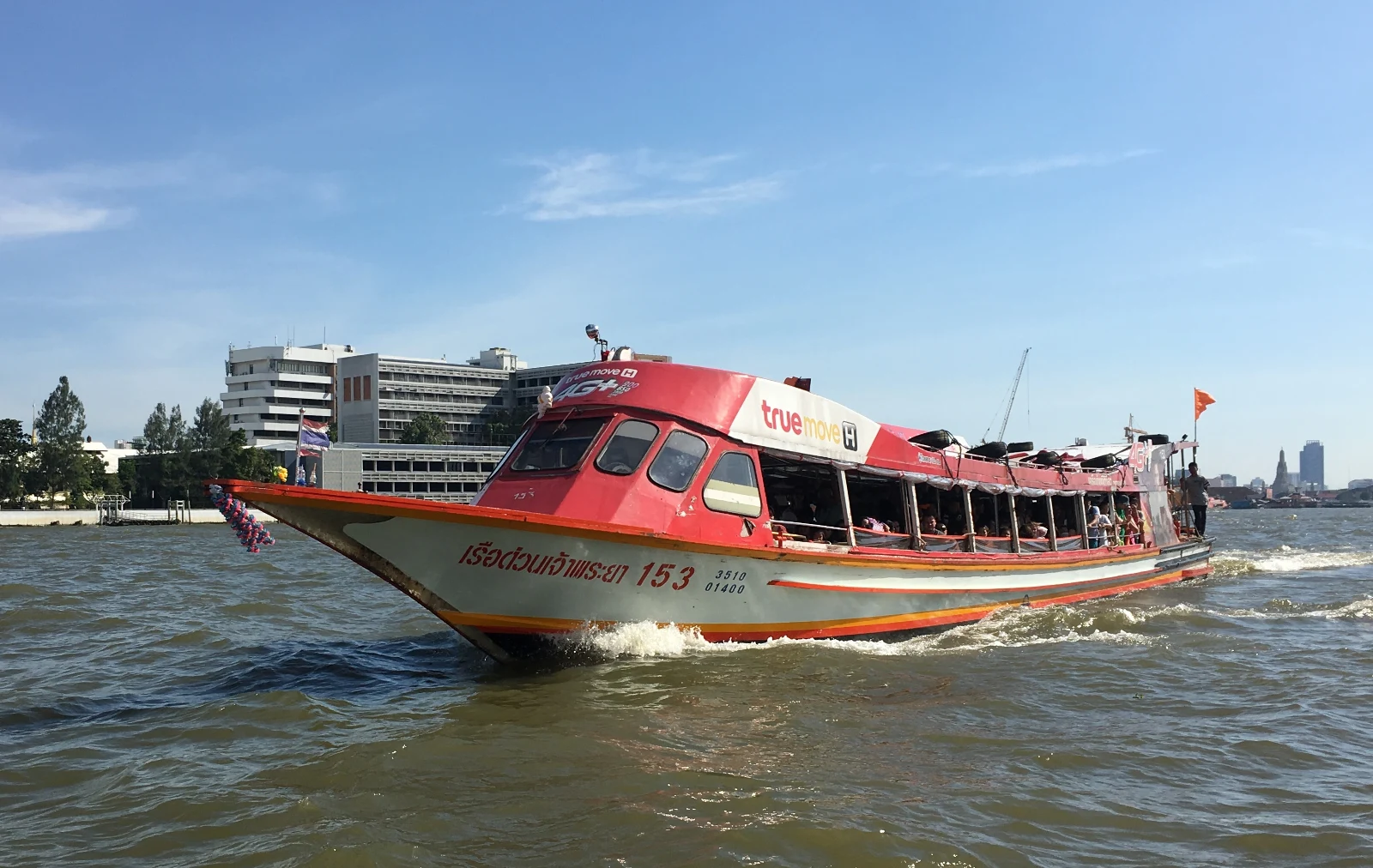
An orange-flag Chao Phraya Express Boat heading upriver in Bangkok
An orange-flag express boat heading upriver. Slleong, CC0 1.0 (https://creativecommons.org/publicdomain/zero/1.0/). Resized. Original on Wikimedia Commons.
  • Orange-flag express boat
    The river commuter service runs a named stopping pattern, with different schedules by flag. The operator lists ฿19 flat fare for orange-flag service in its November 2026 schedule. Service patterns vary by day. Ask for the actual stop and next departure at the pier, especially on a weekend or public holiday.
  • Blue-flag tourist boat
    The hop-on hop-off operator publishes its own stop list and timetable. At Sathorn Pier, look for the blue ticket booth and ask for the price of your single trip and the day pass. Check that the departure serves Wat Arun’s tourist boat pier if that is your destination. Buy the pass if you will use enough eligible rides within its validity.
  • Local cross-river ferries and venue boats
    For a short river crossing, use the dedicated pier and line shown on the day. The local crossing near Tha Tien and Wat Pho Pier serves the Wat Arun area separately from the longitudinal sightseeing service. Venue boats can have their own berth, ticket or cutoff. At a shared pier, say the exact destination before paying.

Read the pier name and the side of the river before boarding. At a floating pier, listen to staff before crossing the gap onto the boat. If you need level boarding, check the actual ramp, gangway and access at both ends using the accessible travel guide. Water level and boat type can change what works.

4

Two routes to follow

Asok to Museum Siam, with a Chinatown option

1. Start at MRT Sukhumvit. Follow the Blue Line toward Sanam Chai and Lak Song via Si Lom and Hua Lamphong. Buy a ticket to Sanam Chai or tap in with a supported card. Allow about 30–45 minutes from entering the MRT station to reaching Museum Siam, including waiting and walking.

2. Leave at Sanam Chai Exit 1. Sanam Chai (BL31) Exit 1 serves Museum Siam, Wat Pho and the palace area. BEM lists lifts at Exits 1 and 3. Exit 4 is marked for Pak Khlong Talat flower market and Exit 5 for Rajini Pier. Pick the exit by your destination and access needs.

3. Use Wat Mangkon for a Chinatown stop. It’s two Blue Line stops back toward Sukhumvit from Sanam Chai. At Wat Mangkon (BL29), use Exit 1 for Yaowarat Road, or Exit 3 for the temple. For the next part of the trip through an exit gate, budget a new fare.

Siam to Wat Arun by Skytrain and boat

1. At Siam, take the Silom Line toward Bang Wa. Get off at BTS Saphan Taksin (S6) and follow Exit 2 to Sathorn Pier under the bridge. Keep 10–15 minutes for the train exit, pier approach and ticket queue.

2. Take a northbound tourist boat that stops at Wat Arun. The operator’s published table shows a 10:30 departure from Sathorn reaching Wat Arun at 10:50. Treat this as a worked timetable example and check the day’s sign before relying on it. For that departure, plan to be at the ticket counter by about 10:15. Allow about an hour from stepping into BTS Siam to reaching Wat Arun when connections line up, with up to another boat interval if you miss it.

3. Check the reverse journey while you’re at the pier. Ask where the southbound return boards and when the last one leaves. For the Grand Palace area across the river, check today’s cross-river boarding, or use a service showing Tha Chang (N9) after Wat Arun. From there, follow signs for the palace visitor entrance.

5

Plan the late trip or take a car

  • Late dinner or a show
    Check the last train from your exact station in your direction and the time of the onward connection. For example, BEM’s 17 November 2026 schedule listed Wat Mangkon’s last departures at 00:12 toward Lak Song and 23:28 the other way. Plan for the connection and station access as well. If you might miss either, choose an identifiable taxi pickup point before the show.
  • Luggage, young children or limited walking
    A door-to-door car can be easier when the rail route crosses stairs, long station corridors and pavements. Check space for every passenger and bag, any child seat needs, and the ability to carry a wheelchair. Use exact entrances at both ends.
  • Heavy rain or peak traffic
    A rail trunk leg and short road pickup can work when traffic is slow and the destination sits beyond a comfortable walk. Compare door-to-door time for the current trip, including access to the station and vehicle wait. Use the taxi meter or confirm the app’s offered price and how tolls are charged.

Save the stop name and local spelling, entrance pin, return time and an alternative way home on your phone. Use the three-day Bangkok itinerary for more journeys grouped around nearby sights.

Sources and review

Sources used for this guide

Sources are reviewed regularly so important changes can be reflected in the guide.

Suggest content

Help us improve Thailand Navigator.
What would you like to do?

Current location: Bangkok

Your account, current page and submission date are recorded automatically.

Community experiences

Reviews of Bangkok by BTS, MRT and River Boat

Read first-hand experiences, then share your own.

Write a review
Loading member reviews…
Reviews reflect members’ own experiences.

Want to write a review?

Closing this prompt will not remove your rating.

Choose language

Select the language used across Thailand Navigator.

You can change this any time from the language menu.