

ThailandNavigator
Thailand Guide

Moving to Thailand: Your First 30 Days

A week-by-week plan for temporary accommodation, arrival paperwork, a phone and payments, and the decisions to test in person before committing.

Reading time
8 min read
Reviewed
Reviewed
Editorial owner
Thailand Navigator Editorial Team
Bangkok’s modern skyline beside Benjakitti Park
Benjakitti Park, Bangkok. OPK-Photography, CC BY-SA 4.0. Cropped.
Entry, work and extension rules depend on your permission to stay. Check your case with Thai immigration or the relevant Thai embassy or consulate.
Quick answer

Get your essentials working and give yourself time to choose a home

Book flexible accommodation and plan the first ride before you fly. In your first three days, check your permission to stay, save the accommodation report details, and get a phone and a backup way to pay. Use the next two weeks to try real commutes before signing a lease.

Prepare to arrive Check entry documents, the arrival card and how to reach your first address.
Get online and stay organised Test calls, payments and access to health care. Record every immigration date.
Test everyday life Walk from prospective homes to transit, shops and healthcare before signing.

Plan your first month

Choose the option that best matches your situation to see the most relevant part of this guide.

Use this plan if you are arriving to work, study, live with family, retire or try a longer stay. Start with essentials that affect every arrival. Make the bigger decisions once you have checked your permission to stay, tested a normal week, and know what your household needs. The Moving to Thailand hub has guides for the decisions that follow.

1

Before departure

1. Confirm the basis of your stay. Match the plan to your citizenship, visa or other permission, purpose, and entry dates. If taking up employment, coordinate with the employer on immigration status, permission to work and the date you can begin. Check the Thailand visa guide and work permit guidance, then confirm your own case with the issuing authority.

2. Book a first address and the arrival ride. Choose temporary accommodation within practical reach of the places you need to be. Check late check-in, cancellation, luggage access, internet, and whether the property handles the TM.30 address report. Keep the exact property address and phone number accessible offline. Leave yourself room to extend temporarily while you view homes.

3. Complete the arrival card in the official window. Where required, submit the Thailand Digital Arrival Card online no more than three days before the arrival date, including the arrival day. It is free through Thai Immigration’s official TDAC service. Have the passport, travel details and first accommodation address ready. Keep the confirmation where you can access it without signal.

4. Bring payment and health backups. Use funds you can access immediately. Pack a separately stored backup card, a way to get Thai baht and instructions for restoring access to your home bank. Take your insurance contact and essential medical records. Check Thai rules for bringing any prescribed medicines that have special controls.
2

Days 1 to 3

1. Check your entry record before making plans. After entry, record the date your stay is authorised through from the immigration record or stamp. Save the evidence. If the record looks inconsistent with your documents, check with Immigration promptly before planning a lease, work start or travel. The visa’s validity to enter and the date you may stay through serve different purposes.

2. Get to your accommodation using the route you planned. If landing at Suvarnabhumi Airport, compare the Airport Rail Link with a taxi or pickup to your actual address. A rail journey can make sense when the last leg is simple. A pickup can suit a late arrival, heavy luggage or children. Confirm which Bangkok airport your ticket uses.

3. Confirm the address report with your host. The applicable owner, house-master, possessor or hotel manager generally handles the TM.30 report within 24 hours of arrival at the residence. Ask whether it was filed and what proof or reference the property can supply. Keep it if you’ll need to show your address. If moving again, ask the next host and your local immigration office what action that move calls for.

4. Test your phone before relying on it. Use roaming or a travel eSIM initially if it suits your phone. If you need a Thai number, choose a provider or shop that can register it against your passport. Test calls, texts and ordinary mobile data. Keep your original number active if your bank, employer or family uses it. A data-only eSIM may give you internet without a local number for calls or SMS.

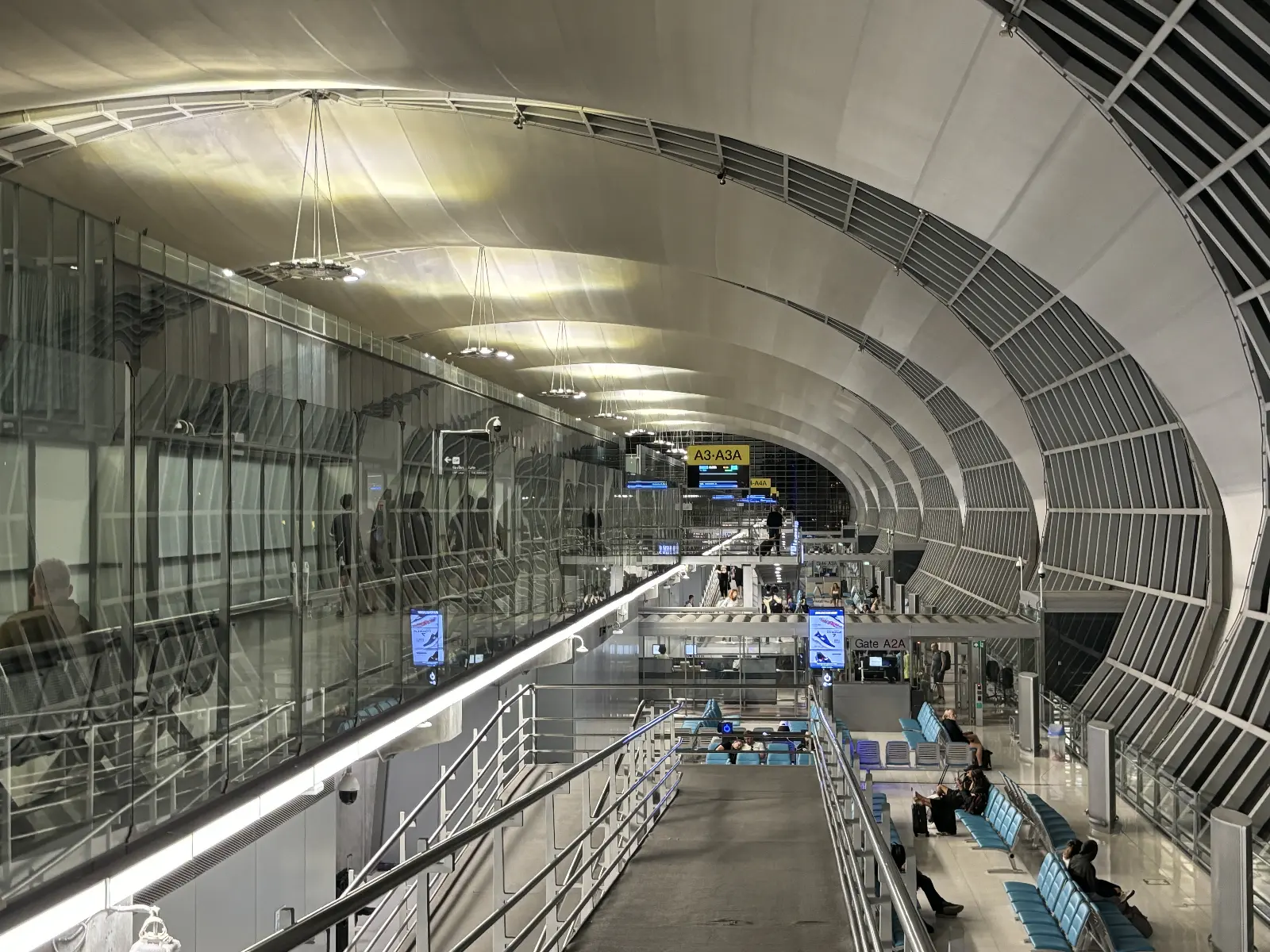
Concourse A at Bangkok Suvarnabhumi International Airport
Concourse A, Suvarnabhumi Airport, February 2024. MNXANL, CC BY-SA 4.0. Resized.
3

Days 4 to 7

  • Run the weekday journey
    Travel from your temporary address to the workplace, school or neighbourhood you’re considering at the actual time you’ll go. Record walk, wait, transfer and return time. On different days try a grocery trip and returning after dark. The Thailand transport guide explains common options.
  • Make a basic weekly spending plan
    Track lodging, meals, transport, phone and healthcare separately in baht. Compare the routine cost to the way you actually lived in week one. Use the Thailand cost-of-living guide to see common categories. Keep enough accessible for the next lodging payment and an unexpected change.
  • Know where you’ll seek care
    Save your insurer’s assistance number and the nearest suitable provider. Confirm whether your cover applies from arrival, how you pay, and what needs approval. Start with the health insurance guide. In Bangkok, use the hospital guide by location and care needs to identify the actual campus.
  • Solve urgent work or family dependencies
    If you need to start a job, meet a school deadline or arrange ongoing treatment, ask the organisation which original documents, translations and permissions they require. Let those confirmed dates determine when to move neighbourhood or schedule other appointments.
4

Days 8 to 14

1. View homes while you still have somewhere to stay. Use Thailand Navigator rentals and shortlist homes near the journeys you tested. In Bangkok, the condo rental guide walks through viewing, comparing total costs and checking the lease. Visit at least once at the time you’ll regularly be home. Test mobile signal, building access, running water and who handles repairs. For a remote worker, ask about fixed internet installation and available speeds at that unit.

2. Check the costs and documents before a deposit. Confirm who is entitled to let the property and that the contract identifies the unit, payment dates and deposit, the meter or utility rates, allowed furniture or pets, and early exit conditions. Confirm the owner or manager’s process for the address report and what proof you can obtain for banking or other admin. Request a receipt for any payment and retain your inventory and photos.

3. Set up banking when your branch confirms eligibility. If a local account is important, contact the branch you can visit. Give them your immigration and residence situation and ask what original documents they accept, whether they need a local address or supporting letter, and whether your account would support the mobile app and services you need. Bangkok Bank says foreign customers open an account in person and may need additional documents. Keep your backup cards and cash while you arrange this.

If a shop uses QR payment. Check whether your app and the merchant’s Thai QR provider participate in a Bank of Thailand cross-border arrangement. If your app cannot pay it, use a card where accepted or carry some Thai cash. Check the payee, fee and currency before confirming payments.

5

Days 15 to 30

  • Put immigration dates on a calendar
    Record the end of the permitted stay and any applicable appointment or reporting deadline. If you will be staying for more than 90 consecutive days, check the TM.47 reporting process and due date. Consult Immigration on whether you need a re-entry permit before booking travel outside Thailand. Address reporting, a stay extension and re-entry permission are separate procedures.
  • Make the transport decision after real journeys
    If your week works with the local transport options, keep using them while you settle. If you need to drive, check which licence and vehicle category are valid for you and what your rental and insurance cover. Use a car only once the paperwork and practical routes make sense.
  • Settle in without buying everything at once
    Set up what you need to sleep, work and handle daily tasks. Wait on furniture, a vehicle, school transport upgrades and an annual gym or internet contract until you know the lease and how often you’ll use them. Ask about cancellation and refund terms on anything paid in advance.
  • Track days and financial records if staying long term
    Keep a simple calendar of days in Thailand and copies of pay and transfer records. Thai tax residency can depend on reaching 180 days in a tax year. Get advice on your specific income, remittances and treaty questions if your move makes those relevant.
  • If you’re still choosing a city
    Give the neighbourhood a real trial before committing. The retirement trial-stay guide explains how to compare ordinary days. If Hua Hin is on your shortlist, the car-free Hua Hin guide shows what can be done on foot or by shared ride.
6

What to carry and what to keep offline

  • Entry and stay
    Passport, visa or entry approval when applicable, arrival card confirmation, current entry record and emergency contacts.
  • Housing and address
    First address and phone in Thai or in a map pin, booking and payment receipt, TM.30 reference if available, and later the lease, inventory and payment records.
  • Work, family or study
    The originals required for your specific process, such as employer or school letters and family documents. Ask which translations or legalisations are actually accepted before paying for them.
  • Health and banking
    Insurance policy number and contact, prescriptions or essential care summary, accessible backup payment, and documents the intended bank branch asks for.

Keep sensitive copies in a secure place you can access while offline. Bring originals only where the confirmed process requires them and keep a note of any documents submitted to an authority or organisation.

7

Examples and common questions

  • I start work a week after landing
    Ask your employer to set the document and start-date sequence before your flight. Book temporary housing near the workplace or convenient transit, and test the trip during the working week. Leave lease and banking commitments until the relevant paperwork and branch requirements are clear.
  • I’m moving with children
    Start with the time it takes to reach school, what temporary accommodation allows, access to meals and medical care, and how a late arrival works. Time the school journey before choosing a house. If the new school has document deadlines, do those before furniture and other home setup.
  • I’m retiring and want to stay flexible
    Begin with housing you can extend and check both healthcare access and any time-sensitive retirement visa requirements. If a confirmed immigration process needs bank evidence by a set date, sort that out early. Otherwise, use the trial stay to see whether the location works before moving your household.
  • Should I arrange everything before arrival?
    Arrange what affects entry, first lodging, health needs, an accessible way to pay and any fixed start date. Try the commute and inspect the home before committing to a long lease, furniture or a vehicle.
Sources and review

Sources used for this guide

Sources are reviewed regularly so important changes can be reflected in the guide.

Suggest content

Help us improve Thailand Navigator.
What would you like to do?

Your account, current page and submission date are recorded automatically.

Community experiences

Reviews of Moving to Thailand: Your First 30 Days

Read first-hand experiences, then share your own.

Write a review
Loading member reviews…
Reviews reflect members’ own experiences.

Want to write a review?

Closing this prompt will not remove your rating.

Choose language

Select the language used across Thailand Navigator.

You can change this any time from the language menu.