
ThailandNavigator
Thailand Guide

Renting a Motorbike in Thailand — Licence, Insurance and Deposit Checks

Check motorcycle licences, IDPs, medical and vehicle insurance, passport deposits, rental contracts, bike condition and damage disputes before hiring in Thailand.

Reading time
7 min read
Reviewed
Reviewed
Editorial owner
Thailand Navigator Editorial Team
Context
Thailand
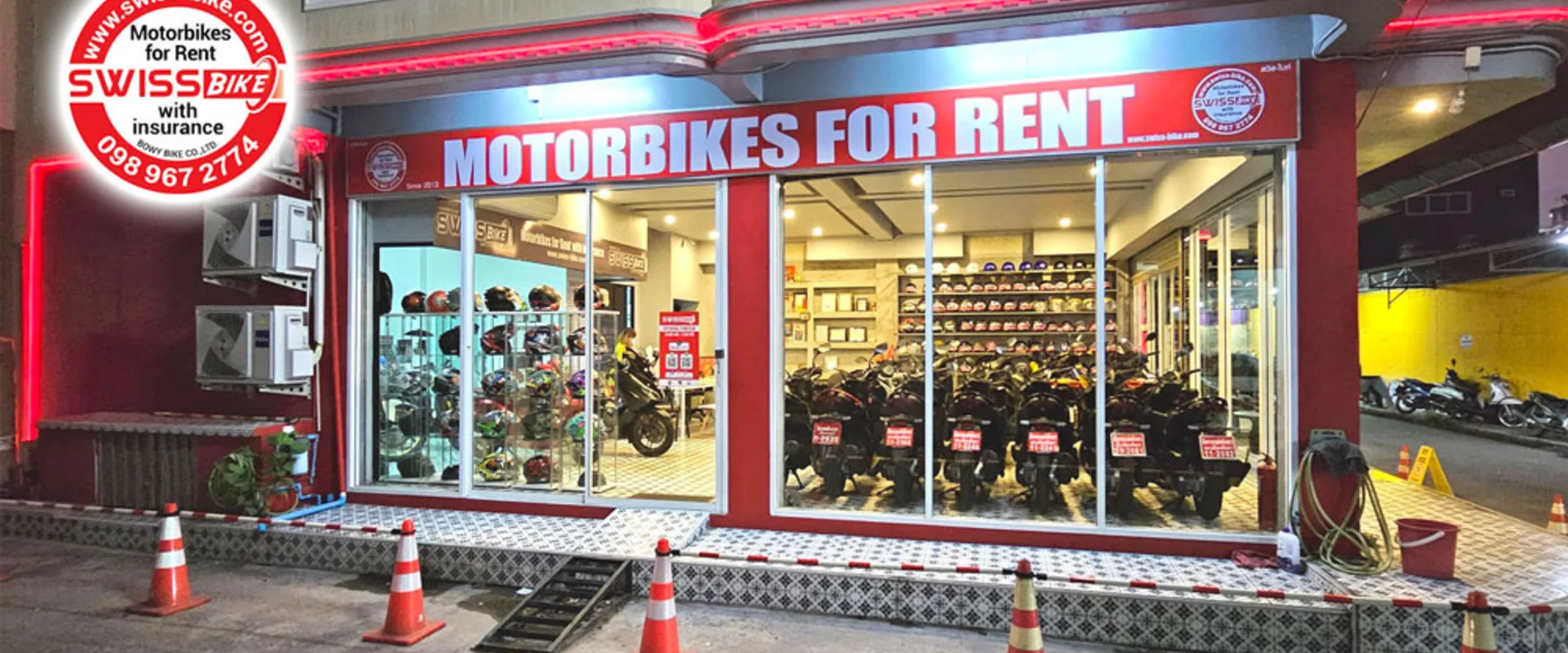
Motorbikes and helmets inside the signed Swiss Bike rental shop in Pattaya
Motorbikes and helmets at Swiss Bike in Pattaya. Check the written rental terms and your own insurance before hiring.
Confirm the recognised licence and insurance for your own nationality, vehicle and booking. Rent only if you are competent, properly licensed and suitably covered.
Quick answer

Check your licence and insurance before choosing a bike

A rental handover does not establish legal entitlement or cover. Confirm the written agreement, keep your passport and record the vehicle condition.

Motorcycle category The correct entitlement for the vehicle
Separate cover Your injuries, vehicle damage and liability
Keep your passport Agree a documented alternative deposit

Find the help you need

Choose your situation and follow the relevant steps.

Rent a motorbike only if you are already competent to ride, have the correct recognised motorcycle entitlement and can confirm suitable insurance. A shop handing over a scooter does not establish that you are licensed or covered. If any of those checks fails, choose another form of transport.

1

Four checks before paying

1

Licence and riding experience

Check the motorcycle category on your licence and the documents Thailand recognises for your nationality. A car-only entitlement is insufficient for a motorcycle. An International Driving Permit supports the underlying licence and does not add a motorcycle category.

2

Your medical insurance

Ask your travel insurer about riding the exact engine size, as a rider or passenger, for the length of your trip. Check licence, helmet, alcohol and activity conditions. Get an answer tied to your policy rather than relying on a rental clerk's reassurance.

3

The vehicle's insurance

Ask to see the actual policy and rental-use conditions. Establish what covers injury, damage to the bike, theft, third-party property and your liability. “Insurance included” is too vague to determine the costs you could face.

4

The agreement and deposit

Read the written price, return time, deposit refund and damage process. Retain your passport. Take condition photographs and a video before departure. Walk away if the operator will not explain the contract or demands your passport as security.

2

Licences, IDPs and scooter categories

Do not assume an automatic scooter is treated as a bicycle or that a smaller engine eliminates the need for the right licence. Establish the actual engine capacity and vehicle category. Check the current recognition arrangements with the Thai Department of Land Transport and the official travel advice relevant to your issuing country.

British travel advice currently specifies the 1968 International Driving Permit together with the UK driving licence. Australian advice describes an IDP and Australian licence for the relevant vehicle type. These are nationality examples. Other recognised arrangements can differ. Carry the valid documents that apply to you, and check any residency-related requirement for a Thai licence.

Read Driving in Thailand and driving licences and rental documents for the broader document context. A permit bought from an unrecognised internet seller may be worthless. Obtain any IDP through an authorised issuer before travelling. The rental operator's willingness to rent is not an independent licence check.

3

Separate the different kinds of insurance

Think about your own injuries, other people's injuries, damage to the rented vehicle, theft and damage to other property separately. One policy may address only some of these. The compulsory Thai motor-insurance scheme, often called Por Ror Bor, concerns injury and life-related benefits under its terms. It is not comprehensive cover for a rented bike or other property.

Ask for the insurer name, policy number, dates, vehicle registration and claims contact. Confirm that rental use, the named rider, engine capacity and planned area are permitted. Ask about the excess, maximum payout, exclusions and whether you must pay first. A “damage waiver” is a contract arrangement whose wording must also be checked.

  • Does my travel policy cover me as the rider of this exact motorcycle and engine size?
  • Does it also cover a passenger, and under what conditions?
  • What motorcycle licence must I hold at home and while riding in Thailand?
  • Are treatment, evacuation and repatriation covered, and what approvals are needed?
  • Who pays for damage, theft, third-party property and the operator's loss-of-use claim?
  • What happens if the keys are lost, the bike is flooded or an unlisted person rides?

Keep written answers and policy wording. The car-rental insurance guide explains useful concepts such as excess and damage exclusions, although its car-specific conditions do not establish motorcycle cover. AXA's Hua Hin branch is a TN-listed insurance office you can contact about its products. An office listing does not mean you qualify for a particular policy.

4

Choose an identifiable rental operator

Use an operator with a clear location, contact details, written agreement and a process for breakdowns and accidents. Check the exact branch and return location. A trading showroom, rental desk and map pin can be different places.

For a concrete example, Swiss Bike Pattaya motorbike rentals has a researched rental-shop listing in Pattaya. Its published rental information describes a minimum three-day hire. Check the current model, rate, deposit, document alternatives and insurance wording directly before paying. This is an example for due diligence, rather than an assurance that every rider or booking is suitable.

Ask what happens outside opening hours and whether roadside help reaches your planned route. A shop in one resort may prohibit inter-province travel, ferries, off-road use or distant returns. Obtain permission in writing where needed. Check the current total price instead of relying on a promotional daily headline.

5

Price, contract and deposit checks

Confirm whether a rental day means 24 hours or a particular return cut-off. Ask about late-return charges, fuel, delivery, collection, cleaning, additional riders, keys and cancellation. Establish whether the deposit is cash, a card hold or a card payment, and when it will be released or returned.

Keep your original passport. Official British and Australian advice warns against giving it to motorcycle or jet-ski operators as a guarantee. Ask for an acceptable alternative deposit and a receipt. If you provide an identity copy, use a secure process and ask what is required. If the operator refuses a workable arrangement, use another operator or transport option.

Read the damage and dispute clauses before signing. Ask how damage costs are assessed, whether independent repair estimates are available and whether a loss-of-use charge applies. Do not sign blank forms or accept a condition record describing a damaged bike as unmarked.

6

Inspect the motorbike and helmet

Choose a bike you can physically control, including at low speed and when parking. Have the operator demonstrate the controls. Inspect it in good light and ask about anything unfamiliar. Refuse a vehicle that appears unsafe rather than attempting to repair it yourself.

  • Check both brakes, tyres, lights, indicators, mirrors and horn with the operator.
  • Look for damaged wheels, leaks, worn tyres, loose fittings and missing equipment.
  • Photograph both sides, front and rear, registration plate, existing scratches and any damaged panels.
  • Record the fuel level, odometer, supplied equipment and number of keys.
  • Check that the helmet fits securely and the strap works. Request suitable protection for every passenger.
  • Have existing damage acknowledged in the contract and keep your own dated copies.

Thai law requires helmets for riders and passengers. Wearing one is also a critical protection and may be an insurance condition. A helmet that is visibly damaged or does not fit should be replaced. Wear appropriate protective clothing and footwear. Do not use a holiday rental as your first lesson on unfamiliar roads.

7

Routes, weather and alternatives

Leave room for unfamiliar junctions, road surfaces and traffic. Riding in rain, after dark or after drinking adds risk. Never ride under the influence. Do not use a handheld phone while moving. Stop somewhere safe to check directions.

Hills, bends and wet roads on Phuket Island or Koh Samui can make a short map distance demanding. In Chiang Mai province, a city errand and a mountain route involve very different riding conditions. Choose transport based on the journey and your ability rather than the cheapest daily hire price.

Consider a car with a driver, a licensed taxi, public transport or a suitable bus route. Phuket Smart Bus is an actual operator listing useful for checking its published service and contacts. Check its current stops and hours, as the office address is not automatically a boarding point.

8

Accident, breakdown or dispute

For an injury or dangerous situation, follow Emergency help in Thailand. Call 1669 for a medical emergency and 191 where urgent police assistance is needed. When safe, contact the rental operator and relevant insurer, preserve the scene evidence and ask for the formal reporting process.

If the bike breaks down, get off the carriageway safely and call the operator. Do not continue on a vehicle with faulty brakes, a damaged tyre or an apparent mechanical problem. Ask who authorises repairs and what to do with the keys and bike. Keep any written authorisation.

For a disputed charge, ask for the written explanation, condition evidence and an itemised estimate. Avoid confrontation or signing a settlement you do not understand. Pattaya Tourist Police Station is a specific local assistance contact, while 1155 provides national Tourist Police assistance. Seek independent advice for a serious liability dispute.

9

Return the bike and close the agreement

Return during agreed hours with time for a joint inspection. Photograph the condition, fuel and odometer again. Ask for a written return confirmation, deposit refund receipt or card-release confirmation. Keep the rental agreement and all messages until any claim or card hold is resolved.

If your passport is lost during the trip, use the lost-passport guide promptly. Thailand safety guidance provides further preparation. Information was checked on 19 November 2026. Licensing recognition, operator terms and insurance acceptance must be confirmed for your own documents and booking.

Sources and review

Sources used for this guide

Sources are reviewed regularly so important changes can be reflected in the guide.

Suggest content

Help us improve Thailand Navigator.
What would you like to do?

Current location: Thailand

Your account, current page and submission date are recorded automatically.

Community experiences

Reviews of Renting a Motorbike in Thailand — Licence, Insurance and Deposit Checks

Read first-hand experiences, then share your own.

Write a review
Loading member reviews…
Reviews reflect members’ own experiences.

Want to write a review?

Closing this prompt will not remove your rating.

Choose language

Select the language used across Thailand Navigator.

You can change this any time from the language menu.