
Festivals
Songkran Festival
Plan Songkran in Thailand: understand Thai New Year traditions, the 13–15 April core dates, regional celebrations, respectful water play, transport and practical packing.
Reviewed 1 November 2026. Annual timing is distinct from local event schedules. Regional examples and police guidance are drawn from the 2026 notices; confirm the programme and rules for your year and venue.
Start here
Songkran in Thailand: dates, traditions and travel tips
Songkran marks the traditional Thai New Year, with core dates of 13–15 April. You can choose temple and family traditions, public water play or a separately ticketed event. Local programmes can start earlier or finish later, so check the current year’s venue and dates before arranging travel.
More than the water fights Songkran is a time for renewal, family reunions and respect for older people, ancestors and Buddha images.
When is Songkran? The usual core dates are 13–15 April.
Find what you need
Use a section below to plan your next step.
More than the water fights
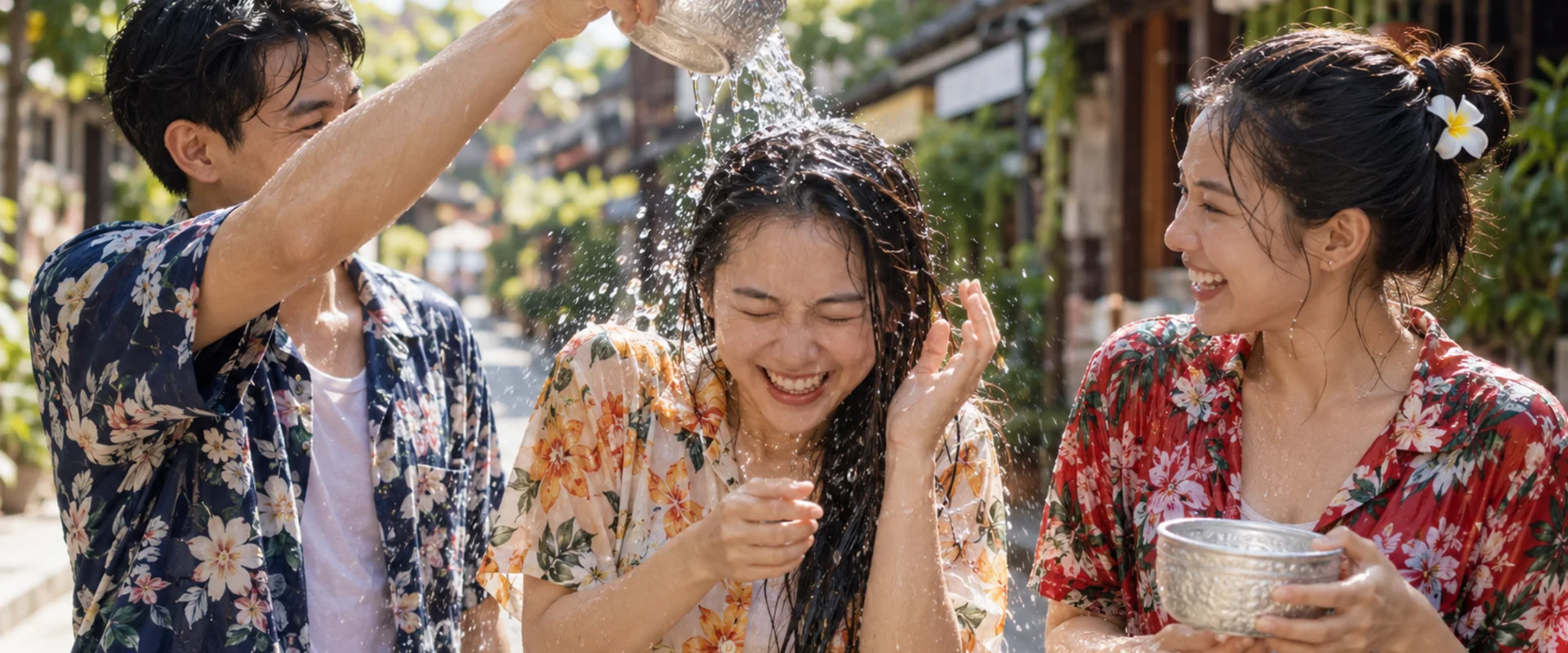
Songkran is a time for renewal, family reunions and respect for older people, ancestors and Buddha images. Water-pouring symbolises cleansing, reverence and good fortune. Temple visits, merit-making, games, music and shared food are also part of the tradition.
UNESCO inscribed “Songkran in Thailand, traditional Thai New Year festival” on its Representative List of the Intangible Cultural Heritage of Humanity in 2023. That recognition concerns a living cultural tradition, not just large water parties. You can have a worthwhile visit without entering a crowded splash zone.
When is Songkran?
The usual core dates are 13–15 April. For the next annual cycle, those dates fall Tuesday–Thursday in 2027. They are a planning starting point, not a confirmed schedule for every street, concert or ceremony.
Some communities celebrate on different or extended dates. Chon Buri’s Wan Lai traditions, for example, extend beyond the main Songkran period. Read the current local programme for the town and event you want. Check the Bank of Thailand calendar for bank holidays and the relevant office’s notice for closures; extra days off and event dates are separate matters.
This guide uses TAT’s 2026 programme to explain regional choices. It does not carry that past programme’s venues, hours or ticket arrangements forward as confirmed 2027 events.
Choose your base and your style of celebration
| Comparison | Why consider it? | Planning detail |
|---|---|---|
| Bangkok | A range of cultural events, public water zones and separately ticketed concerts. | Choose accommodation and transport around the actual venue; distinguish a street celebration from a private ticketed event. |
| Chiang Mai | Northern traditions, temples and lively celebrations around the city. | Check the current route and closures; do not use moat or canal water for splashing. |
| Chon Buri / Pattaya area | Wan Lai traditions that can continue later in April. | Confirm the locality and date; do not assume the main action ends on 15 April. |
| Khon Kaen, Udon Thani or a regional town | Community traditions alongside urban celebrations. | Look for the municipal programme and ask where quieter activities take place. |
| Phuket or another southern base | A beach trip combined with local celebrations. | Check the specific town or beach programme and the journey back after water play. |
Join cultural activities respectfully
For temple activities, wear suitable clothing, remove shoes where required and follow the temple’s instructions. A gentle ritual pouring is different from splashing a participant in a street game. Ask how to join rather than improvising with a Buddha image or a ceremony.
If invited to a family blessing or water-pouring for elders, watch the hosts and use the amount and manner they indicate. Ask before taking close photographs. Leave room for worshippers and do not enter a quiet ceremony carrying a water gun.
Look for a published temple, museum or community programme if you want a calmer experience. A morning cultural visit followed by a rest can suit a family or someone who prefers to avoid dense crowds.
Water-play etiquette and local rules
Keep water play within the designated place and times, and respect anyone who does not want to join. Do not target monks, older people, babies, workers, people carrying food or anyone operating a vehicle. Use gentle splashing away from faces and eyes.
The police’s 2026 safety notice prohibited high-pressure water guns and smearing powder or paint. Check the current event rules again for your visit. A stall selling an item does not prove the item is allowed at your venue.
Use clean water, avoid dirty canal or moat water, and do not throw ice or hard objects. Stop if someone appears distressed, a crowd becomes too tightly packed or an exit is obstructed. Celebration does not excuse unwanted touching or harassment.
Arrange travel before the holiday rush
Songkran is an important homecoming period, with many people travelling to see family. Book intercity transport and accommodation once your dates are settled, and read change conditions. Allow time for crowded terminals, luggage handling and the final ride to your hotel.
Check the exact departure station, airport or bus terminal. If arriving with bags, ask the accommodation how to reach it without walking through a water-play area. A waterproof cover helps, but a dry route and a confirmed pickup are better plans for documents and electronics.
For a day out, settle the return route before joining the celebrations. Road closures can make a pickup point inaccessible even when it looks nearby on a map. Use rail where the route fits, check the last service and carry a dry layer for the journey.
What to carry for a water-play outing
0 checked
0%
Heat, crowds and roads
Plan breaks rather than spending the whole day standing in direct sun. Keep drinking water available, seek shade and take extra care with children, older companions and anyone whose health is affected by heat. If someone becomes seriously unwell, seek urgent assistance instead of trying to continue the outing.
Avoid drinking and driving. Being splashed while riding adds another distraction, so a motorbike is a poor way to move through active water-play streets. Follow road controls and use an appropriate transport option for a wet, tired group.
With children or access needs, ask about toilets, shade, steps and crowd density. Start with a quieter venue or time and keep the visit short. For a less wet holiday, choose accommodation away from the main splash streets and ask staff about dry routes; no one can guarantee every pavement stays dry.
Questions travellers ask
Do I need a festival ticket?
Public celebrations, temple activities and private concerts have different arrangements. A paid concert pass is for that event and does not cover Songkran across a city.
Can I enjoy Songkran without water fights?
Yes. Seek temple, cultural or community activities, follow the hosts’ etiquette and plan a quieter route. Avoid the main splash zones if staying dry matters.
Will everything be closed?
No single answer covers hotels, shops, banks and government offices. Check the specific provider and office, particularly for appointments and administrative deadlines.
Are the biggest venues always best for a first visit?
Choose according to your comfort with heat, noise and crowds. A manageable local celebration can be a better fit than a packed street or large concert.
Useful next steps
Loy Krathong
Explore the traditions and planning of another major Thai festival.
Learn moreSeasonal highlights
Find more seasonal trips.
Learn moreGetting around Thailand
Compare intercity routes and local transport.
Learn moreSources and review
Sources used for this guide
Sources are reviewed regularly so important changes can be reflected in the guide.
Songkran’s meaning and 2023 heritage inscriptionUNESCO Intangible Cultural Heritage Last checked 1 Nov 2026
Songkran’s annual 13–15 April timingThai Airways Sawasdee Last checked 1 Nov 2026
Regional celebrations: official 2026 programme examplesTourism Authority of Thailand Last checked 1 Nov 2026
Songkran safety measures and conduct: 2026 noticeRoyal Thai Police, Provincial Police Region 9 Last checked 1 Nov 2026
Four checks before Songkran travelTourist Police Bureau, Thailand Last checked 1 Nov 2026
Financial institutions’ current holiday calendarBank of Thailand Last checked 1 Nov 2026