
- Bangkok departures
Many intercity trains leave Krung Thep Aphiwat Central Terminal, which connects to Bangkok’s local transit network. Some trains still use Bangkok Railway Station at Hua Lamphong, including Eastern Line services shown in the SRT timetable. The Kanchanaburi route has services from Thon Buri Railway Station. These are separate stations. Use the one printed for your train and share that name and pin with your driver. - Northern Line · Ayutthaya or Chiang Mai
For a day trip, check which services stop at Ayutthaya Railway Station and what runs back after the visit. For Chiang Mai Railway Station, compare a sleeper with a daytime service and check your plan after arrival. See the Bangkok and Chiang Mai rail itinerary for a trip that puts the rail leg between two longer stays. - Northeastern Line · choose the right branch
Look up your exact destination. The routes serving Khon Kaen and Nong Khai differ from services to Ubon Ratchathani. Check that the train stops at the intended station and that onward transport works if it arrives early or late. - Southern Line · beach towns and island gateways
Use Hua Hin Railway Station for a stay in town. Chumphon Railway Station and Surat Thani Railway Station are inland from the boat terminals. Surat Thani’s station is in Phun Phin. Start planning the onward ride using the specific operator and pier named on your ferry ticket. - Kanchanaburi and the historic railway
Check Thon Buri as the starting station where indicated and choose the stop that fits the visit. SRT lists Kanchanaburi and Nam Tok on the branch. Verify the return service before you head out, especially if you want a day trip with several stops.
Thailand Guide
Thailand by Train
Choose a Thai rail route, find the right Bangkok station, compare seats and sleepers, and plan the transfer at both ends.
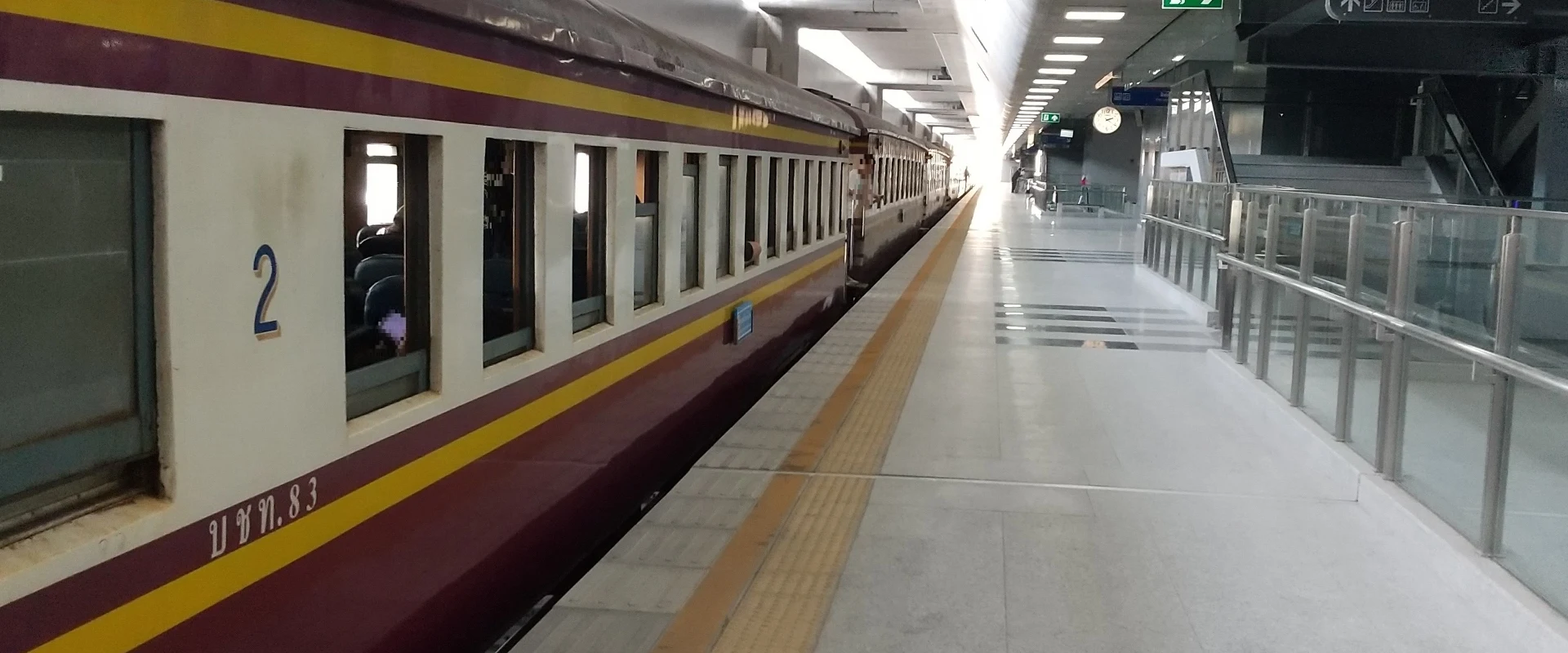
Schedules, carriages and stops can change. Confirm the date, train number, departure and arrival stations with the State Railway of Thailand before travelling.
Quick answer
Choose the train number and stations before choosing the seat
Work back from where you need to be. Use the exact stations shown on the timetable, choose a seat or berth for the length of the trip, and secure the onward ride if it leaves from another part of town.
Pick a route Start with the destinations and both station names.
Choose the carriage Compare seat, berth and boarding access.
Plan the last leg Check the actual distance to the lodging, pier or next terminal.
Plan the rail journey
Choose the option that best matches your situation to see the most relevant part of this guide.
Routes and stations North, Isaan, Ayutthaya, Kanchanaburi and the South
Seats and sleepers Choose a carriage you can use comfortably
Book a ticket Use official D-Ticket or the station counter
Make the transfer Plan arrival at stations and onward travel
Worked example and questions Build a Bangkok to Chiang Mai sleeper day
Start with the places you want to reach, then compare where the train actually stops and what time you will arrive. An overnight train can replace a hotel night. A daytime service gives you a view, but can use most of a day. The right choice depends on the station transfer, the type of carriage and the rest of your Thailand itinerary.
Choose the route and station
Choose a seat or sleeper
- Seat for a short journey
A local or ordinary seat may work for a shorter hop with modest luggage. Check whether that service has reserved seats or a local counter ticket. For longer daytime rides, compare the air-conditioned and fan carriages actually shown for the train. - Second-class sleeper for an overnight trip
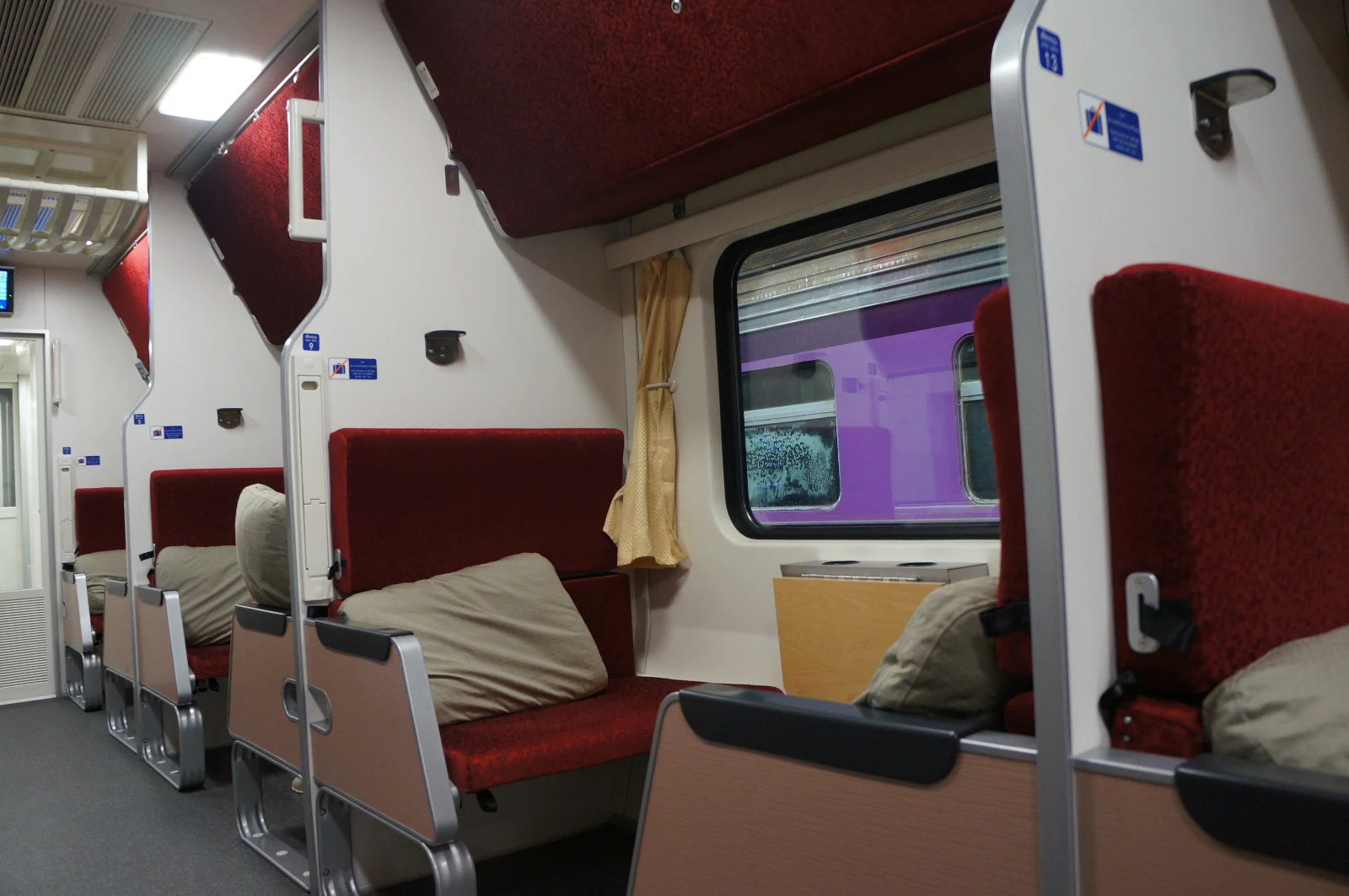
Upper and lower berths are sold separately on sleeper services. Choose a lower berth if using a short ladder would be difficult. Choose based on berth layout, luggage and the train’s arrival time. Ask for an alternative if the available berth does not work for your mobility needs. - First-class sleeper for privacy
Where offered, confirm whether you are booking one berth in a compartment or the whole compartment. Check the actual train and carriage. For a group, check whether the booking puts you together before paying. - Travel with a wheelchair or large luggage
Ask the station and SRT what the train and platform can accommodate. Check the boarding step and gap, accessible toilet, space for a mobility device and assistance at both ends. Confirm baggage or bicycle arrangements before buying. A step-free station entrance may still leave a difficult train boarding step.
Book and verify the ticket
1. Find the train using the official State Railway timetable. Check the exact origin, destination, local date, train number and arrival time. If it arrives after midnight, note the arrival date separately. Look up the return or the next connection before choosing the first train.
2. Use D-Ticket for reservable trains or the station counter for local services. SRT’s D-Ticket terms list up to 180 days’ advance booking for eligible services and exclude ordinary, local and commuter services from internet booking. Actual availability varies by route, date and segment. If D-Ticket does not show seats, check whether the train is sold online at all, then contact the station or SRT on 1690.
3. Check passenger details and the seat or berth. Enter the correct passenger names and IDs, including passport information where required. Review the class, upper or lower berth, fare, change and refund rules before paying. Check the rules on the ticket itself when using another sales channel.
4. Take the paper and offline copies. Save your confirmation and ticket offline. SRT’s current D-Ticket terms instruct passengers to print the ticket. Carry it alongside the passport or other ID used to book. Keep the train number and station names available without signal.
Plan both station transfers
Put the exact entrance into your map or booking. At Krung Thep Aphiwat, allow time to find the long-distance area, check the departure board and reach the gate. Give families and passengers needing assistance time to get from the station entrance to the platform. Ask station staff where to wait when the platform is not yet shown.
At the destination, plan the ride to the hotel before travelling if the train arrives early, late, or outside the main town. Ask about luggage storage if you reach a room before check-in. In Hua Hin, use the car-free guide to compare a walk with a pickup. At Ayutthaya, plan how you’ll cross from the station side to the historic area and how you’ll return.
Leave a bigger margin for independent flights, ferry departures or fixed tours. A train’s scheduled arrival is only the start of that transfer. Include a possible delay, the walk out, the drive to the exact terminal and the operator’s check-in deadline. If a missed connection would strand you or lose a flight, move the connection later or spend a night near it.
A Bangkok to Chiang Mai example
SRT’s northbound timetable shows train 9 leaving Krung Thep Aphiwat at 18:40 and reaching Chiang Mai Railway Station at 07:15 the following day. That is 12 hours 35 minutes on the published timetable. Confirm both times for your date. Keep the Bangkok afternoon free for an unhurried trip to the station, and make the Chiang Mai morning flexible until your accommodation confirms access or luggage storage.
- What if the sleeper is full?
Look at another departure, travel by day, or shift the itinerary by a night. Compare how a different arrival time affects your onward plan. Check which train actually has sleeping berths before assuming another departure is equivalent. - Can I book rail and ferry separately?
Yes, where the operator can take you at the pier in time. Confirm the station-to-pier transfer and the cutoff for the exact ferry. A named joint ticket may simplify the ground leg. Read its missed-connection policy before paying. - What if I go to the wrong station?
Check the printed station and remaining time. Contact SRT or the station about options. Use the current ticket terms if you need to change the trip. - What should I have in the overnight bag?
Keep ID, ticket, phone, charger, valuables, a layer for air conditioning and personal essentials close at hand. Check luggage space and bring water or food according to what the service provides.
Sources and review
Sources used for this guide
Sources are reviewed regularly so important changes can be reflected in the guide.
Krung Thep Aphiwat Central TerminalThailand Navigator Last checked 17 Nov 2026
Bangkok Railway Station (Hua Lamphong)Thailand Navigator Last checked 17 Nov 2026
Thon Buri Railway StationThailand Navigator Last checked 17 Nov 2026
Chiang Mai Railway StationThailand Navigator Last checked 17 Nov 2026
Surat Thani Railway StationThailand Navigator Last checked 17 Nov 2026
Getting Around ThailandThailand Navigator Last checked 17 Nov 2026
Community experiences
Reviews of Thailand by Train
Read first-hand experiences, then share your own.
Loading member reviews…
Reviews are temporarily unavailable. Please try again.
—
Ratings include stars without a written review.Rating distribution
No written reviews yet
Your experience could help the next visitor decide what to explore.
Be the first to share your experience
What stood out? What would you tell someone planning a visit? A short, honest review is enough.
Write a review