What you need to know
What has changed
Thailand’s Agriculture Ministry has ordered a review of the protection of four newly developed holy basil varieties associated with CPRAM, while reassuring growers and the public that ordinary cultivation and sale of traditional basil can continue.
The ministry’s 24 October announcement says Agriculture Minister Suriya Juangroongruangkit instructed the Department of Agriculture to examine the matter and report within one week. That is a timetable for an investigation, not an announcement that the registrations have been cancelled.
What the government has said
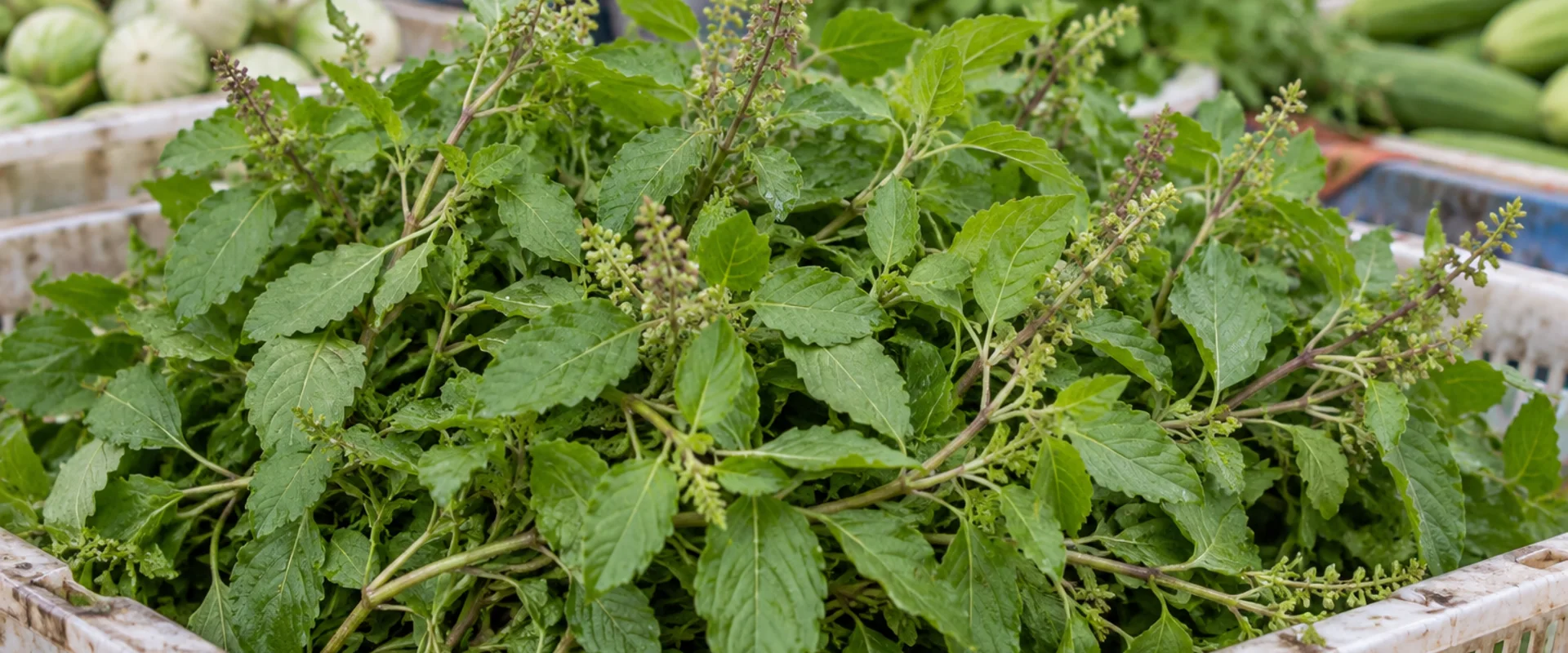
The ministry says research and development should be supported without affecting native varieties or farmers’ interests. Its statement specifically reassures people about growing and selling the more than 300 traditional holy basil varieties described by the authorities.
The distinction is between particular newly developed varieties and the herb as a whole. The review concerns the four-variety registration process; it does not establish that all basil used in home cooking, market stalls or restaurants has become private property.
The company’s response
In a statement reported by The Nation on 24 October, CP Group denied claiming rights over holy basil nationwide. It said CPRAM, a CP ALL subsidiary, had undertaken the development and application concerning four new varieties.
CP Group said farmers and villagers do not need its permission to grow or trade traditional holy basil. Those are the company’s statements in response to the controversy; the ministry’s examination remains a separate process.
Clarity for shops and restaurants
Thai Post’s 25 October report reiterates that farmers may cultivate, propagate and sell traditional and ordinary varieties, while market sellers, restaurants and consumers can continue buying leaves and using them in food. It also reports that the department is comparing the registrations with existing government basil research.
The reassurance concerns ordinary varieties and everyday cooking. It should not be read as a conclusion that every protected commercial variety has identical propagation conditions. The registration review is still the process through which the authorities intend to clarify the scope of the rights.
For residents buying ingredients or restaurants using ordinary basil, the immediate public message from both the ministry and company is reassurance about traditional varieties. Growers considering propagation of a specifically protected commercial variety should obtain the relevant official guidance for that variety. Further conclusions about the registration review should await the authorities’ findings.