Compare Chiang Mai neighbourhoods, two real monthly rental tariffs, move-in cash, utilities, transport and sample budgets built from stated assumptions.
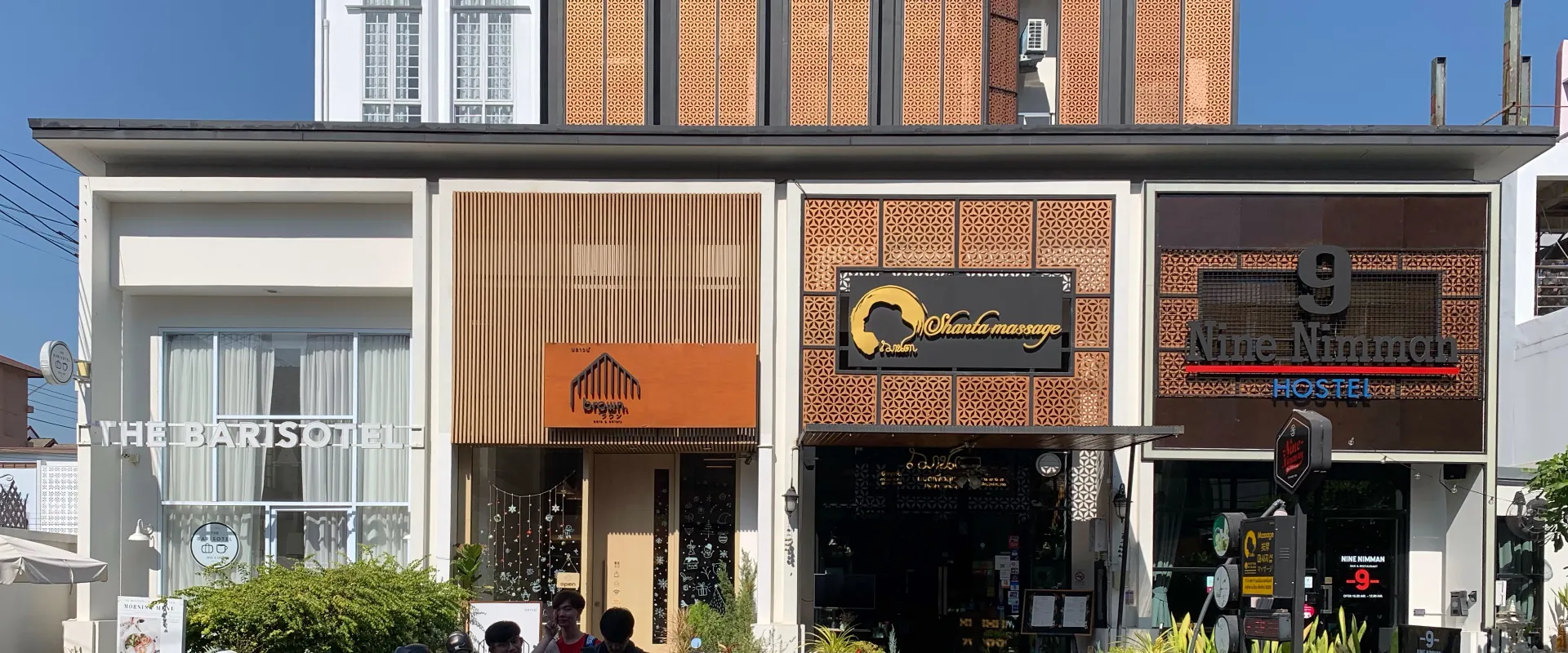
Shops on Nimmanhemin Road. Chainwit, CC BY-SA 4.0 (https://creativecommons.org/licenses/by-sa/4.0/). Cropped and resized. Original on Wikimedia Commons.
Rental offers were checked on 17 November 2026. Example budgets use stated assumptions and exclude some household-specific expenses. Confirm terms and current bills for your room.
Quick answer
Compare the full monthly bill and cash due to move in
Two operators publish rooms from ฿6,900 and ฿8,100 in high season. Compare the same dates and usage, then check deposits, the latest utility bill and your real weekly transport costs.
For an easy first monthPick a walkable area and a furnished room with a short term while you test your routes.
Ask for evidenceGet a written quote, sample utility statement and a list of move-in and checkout charges.
Allow for the seasonCompare October–March rent, hot-season AC use and the cost of flexible bookings.
Find a neighbourhood and build a realistic budget
Choose the option that best matches your situation to see the most relevant part of this guide.
The practical cost of living in Chiang Mai is your rent, utilities and the trips your address creates. A lower advertised rate can cost more once you include extra rides, a second deposit or a higher bill for air conditioning. Use two real furnished-studio offers below as starting points, then price your own habits.
1
Choose an area by the trips you make every week
Old City and east moat The Old City works well if you want to walk to local meals and use occasional rides. Look at the last few hundred metres of the actual route after dark. Check market or venue noise, cracked pavements, crossings and whether a taxi can reach the lane.
Santitham and Chang Phueak Around Chang Phueak, try the walk from the building to groceries and the north moat. This area suits a base with local restaurants and a short paid ride when carrying shopping or returning late. Khao Soi Khun Yai near the moat is an exact daytime food landmark to use when assessing the area.
Nimman and Suthep Nimman in Suthep can work for people who want cafés and work spaces nearby. Check the actual Wi-Fi speed, construction and traffic noise from your room with windows closed. Quotes differ by building, dates, floor and included services.
Wat Ket and the eastern riverbank Wat Ket suits people who regularly need the east bank or Chiang Mai Railway Station. Test the specific river crossing and pavement for errands to Warorot Market. A bridge closure, a late return or heavy shopping can change a walk into a ride.
One Nimman in the Nimman neighbourhood. F.Borromini, CC BY-SA 4.0 (https://creativecommons.org/licenses/by-sa/4.0/). Resized. Original on Wikimedia Commons.
Test a weekday before you commit. Route the actual building entrance to a supermarket, work space and any school or care appointment. Check the same route in the evening. Multiply the ride quote by the number of one-way journeys you make in a week. Price a private ride or a Chiang Mai car rental separately for occasional trips beyond town. Include parking if you need it.
2
Compare two real monthly rental offers
Both offers below are published by the accommodation operators and were checked on 17 November 2026. Ask the operator to confirm availability, the current amount payable and all fees in writing for your own dates.
Fathai Apartment, Santitham Fathai Apartment publishes a 30 m² Superior studio at ฿6,900 for one month, with a ฿7,000 deposit and ฿500 checkout cleaning fee. It publishes ฿6,400 per calendar month on its two- to six-month Superior tier. Its posted bill examples list separately metered electricity at ฿8 per unit and water at ฿25 per unit, with Wi-Fi included.
PT Residence, near Nimman PT Residence publishes a furnished 28 m² Budget Studio at ฿8,100 a month in October–March or ฿7,200 in April–September, with a ฿10,000 deposit. The operator posts ฿6 per electricity unit and ฿100 per month for water, and describes one month as the usual minimum. Ask what happens to the monthly price when your stay crosses September or March.
These are advertised operator charges to check against a written quote and a sample bill. For residential leases covered by the controlled-contract rules, Thailand’s Office of the Consumer Protection Board says water and electricity charges must follow applicable utility rates without markup. Ask the office on 1166 about the rules for your particular agreement if the amounts or charges are unclear. Ask the landlord who issues the bill and how the meter is read.
3
Build a monthly budget and a separate move-in total
Use these two worked examples to compare the same 150 kWh of electricity. The electricity and water figures illustrate the published quotes. Food, rides, phone and household items are budget inputs you can replace with your own amounts. Both examples use one adult and 30 days.
Walkable month using Fathai’s one-month studio Rent ฿6,900, electricity ฿1,200 at the posted rate and water ฿125 assuming five units. Add ฿4,500 for food, ฿1,200 for local rides, ฿350 for mobile data and ฿800 for household basics. Example total ฿15,075. First rent and deposit require ฿13,900 on move-in, with ฿500 cleaning to allow for at checkout.
High-season month near Nimman using PT Residence Rent ฿8,100, electricity ฿900 at the posted rate and water ฿100. Add ฿7,500 for food, ฿2,400 for rides, ฿450 for mobile data and ฿1,500 for household basics or occasional workspace. Example total ฿20,950. First rent and deposit require ฿18,100 on move-in.
Add separate amounts for healthcare or insurance, visa costs where applicable, trips out of town, childcare and any home office or gym fees. Compare a heavy air-conditioning month. An extra 100 kWh would add ฿800 or ฿600 using the published rates in the two examples. For your real total, use your contract and actual meter readings. The cash and card guide helps if a deposit or first month must be transferred locally.
4
Check the room and the written terms before paying
1. Get a dated quote for the exact room. Check whether rent is per calendar month or per consecutive 30 days, what equipment and internet are included, what is due at signing, and what you pay if you leave early. Ask about deposit return timing, the checkout inspection and any separately charged cleaning.
2. Check the building and photograph the starting condition. Try hot water and air conditioning. Check a video call on Wi-Fi if work depends on it. Record existing damage, meter readings, door keys and furniture on the move-in checklist. Ask the manager to acknowledge the record and ask for a receipt for every payment.
3. Keep your first term compatible with weather and air quality. Consider a short first term if you are testing the neighbourhood or a late dry-season stay. Compare the cost of extension and the break terms with one more week in a flexible room. Read the Northern Thailand smoke-season guide and ask whether the windows seal and particle filtration is available. If you will fly often from Chiang Mai Airport, include the fare and extra cost for an early pickup.