
ThailandNavigator
Thailand Guide

Hospital Treatment in Thailand — Admission, Payment and Insurance Claims

Prepare for hospital treatment in Thailand with admission documents, cost estimates, deposits, direct billing, insurance guarantees, discharge records and follow-up checks.

Reading time
7 min read
Reviewed
Reviewed
Editorial owner
Thailand Navigator Editorial Team
Context
Thailand
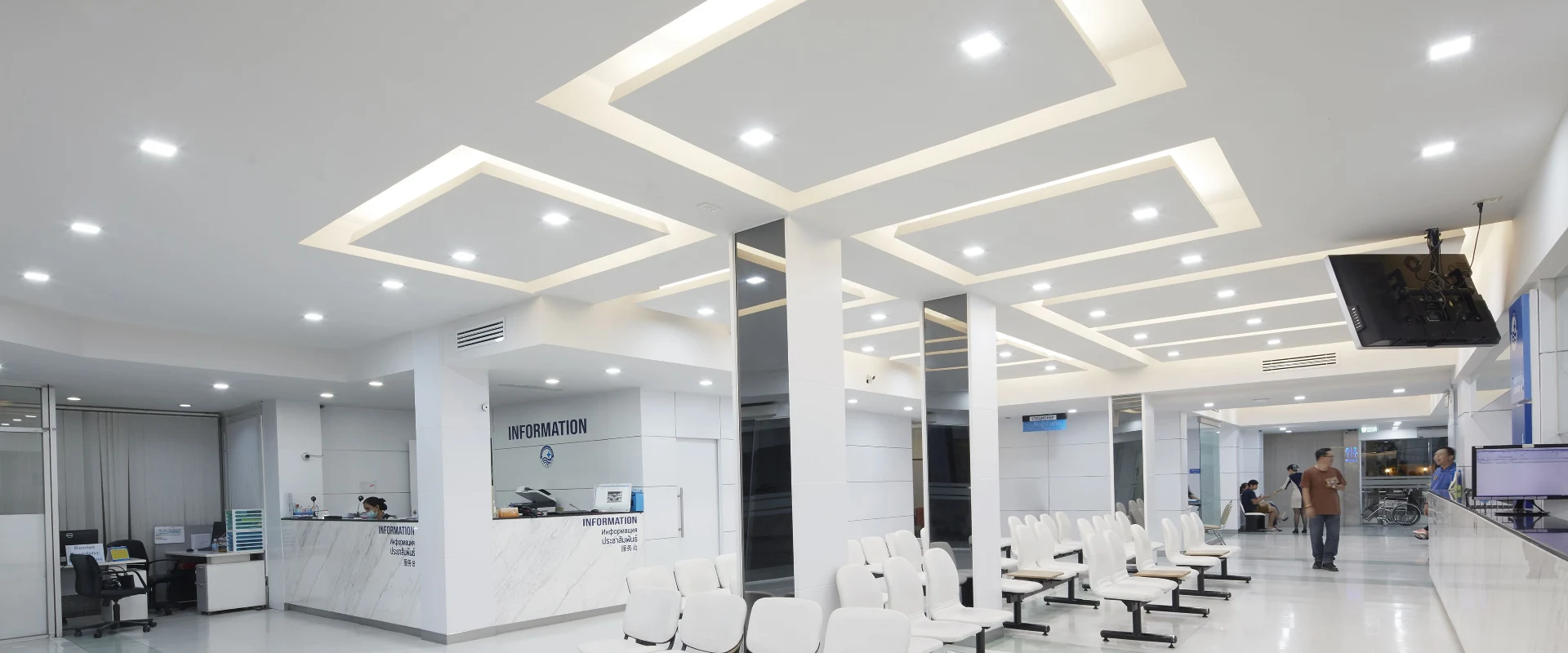
Outpatient registration lobby and seating at Pattaya Memorial Hospital
The outpatient lobby at Pattaya Memorial Hospital. Check registration, treatment and payment arrangements with the relevant hospital team.
Seek emergency care promptly. Clinicians decide treatment and safe transfer. Hospital estimates and insurer approval depend on the individual case.
Quick answer

Confirm the care and payment arrangement separately

Check the exact branch and treatment, then agree the estimate, insurer approval and costs you must pay. Keep the records needed for discharge and reimbursement.

Exact branch Check the relevant service and specialist
Payment guarantee Confirm what the insurer approved
Claim folder Reports, itemised bills and receipts

Find the help you need

Choose your situation and follow the relevant steps.

Hospital care in Thailand involves a clinical decision and a payment process. For a medical emergency, call 1669 and seek appropriate care immediately. For planned treatment, check the exact hospital, specialist, estimate and insurer approval before agreeing to admission. Keep the hospital's billing team and your insurer in contact throughout the stay.

1

Choose the right route into care

1

Emergency treatment

Call 1669 for a serious injury or sudden severe illness. Follow the emergency-help guide and the dispatcher. Ask a companion to bring documents and contact insurance. Comparing prices or waiting for a routine clinic appointment should not postpone urgent care.

2

An outpatient consultation

Confirm the branch, specialty, doctor, appointment time and likely consultation charges. Ask whether tests and medication are billed separately. An insurer may treat an outpatient visit differently from an inpatient admission or day procedure.

3

A planned admission or procedure

Obtain the proposed treatment, estimate, room category and payment arrangements in writing. Ask the insurer which approvals are required and whether the proposed care is covered. Confirm what the estimate excludes and what happens if the plan changes.

4

A transfer or medical evacuation

The treating team must assess whether transfer is safe and find an accepting facility. Ask the insurer's medical assistance team to coordinate covered transport. A scheduled ferry, taxi or commercial flight may be unsuitable for the patient's condition.

2

Choose a facility for the actual care needed

Start with the condition, urgency and location. Ask whether the required specialist, diagnostic service and level of care are available at that specific branch. A hospital group name or a polished room photograph does not establish the relevant service at every campus.

Use Choosing a hospital in Thailand and Bangkok hospitals by location and care needs to compare options. The decision is different for a routine consultation, major trauma, childbirth, complex surgery or follow-up care. Ask a treating professional for an appropriate referral where needed.

TN lists Bumrungrad International Hospital and Samitivej Sukhumvit Hospital in Bangkok, Pattaya Memorial Hospital and Bangkok Hospital Pattaya, Hua Hin Hospital and Bangkok Hospital Hua Hin, plus Bangkok Hospital Chiang Mai, Bangkok Hospital Phuket and Bangkok Hospital Samui. Open the exact listing for its map and contact details. These are useful service references, rather than a clinical ranking.

3

Registration and documents to bring

Hospitals commonly need passport identification, contact details and an emergency contact. Bring the original if available and a secure copy. If the passport is lost or held elsewhere, explain the situation to registration and ask what evidence is accepted. Use the lost-passport guide for replacement steps.

  • Passport or available identity evidence and the current Thai contact address.
  • Insurance card, policy schedule and the insurer's emergency assistance contact.
  • Any preauthorisation, referral, appointment confirmation and previous hospital number.
  • Medication list with generic names, allergies and important medical history.
  • Relevant test results, imaging and previous reports, if readily available.
  • A trusted emergency contact and any necessary consent or legal-authority documents.
  • An accepted payment method and a way to contact your bank if a limit must be checked.

Tell staff which language you need. Ask whether an interpreter or international liaison service is available, whether it costs extra and whether it is available for the consultation and discharge. A bilingual receptionist does not establish that every document or conversation will be translated.

4

Understand an estimate before consenting to planned care

Ask for an itemised estimate and its assumptions. Identify the consultation, procedure, surgeon, anaesthetist, operating room, imaging, laboratory, nursing, medication, room and other charges. Ask how emergency changes, complications, intensive care or extra nights affect the total.

For example, Bumrungrad's published finance information explains that estimates are possible ranges and that actual costs depend on the individual treatment. It also identifies exclusions and deposit arrangements. This is a specific hospital's process, rather than a national fixed-price schedule.

Ask whether a quoted package is clinically appropriate and exactly which services, dates and patient conditions it covers. A screening package is different from treatment of a newly discovered problem. Keep a copy of the accepted estimate and ask how staff will discuss additional planned costs when circumstances allow.

5

Get the insurer and hospital to confirm the same arrangement

Direct billing means the hospital bills an insurer or assistance company under an accepted arrangement. It does not establish that every policyholder, condition or treatment is covered. A provider appearing on an insurer list is only the beginning of the check.

Ask the hospital's insurance team and the insurer to confirm the patient, diagnosis or planned procedure, branch, admission dates and approved amount. Ask whether a guarantee of payment has actually been received, what it covers and what you must pay yourself. Identify any excess, co-payment, room limit or excluded service.

Bumrungrad's insurance information distinguishes direct billing from paying first and claiming reimbursement. Bangkok Hospital Samui describes eligibility, cost-estimate and insurer-coordination services. Those teams can assist, but your own policy and the insurer's decision still control the accepted benefits.

  • Does this policy cover the condition and the proposed treatment at this branch?
  • Is the treatment authorised as outpatient, inpatient or a day procedure?
  • Has the hospital received the payment guarantee, and is its scope sufficient?
  • What happens if tests, surgery or extra nights change the estimate?
  • Which costs must I pay at admission or discharge?
  • Which claim forms, medical records and original receipts will be required?

For local context, read Using health insurance at Hua Hin hospitals. Health insurance in Thailand explains longer-term arrangements. AXA's Hua Hin branch is an actual insurer office listing, rather than a promise of acceptance for a particular visitor or treatment.

6

Deposits, uninsured costs and payment difficulties

Both public and private hospitals charge for services. Expect to clarify payment even if the visit is urgent. A deposit may be requested, particularly in private care, and additional funds may be required during an admission. Do not assume that a public hospital, an insurance card or an emergency call makes the entire treatment free.

Keep deposit and payment receipts separate from the estimate. Ask whether a card transaction is a hold or a charge, what the refund process is and what exchange-rate or bank effects may apply. Pay through the hospital's verified cashier or official payment system. Verify an unexpected payment message using a known hospital contact.

If you cannot meet the cost, tell the hospital and insurer early. Ask about clinically appropriate options and any transfer that the medical team considers safe. Do not arrange an unassessed transfer simply to reduce a bill. UK guidance states that a GHIC cannot be used in Thailand and that the British embassy does not pay ordinary medical bills. Other nationalities should check their own entitlements and consular limits.

7

During an admission

Ask who is responsible for the treatment plan, daily updates and payment questions. Choose one trusted contact to help coordinate information if possible. Give appropriate consent for the hospital to speak to the insurer or family, while checking what access you are authorising.

Keep a simple record of the diagnosis, proposed next step, outstanding tests and contact names. Ask for an explanation in a language you understand before consenting to planned procedures. If you need an independent second opinion, ask how records and imaging can be shared and whether doing so affects costs or timing.

If the stay may continue beyond your Thai permitted-stay expiry, contact the hospital liaison team and the responsible immigration office promptly. Medical documentation can support the appropriate application. It does not automatically extend permission. The immigration-deadline guide explains that distinction.

8

Discharge and your claim folder

Start asking about discharge documents before the final morning. Confirm that the clinical discharge plan and insurer payment review are both progressing. Ask how to obtain a full medical report or imaging files later if they are not ready immediately.

  • Discharge summary, diagnosis and treatment information.
  • Itemised final invoice, deposit reconciliation and payment receipts.
  • Prescriptions with generic medicine names and clear instructions.
  • Follow-up appointments, warning signs and an after-hours contact.
  • Relevant test results, imaging and the process for requesting further records.
  • Claim form completed as required by your actual insurer.
  • Fit-to-fly or other travel documentation if the doctor and airline require it.

Keep copies before sending original receipts. Check the insurer's submission deadline and which currency or banking details it requires. A hospital receipt establishes payment, while the insurer may also need clinical evidence and policy-specific forms.

9

After hospital and before onward travel

Follow the treating team's instructions and ask about continuing care near your next destination. For an island or remote itinerary, read Planning for medical emergencies outside major cities. Keep enough prescribed medicine and the appropriate documentation for further travel.

Do not assume an airline will accept a hospital discharge note as a fit-to-fly clearance. Check its medical process before changing tickets. If there was an accident, use the road-accident guide to keep the medical claim and police or vehicle case organised.

Last checked 19 November 2026. Treatment decisions belong to qualified clinicians. Prices, admission requirements and insurance approval depend on the hospital, policy and case.

Sources and review

Sources used for this guide

Sources are reviewed regularly so important changes can be reflected in the guide.

Suggest content

Help us improve Thailand Navigator.
What would you like to do?

Current location: Thailand

Your account, current page and submission date are recorded automatically.

Community experiences

Reviews of Hospital Treatment in Thailand — Admission, Payment and Insurance Claims

Read first-hand experiences, then share your own.

Write a review
Loading member reviews…
Reviews reflect members’ own experiences.

Want to write a review?

Closing this prompt will not remove your rating.

Choose language

Select the language used across Thailand Navigator.

You can change this any time from the language menu.