
ThailandNavigator
Thailand Guide

What to Do After a Road Accident in Thailand

What to do after a Thailand road accident, from emergency calls and scene safety to police reports, rental vehicles, insurance evidence and hospital follow-up.

Reading time
7 min read
Reviewed
Reviewed
Editorial owner
Thailand Navigator Editorial Team
Context
Thailand
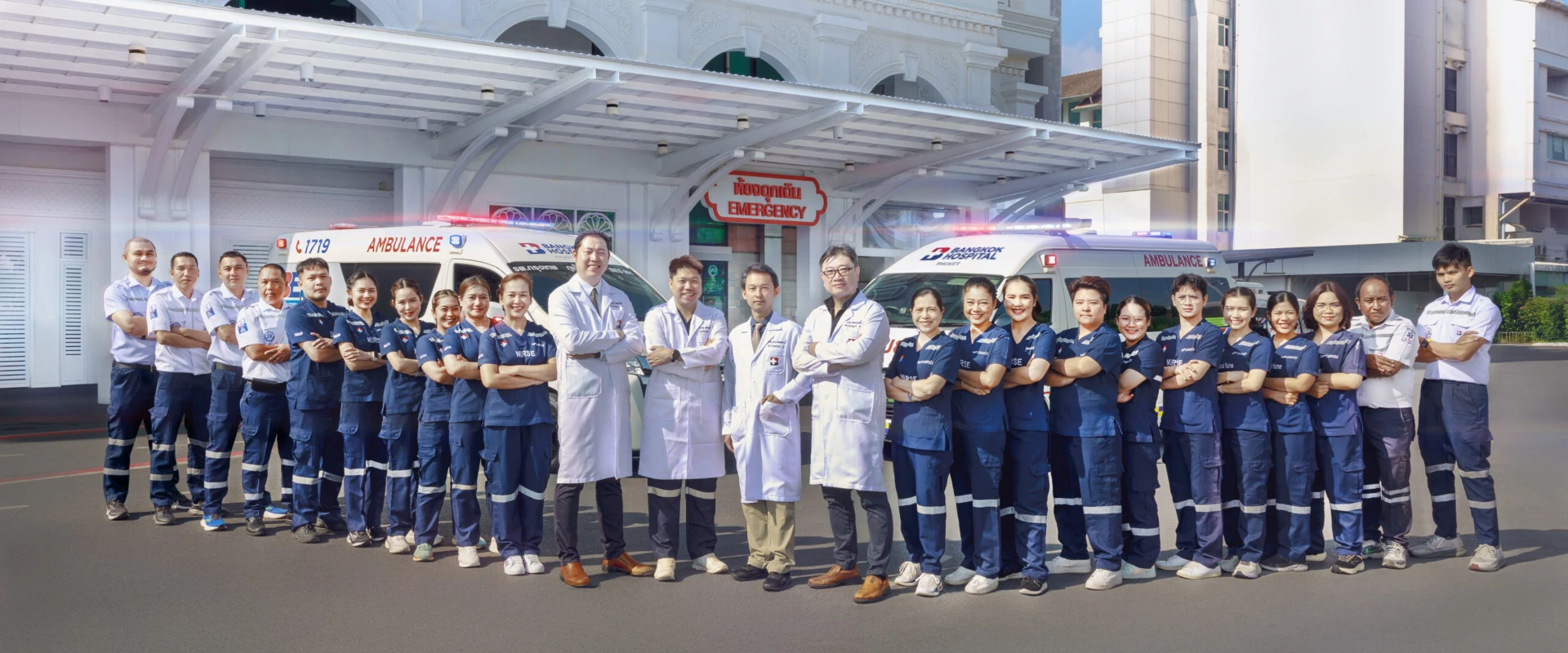
Bangkok Hospital Phuket emergency team and ambulances at the signed emergency entrance
Emergency team and ambulances at Bangkok Hospital Phuket.
Prioritise immediate safety and medical care. Follow police and emergency responders and obtain qualified advice for statements, detention or liability disputes.
Quick answer

Protect people, call for help and preserve the evidence

Call 1669 for a medical emergency. Once safe, notify police, the motor insurer and the rental operator and obtain the relevant case references.

1669 Medical emergency and ambulance
191 / 1155 Urgent police / tourist assistance
Claim references Keep police, insurer and rental records

Find the help you need

Choose your situation and follow the relevant steps.

After a road accident, protect people first. Call 1669 for a medical emergency and 191 if urgent police assistance is needed. Give the exact location and follow the dispatcher. Once everyone is safe, contact the vehicle insurer and rental company, preserve evidence and obtain the reporting documents needed for the case.

1

The first steps after a collision

1

Check the danger

Watch for moving traffic, fire, leaking fuel, electrical hazards and an unstable vehicle. Move yourself to a safe position if you can. Do not stand in the road to take photographs. Tell emergency services about anyone trapped or at immediate risk.

2

Call for medical help

Use 1669 for a serious injury or sudden illness. Give the road, direction of travel, landmark and callback number. Describe consciousness, breathing and the number of injured people. Ask a nearby Thai speaker to help if necessary.

3

Notify police and insurers

Use 191 for urgent police assistance. Contact the actual motor insurer's claims number and the rental operator as soon as practical. Ask whether a surveyor will attend and what you should do before moving or arranging repairs.

4

Keep a factual record

When safe, record the time, location, vehicle registrations, contact details and witnesses. Preserve photos and messages. Explain what you observed without guessing about blame. Ask for the police report or case reference and insurer claim number.

2

Injuries and ambulance access

Follow Emergency help in Thailand for emergency calls, first-aid communication and hospital access. An apparently minor collision can still require medical assessment. If symptoms are serious, worsening or uncertain, ask the emergency service or a medical professional rather than relying on roadside reassurance.

Tell the dispatcher if someone is unresponsive, not breathing normally or has major bleeding. Follow the instructions given. Avoid moving someone with a potentially serious injury unless there is immediate danger or a responder directs you. Do not remove protective equipment or give medication without appropriate guidance.

Make access easier without creating another risk. A companion can meet an ambulance at a safe landmark or road entrance. Share the precise location, including which carriageway or direction you are on. Keep your phone available for a callback.

3

Police, vehicles and the accident scene

Stay calm and cooperate with the responding authorities. If a vehicle is obstructing traffic or creates a hazard, explain the situation to police and the insurer and follow their instructions about moving it. Prioritise immediate safety. Do not delay rescue to preserve a photograph or argue about a road position.

Record the registration of every involved vehicle, the driver's contact details and insurer information where available. Ask permission before photographing another person's identity document. Keep sensitive information within the police, insurer and legal process rather than posting it publicly.

Tourist Police on 1155 can assist with communication and routing. Pattaya Tourist Police Station is an actual local contact for the Pattaya area. The local investigating station may still need to handle a formal accident report. Ask which office is responsible, what reference to quote and how to obtain a copy.

Do not leave simply because the other driver says everything is settled. Ask police and your insurer what reporting and attendance are required. Australian official advice warns that people involved in accidents may be detained or arrested while compensation is being resolved. Seek qualified legal and consular help if the matter becomes serious or you are unsure what is being requested.

4

Preserve useful evidence safely

  • Time, date, precise location and direction of travel.
  • Vehicle registrations, makes and models, with contact details of the parties.
  • Wide photographs showing the road, junction and relevant signs, where safe.
  • Photographs of visible damage, debris and road conditions without obstructing rescue.
  • Names and contact details of willing witnesses.
  • Original dashcam or phone files, including timestamps and the period before the collision.
  • Police station, officer or case reference and the process for obtaining the report.
  • Insurer, surveyor and rental-company claim or incident references.

Back up original files and keep an unedited copy. CCTV may not be retained indefinitely, so tell the investigating officer promptly about cameras at nearby premises. Do not confront a business or demand private recordings yourself. Make a factual written account while the events are fresh.

5

Contact the correct insurer and rental company

There may be several relevant arrangements. Motor insurance can address vehicle or third-party claims, compulsory Thai motor insurance concerns injury benefits under its terms, and travel insurance can address your own medical or travel costs if covered. Tell each relevant provider about the other claims and ask what evidence it needs.

Use the claims contact on the actual policy. A local insurance branch's ordinary opening hours or sales number may differ from its emergency claims channel. AXA's Hua Hin branch is a verified office listing for locating that business. Its existence does not establish cover for your accident or replace the claims number on your policy.

If the vehicle is rented, contact the named operator and quote the registration and agreement. For example, Swiss Bike Pattaya has a researched rental-shop listing, but a claim must follow the terms of your actual hire. Ask who authorises towing, storage and repairs, whether a surveyor must attend and how to record any excess payment.

Do not authorise an expensive repair or sign a settlement without understanding it and consulting the relevant insurer where appropriate. Ask for itemised costs and an official receipt. Never make a false statement about the driver, licence, alcohol, location or circumstances to obtain cover.

6

Hospital treatment and payment

Go to the receiving facility recommended by the medical team. A hospital across the city is not necessarily the appropriate first destination. Tell staff about medication, allergies and relevant medical history. Ask a companion to contact the travel insurer's medical assistance team while treatment proceeds.

TN has specific listings for Bumrungrad International Hospital in Bangkok, Bangkok Hospital Pattaya, Hua Hin Hospital, Bangkok Hospital Chiang Mai, Bangkok Hospital Phuket and Bangkok Hospital Samui. These help identify actual branches and maps. Emergency dispatch and the treating team determine suitable care and any transfer.

Ask about the deposit, estimate and insurer payment guarantee when the situation permits. Keep medical reports, itemised invoices, receipts and prescriptions. A police report alone does not prove medical necessity or guarantee insurance payment. A hospital willing to contact the insurer does not mean the insurer has accepted the claim.

7

Statements, settlements and language

Ask for an interpreter and independent advice if you cannot understand a document or the implications of a payment. Explain facts accurately and ask for a copy of any statement you sign. A cash request at the scene, an insurer assessment and an official legal outcome are different things.

If you are arrested, injured and unable to manage the case, or facing a substantial liability demand, contact a qualified Thai lawyer and your own embassy or consulate. The British Embassy's TN listing explains its official consular contact route for British people. Other nationalities should use their own mission. Consular staff cannot determine fault, cancel Thai proceedings or pay ordinary compensation.

Avoid arguments, threats and public accusations. Retain messages and receipts for a disputed demand. Ask the insurer and adviser to explain any proposed release or settlement before you accept it.

8

Follow-up before departure

Ask the police or your lawyer whether you need to attend again and how the case will continue after travel. Obtain the report, claim reference and contacts before leaving the area. Tell the insurer about changed plans and ask the treating doctor whether you are fit to fly or need follow-up care.

Check your passport and lawful-stay deadline if hospitalisation or proceedings delay departure. Use the lost-passport guide if documents are missing and the immigration-deadline guide if permission is close to expiry. Medical treatment, a pending insurance claim or a changed ticket does not automatically extend your Thai stay.

Before renting again, read motorbike licence, insurance and deposit checks, Driving in Thailand and the car-rental insurance guide. The practical goal is to know the right contacts and documents before a problem occurs.

Last checked 19 November 2026 using official emergency and consular guidance and insurer claim instructions. The police, treating professionals, your insurer and qualified advisers must assess the actual incident.

Sources and review

Sources used for this guide

Sources are reviewed regularly so important changes can be reflected in the guide.

Suggest content

Help us improve Thailand Navigator.
What would you like to do?

Current location: Thailand

Your account, current page and submission date are recorded automatically.

Community experiences

Reviews of What to Do After a Road Accident in Thailand

Read first-hand experiences, then share your own.

Write a review
Loading member reviews…
Reviews reflect members’ own experiences.

Want to write a review?

Closing this prompt will not remove your rating.

Choose language

Select the language used across Thailand Navigator.

You can change this any time from the language menu.