

ThailandNavigator
Thailand Guide

Scammed in Thailand — Preserve Evidence and Get Help

Respond to suspected scams in Thailand, protect accounts, contact banks and AOC 1441, preserve evidence, report to police and avoid recovery scams.

Reading time
7 min read
Reviewed
Reviewed
Editorial owner
Thailand Navigator Editorial Team
Context
Thailand
A person using a smartphone and payment card beside a laptop
Contact the bank or payment provider through its verified channel if a payment or account may be compromised.
For immediate danger call 191. Report suspected payment fraud promptly through genuine bank and official channels. Recovery and reimbursement are not guaranteed.
Quick answer

Stop further payments and contact the provider now

Protect accounts, keep original evidence and obtain bank and police references. Distinguish payment fraud, a service complaint and an urgent safety threat.

Bank or provider Use its verified fraud contact immediately
1441 Thai Anti-Online Scam Center
Evidence folder Transactions, messages and case references

Find the help you need

Choose your situation and follow the relevant steps.

If you think you have been scammed, stop further payments and contact the relevant bank or payment provider immediately using its verified channel. If someone is threatening you, get to safety and call 191. Preserve the evidence, report the incident through the appropriate official route and keep every reference number.

1

Act on the immediate risk

1

Money has just been transferred

Call the sending bank or payment provider now and explain suspected fraud. Give the transaction details and ask what can be blocked or recalled. For Thai online-scam reporting and assistance, the Anti-Online Scam Center uses 1441. Speed matters, and recovery is not guaranteed.

2

Card or account details are exposed

Use the issuer's official app or verified phone contact to block the card or secure the account. Explain whether the transaction was unauthorised or you were deceived into authorising it. Those circumstances can lead to different investigation and claim processes.

3

Your phone or email is compromised

Use a trusted device to contact the bank and secure the main email account. Explain any remote-access app or information you shared. Keep evidence without continuing to expose accounts. Do not follow a caller's instructions to move money to a “safe account.”

4

You face a threat or in-person dispute

Prioritise safety and seek police assistance. Use 191 for immediate danger and 1155 for Tourist Police communication or routing help. Do not confront someone, follow a suspect or return alone to recover money or property.

2

Stop contact and protect accounts

End the conversation and contact the organisation through a number or app you already trust. A caller ID, logo, chat history or apparently official email can be copied or compromised. Do not use a fresh link or phone number sent by the person you are reporting.

Tell the bank exactly what happened, including any passwords, one-time codes, card information, remote access or identity copies disclosed. Ask whether cards, online banking, sessions or payment permissions need to be blocked. If a device may be controlled by someone else, tell the bank and use another trusted device for sensitive actions.

Secure the primary email account and review account recovery details and active sessions. Change affected passwords through the genuine service. If your phone number is involved, contact the actual carrier. Preserve relevant evidence before deleting messages or resetting a device, and ask investigators or the provider what they need.

Lost card, frozen account or missing transfer in Thailand covers banking follow-up. Cash, cards and ATMs helps you plan access to money while a card or account is blocked. The lost-passport guide applies if identity documents were also taken.
3

Report payment fraud promptly

The Bank of Thailand's current financial-threat guidance describes reporting through AOC 1441 or a bank and coordinated account measures. Ask for the bank's incident reference, whether a police report is required and exactly what follow-up must happen by when. Do not interpret an initial temporary suspension as money recovered or a final decision.

For a foreign-issued card, contact the card issuer in its home country as well. For a transfer service or digital wallet, use that provider's official fraud route. Ask about the evidence and deadlines for a dispute, recall or chargeback. Availability depends on the payment method, facts and applicable rules.

Keep the amount, currency, date and time, transaction reference, receiving account or wallet details and your own payment confirmation. For cryptocurrency, retain the exchange details, wallet addresses and transaction identifiers. A blockchain transaction should not be described to you as automatically reversible.

If several providers are involved, keep a separate reference for each. Explain earlier reports accurately so the bank, police and payment platform can connect the records. Avoid duplicate inconsistent accounts of the same event.

4

Preserve a clear evidence folder

  • A factual timeline showing first contact, promises, payments and when you discovered the problem.
  • Original messages, email headers where available, phone numbers and account handles.
  • The advertisement, listing, website address or booking page, with dates and screenshots.
  • Contracts, receipts, payment confirmations, bank references and recipient details.
  • Names and descriptions of the people or businesses involved, without unsupported assumptions.
  • Photographs, witness details or location evidence obtained safely and lawfully.
  • Bank, platform, police and insurer case references and the next follow-up deadline.

Keep original files as well as screenshots. A screenshot with no web address, timestamp or surrounding conversation may be harder to interpret. Back up the folder securely. Share private documents only with the genuine provider, investigator, insurer or adviser who needs them.

5

Police reporting and language support

For online crime, use AOC 1441 or the official Thai Police Online route reached through the police's own channels. Current official police warnings identify thaipoliceonline.go.th and warn about pages impersonating reporting services. Avoid sponsored search results or messages offering to file a report for an unexplained fee.

If an online system cannot accept your passport identity or you cannot use its language or verification process, seek help from the local police and Tourist Police on 1155. Do not wait for an online form to work while a bank-reporting deadline passes. Ask which investigating station and document apply to the actual incident.

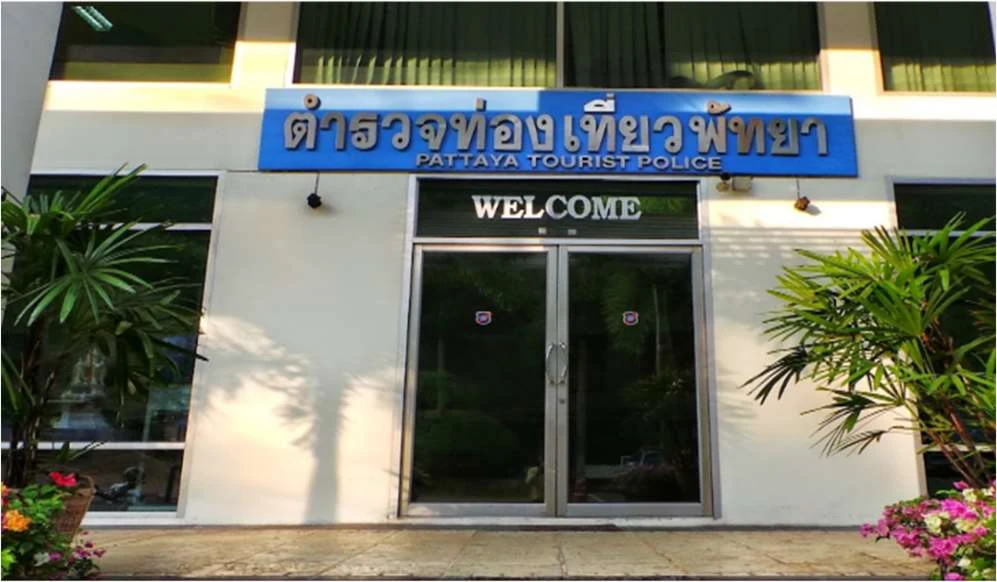
Pattaya Tourist Police Station is a specific TN-listed assistance contact in Pattaya. Its ordinary counter contact and the national 1155 hotline have different roles. Ask for the formal report or case reference and how you can obtain a copy. A chat acknowledgement is not necessarily the report an insurer or bank requires.

Entrance to Pattaya Tourist Police station with its blue Thai and English sign
Pattaya Tourist Police Station. Ask which investigating station should handle a formal report.
6

Distinguish suspected fraud from a service complaint

A disappointing meal, a cancellation fee or a rental-deposit disagreement is not automatically criminal fraud. Keep the contract and identify the promise or obligation you believe was breached. Start with the genuine business or booking platform when it is safe and appropriate, while preserving evidence of any deception or threats.

The Office of the Consumer Protection Board publishes complaint channels and hotline 1166. Ask whether it handles the type of dispute and what documents or representation are needed. A consumer complaint, a payment dispute and a criminal report can be different processes. Obtain advice if you are unsure which applies.

For a rental dispute, motorbike-rental checks and car-rental insurance explain useful contract and condition evidence. Contact the actual operator through the contact details in your agreement and retain its written response.

7

Verify booking messages and business identity

Unexpected payment instructions can arrive through an apparently genuine booking conversation. Verify a changed account or request for card details by contacting the property through a separately established channel. Do not rely only on the same chat that delivered the request.

Use a TN listing to establish the exact location and published contact, then independently verify the specific transaction. A copied hotel name or photo does not prove a payment request came from that property.

Check that the legal or trading name, branch and recipient details make sense. Ask the genuine provider to confirm a changed payment instruction before sending funds. Keep the response. A map listing or a polished website alone cannot guarantee that a person contacting you controls the business.

8

Avoid a second scam during recovery

Be cautious of anyone who contacts you promising guaranteed recovery, claiming to be a police officer or asking for a tax, security deposit or crypto payment to release funds. Verify the identity and case through the official institution. Do not disclose recovery codes, passwords or seed phrases.

Do not send more money to demonstrate that an account works or to “unlock” an investigation. A legitimate professional should explain their identity, scope, written fees and limits. Seek an independent qualified lawyer for a substantial dispute or legal demand, rather than relying on a person introduced by the suspected scammer.

Siam Legal International is an existing Bangkok legal-practice listing with a published litigation and immigration-service scope. Ask whether it can act independently in your particular case, who the responsible Thai lawyer will be and what the written fees cover. A directory listing does not guarantee acceptance, outcome or recovery.

9

Follow-up, insurance and consular help

Record the next action, responsible organisation and deadline for each report. Contact the insurer if the policy may cover theft or related travel costs, using the travel-insurance guide to organise the evidence. A bank investigation or police report does not guarantee reimbursement.

If you are vulnerable, threatened, detained or left without essential documents, contact your own embassy or consulate. The British Embassy in Bangkok is the official assistance route for British people, with appointment and service limits explained in the TN listing. Other nationalities should use their own mission. Consular staff cannot compel a private refund or resolve Thai proceedings for you.

Use Emergency help in Thailand for an urgent safety or medical problem and Thailand safety guidance for prevention. Last checked 19 November 2026 using Bank of Thailand, police, consumer-protection and official consular sources. Report promptly and follow the instructions attached to your actual case.

Sources and review

Sources used for this guide

Sources are reviewed regularly so important changes can be reflected in the guide.

Suggest content

Help us improve Thailand Navigator.
What would you like to do?

Current location: Thailand

Your account, current page and submission date are recorded automatically.

Community experiences

Reviews of Scammed in Thailand — Preserve Evidence and Get Help

Read first-hand experiences, then share your own.

Write a review
Loading member reviews…
Reviews reflect members’ own experiences.

Want to write a review?

Closing this prompt will not remove your rating.

Choose language

Select the language used across Thailand Navigator.

You can change this any time from the language menu.