
ThailandNavigator
Thailand Guide

Swimming Safely in Thailand

Check beach flags, lifeguards, rip currents, child supervision, pools, jellyfish warnings, boat-trip precautions and emergency plans before swimming in Thailand.

Reading time
6 min read
Reviewed
Reviewed
Editorial owner
Thailand Navigator Editorial Team
Context
Thailand
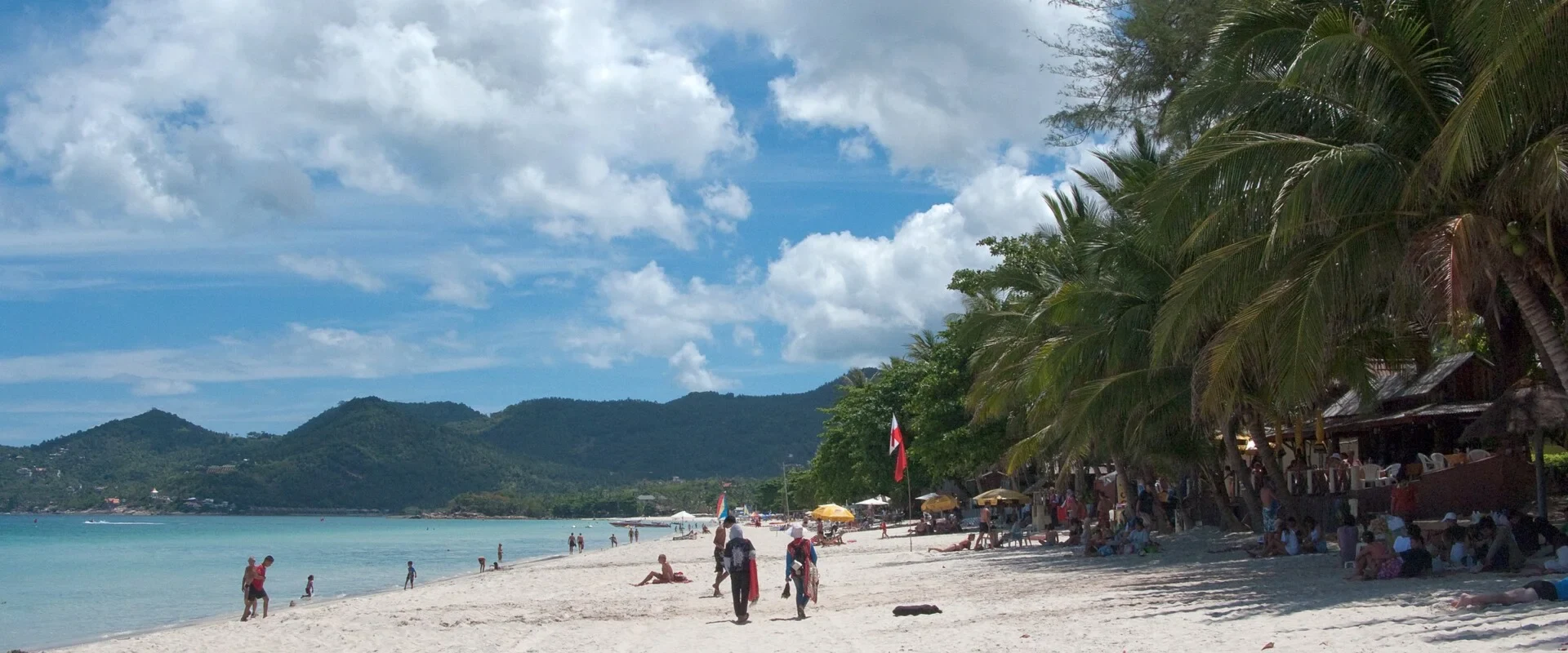
Chaweng Beach on Koh Samui with sand, palm trees and the sea
Chaweng Beach on Koh Samui. A photograph does not establish current swimming conditions; check local warnings and lifeguard advice.
Follow current lifeguard and authority instructions. No beach listing or photograph guarantees safe water conditions. Call 1669 for a medical emergency.
Quick answer

Check local conditions before entering the water

Stay out under red flags or closure instructions. Choose supervised swimming, watch children closely and know how to summon help.

Red flag Stay out and follow local instructions
Supervision Lifeguards and an attentive adult for children
1669 Medical emergency assistance

Find the help you need

Choose your situation and follow the relevant steps.

Choose where and whether to swim using conditions at that beach today. A famous beach, clear-looking water, a hotel photograph or other people swimming cannot establish that it is safe. Thailand has surf, rip currents, sudden depth changes, boat traffic and venomous marine animals, as well as pools whose layout and supervision vary.

1

Make the decision before entering

1

Red flags or a closure

Stay out of the water. Ask the lifeguard or responsible staff about a suitable alternative, such as a supervised pool. Do not move along the beach to bypass the warning.

2

No lifeguard or unclear conditions

Choose a supervised location or postpone. Ask where the designated swimming area is, what the warnings mean and when lifeguard cover actually operates.

3

Children or weak swimmers

Assign close adult supervision, check depth and use appropriate lifejackets for natural water. Inflatable toys and swimming lessons do not remove the need for supervision.

4

Someone is in difficulty

Alert lifeguards and call 1669 for a medical emergency. Throw a flotation aid if safe. Avoid becoming a second casualty by entering dangerous water without rescue training.

2

A practical beach check

Find the nearest staffed lifeguard point, read the signs and identify the swimming boundaries. Ask about current, surf, submerged rocks, sudden drop-offs, boats and jellyfish alerts. Confirm the safest access and exit for your ability. If nobody can explain the conditions, choose another activity rather than guessing.

Red flags mean do not swim. Where a lifeguard system uses red-and-yellow flags, ask staff to identify the supervised swimming zone. Flags and their coverage can vary; a missing flag is not an assurance of safety. Keep away from piers, channels and areas used by personal watercraft or boats.

Use 75 Beaches Across Southern Thailand to research locations, then check conditions on arrival. Beach listings describe places rather than certifying them safe on a particular day. A sheltered-looking section can still have currents or hazards beneath the surface.

3

Understand rip currents and preserve your energy

A rip is water flowing away from shore, sometimes through a gap that looks calmer than the breaking waves nearby. It can move a strong swimmer out of standing depth. You cannot reliably judge safety from water colour, a photograph or confidence in a swimming pool.

If caught, avoid fighting directly against the current. Float, control your breathing and call or signal for help. Keep a flotation aid with you. If able, move parallel to shore to get out of the flow before returning; if you cannot do that safely, keep floating and signalling rather than exhausting yourself. Follow lifeguard directions.

If you see someone struggling, immediately give the lifeguard the location and point to the person. From a safe position, throw a suitable flotation aid. Ask someone to call for help while another person keeps sight of the casualty. Untrained rescue attempts in the same current can create additional casualties.

4

Children, pools and accommodation choices

Choose an adult who is responsible for watching the child at that moment, without a phone, alcohol or other distractions. Hand the role over explicitly. Young children and weak swimmers need especially close supervision; ask a qualified instructor about supervision appropriate to their ability and the setting.

Before booking accommodation, ask about pool barriers, gates, direct room-to-pool access, depth markings and lifeguard hours. Inspect these on arrival. A private villa pool can be accessible while adults unpack, cook or sleep. Agree how doors and gates stay secure outside swimming time.

Use a properly fitting lifejacket for the activity and wearer. Ask the operator for a child-sized jacket before paying for a boat or snorkelling trip. Armbands, rings and inflatable loungers are recreational items and can drift away from shore. They are not a substitute for a lifejacket or supervision.

5

Jellyfish and other marine hazards

Read local jellyfish notices and ask lifeguards about current alerts. Do not touch marine animals or stranded jellyfish. Protective clothing can reduce exposed skin but does not make a hazardous area safe. TAT advises avoiding sea swimming at night, after heavy rain and outside designated safety areas.

For a suspected serious sting, get help immediately, bring the person out of the water only when safe, call 1669 and follow lifeguard or medical instructions. Do not rub the area. Thailand's published box-jellyfish first-aid guidance uses vinegar for at least 30 seconds; that should not be turned into one treatment for every species or every marine injury. Tell responders what was seen and where the sting occurred.

If the person becomes unresponsive or is not breathing normally, tell the emergency dispatcher immediately and follow resuscitation instructions. Do not delay an emergency call while trying to identify an animal. Obtain medical assessment after a serious sting, breathing problem or collapse.

6

Weather, boat trips and snorkelling

Check the current marine forecast as well as the beach flags. Thunderstorms, waves and runoff can change conditions after a pleasant morning. Get out when instructed and do not shelter on an exposed jetty. Rivers and waterfalls carry separate flash-flood risks; a calm pool below a waterfall does not reveal conditions upstream.

Ask a snorkelling operator about the actual site, swimming ability required, guide-to-group arrangement, flotation, emergency equipment and return procedure. Tell the operator about relevant mobility or health limitations. Do not assume a lifejacket, guide or hotel booking guarantees the activity is suitable for you.

Andaman Wave Master is a real ferry and speedboat operator with TN contact details; its listing does not certify a separate snorkelling excursion or provide a rescue service. Use Thailand Ferry and Island Transfers and Cancelled Ferries and Severe Weather when transport and water conditions affect the same day.

7

Use local nodes for planning, not safety guarantees

For Koh Samui, compare the exact location of Chaweng Beach, Lamai Beach and Mae Nam Beach. Choose accommodation and access around your needs, then ask about that day's swimming conditions. No beach in this list is declared safe year-round.

For Phuket, monsoon conditions can affect exposed beaches and boat routes. For Jomtien Beach and Hua Hin, also check local boat activity, warnings, tide and entry conditions. Staying close to a beach does not mean its entire shoreline is an appropriate swimming zone.

8

Prepare a small emergency plan

Save the beach name, nearest road access, hotel contact and a precise meeting point for responders. Call 1669 for a medical emergency and describe whether the person is in the water, conscious and breathing. Emergency Help in Thailand explains how to communicate the location and arrange assistance.

Know where medical care is available without assuming an island facility offers every specialty. Bangkok Hospital Samui and Bangkok Hospital Phuket are verified hospital nodes; emergency responders should guide an urgent destination. Hospital Treatment in Thailand covers admission and payment after immediate care is arranged.

Check Travel Insurance for Thailand for swimming, snorkelling, diving and rescue conditions. Avoid alcohol before entering water, swim with a companion and stay within your ability. The most useful final check is simple: if the conditions change, can everyone get out promptly and can someone summon help?

Sources and review

Sources used for this guide

Sources are reviewed regularly so important changes can be reflected in the guide.

Suggest content

Help us improve Thailand Navigator.
What would you like to do?

Current location: Thailand

Your account, current page and submission date are recorded automatically.

Community experiences

Reviews of Swimming Safely in Thailand

Read first-hand experiences, then share your own.

Write a review
Loading member reviews…
Reviews reflect members’ own experiences.

Want to write a review?

Closing this prompt will not remove your rating.

Choose language

Select the language used across Thailand Navigator.

You can change this any time from the language menu.